
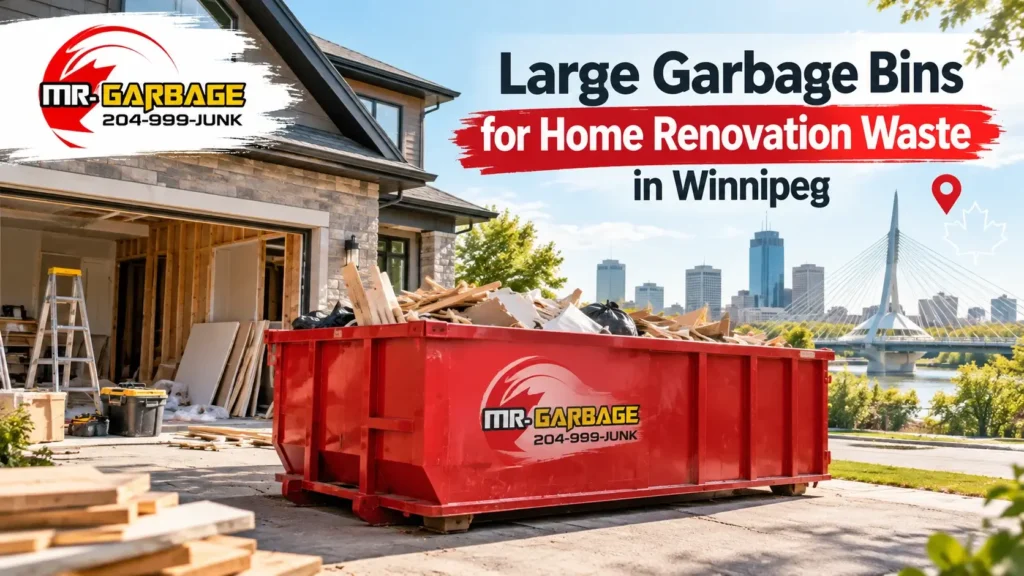
Home renovations create waste. That is true whether you are replacing a kitchen in River Heights, finishing a basement in Charleswood, updating a bathroom in St. Vital, or removing old flooring in Transcona.
A regular household garbage cart is not designed for a major renovation. Winnipeg also does not collect overflowing garbage carts or extra material placed beside them as part of normal cart collection. When a project creates more waste than your regular service can handle, a temporary container can make the cleanup much easier.
That is where large garbage bins can help.
A properly selected bin gives you one place to collect suitable renovation debris while work is underway. It can reduce clutter around the property and save repeated trips to disposal facilities.
But choosing a container is not as simple as picking the biggest one available.
You need to consider the type of waste, the amount of debris, available space, delivery access, and which materials should be recycled separately.
This guide explains what Winnipeg homeowners should know before arranging a large garbage bin rental for a renovation project.
Why Renovation Projects Need Large Garbage Bins
Even a small renovation can create more waste than expected.
Consider a bathroom renovation. You might remove:
- Old flooring
- Cabinets
- Drywall
- Fixtures
- Shelving
- Packaging
- Wood
- General renovation debris
A kitchen renovation can create even more material. Removing cabinets, countertops, flooring, drywall, and other old components can quickly fill a household garbage cart.
A larger project creates an even bigger challenge.
Basement renovations, whole-room renovations, deck removals, roofing work, and demolition can produce bulky debris that is difficult to manage with regular household garbage collection.
Large Garbage Bins Keep Renovation Areas More Organized
One of the main advantages of using a temporary container is simple: you have somewhere to put the waste.
Instead of creating several piles around your driveway or yard, suitable debris can go directly into the container.
That matters when you are working on a property in a neighbourhood such as:
- River Heights
- Charleswood
- St. Vital
- St. Boniface
- Fort Garry
- Tuxedo
- Linden Woods
- Whyte Ridge
- Transcona
- East Kildonan
- North Kildonan
- Garden City
- St. James
- Wolseley
- Crescentwood
- Osborne Village
- Westwood
- Sage Creek
- Bridgwater
- South Pointe
A cleaner work area also makes it easier to move materials, tools, and workers around the property.
What Are Large Garbage Bins?
The phrase large garbage bins can describe several types of waste containers.
For residential renovation work, homeowners will often be looking for a temporary roll-off or walk-in container rather than a permanent municipal garbage bin.
These containers are delivered to the property and picked up when the project or rental period is finished.
They are different from the large garbage bins used at some apartment buildings, commercial properties, or multi-unit housing complexes.
The City of Winnipeg, for example, provides permanent bin collection services to certain multi-unit properties and small commercial customers. Single-family homeowners normally receive cart collection instead.
So, when a homeowner searches for a large garbage bin rental, they are usually looking for a temporary waste container for a specific project.
Choosing the Right Large Garbage Bin Size
Size is one of the first things to discuss with a rental company.
You do not want a container that fills before the renovation is complete. But you also need to consider the physical space available on your property.
Mr. Garbage provides walk-in, easy-load steel bins in several sizes for residential and construction projects. Its service information lists options ranging from smaller renovation containers through larger bins intended for substantial projects.
The best choice depends on the project.
Smaller Renovation Projects
A smaller container may work well for projects such as:
- One-room flooring replacement
- A small bathroom renovation
- Garage cleanouts
- Limited demolition
- Household junk removal
The amount of debris matters more than the name of the project.
A small bathroom renovation can produce less waste than a large garage cleanout, for example.
Medium Renovations
Medium-sized projects can include:
- Kitchen renovations
- Basement renovations
- Multiple-room flooring removal
- Deck replacement
- Larger garage cleanouts
- Interior demolition
These projects may need more container space because bulky materials do not always pack efficiently.
Large Renovations
A larger container can make sense when the project involves several rooms or substantial demolition.
Examples include:
- Whole-home renovations
- Major basement demolition
- Large exterior renovations
- Roofing projects
- Extensive flooring removal
- Larger construction projects
Mr. Garbage’s larger containers are designed for projects where homeowners or contractors need more space for bulky debris. The company also provides construction dumpster rental options for renovation and construction work.
Large Outdoor Garbage Bins: What Should You Consider?
When looking at large outdoor garbage bins, homeowners should think about placement before ordering.
A container may need to remain on a driveway, parking area, or another suitable location with enough room for delivery and pickup.
Check the area for:
- Overhead branches
- Low wires
- Narrow entrances
- Gates
- Parked vehicles
- Soft ground
- Fences
- Buildings
- Other obstacles
This is especially important in older Winnipeg neighbourhoods.
Properties in Wolseley, West Broadway, Osborne Village, Crescentwood, and parts of River Heights can have tighter access or smaller lots.
Newer neighbourhoods such as Bridgwater, Sage Creek, South Pointe, and Prairie Pointe may have different access conditions.
The important thing is to look at your specific property rather than assuming every driveway will work the same way.
Think About Delivery Access
A container rental company needs to be able to reach the placement area.
Before delivery, move vehicles and other obstacles where possible.
If the container needs to be placed somewhere unusual, explain the situation when arranging the rental.
Mr. Garbage uses hook-lift trucks for bin placement and states that its bins can be placed in driveways, parking lots, and other locations with suitable access.
Large Garbage Bins on Wheels vs. Roll-Off Containers
The phrase large garbage bins on wheels can create some confusion.
Many people use “garbage bin” to describe a wheeled commercial or multi-unit garbage container. These are different from temporary roll-off containers used for renovation debris.
A wheeled garbage bin is generally designed to remain at a property and be serviced regularly.
A roll-off or temporary construction container is delivered for a particular project and removed when it is no longer needed.
When Are Wheeled Bins More Suitable?
Large garbage bins on wheels may be useful for properties with ongoing garbage collection needs, such as certain apartment buildings, commercial locations, or multi-unit properties.
They are not necessarily the best choice for a homeowner carrying out a major demolition project.
When Is a Temporary Container Better?
A temporary container is usually more suitable when you have a defined project with a clear start and finish.
Examples include:
- Kitchen demolition
- Basement renovation
- Garage cleanout
- Moving
- Estate cleanout
- Deck removal
- Home renovation
- Construction cleanup
The important difference is the service model, not simply the physical size of the container.
What Can Go Into a Large Garbage Bin?
Before loading a container, confirm what the rental company accepts.
Common renovation materials may include:
- Drywall
- Untreated wood
- Flooring
- Cabinets
- Shelving
- Packaging
- Non-hazardous household junk
- General renovation debris
But not every material should automatically go into the same container.
Some items have separate recycling or disposal requirements in Winnipeg.
Materials That May Need Separate Handling
Homeowners should pay particular attention to:
- Batteries
- Electronics
- Paint
- Household chemicals
- Propane tanks
- Automotive fluids
- Certain appliances
- Other hazardous materials
The City of Winnipeg advises residents not to put hazardous materials into regular garbage or recycling carts. These include batteries, electronics, automotive fluids and parts, aerosols, and household chemicals with hazardous symbols. The City directs residents to appropriate 4R Depot services for accepted materials.
If you are unsure about a material, check the City’s current Recyclepedia or ask the waste provider before loading it.
Recycling Renovation Waste in Winnipeg
Renting a large container does not mean every item from your renovation belongs in it.
Some materials can be recycled, reused, or taken to a specialized drop-off location.
Winnipeg’s 4R Depots accept a broad range of materials, including certain electronics, batteries, household hazardous waste, clean lumber, scrap metal, glass, appliances, and other recyclable or reusable items. Accepted materials can change, so homeowners should check the current list before making a trip.
Community recycling depots have a narrower purpose.
They accept materials such as paper, cardboard, and empty plastic, glass, and metal containers. They do not accept construction materials, appliances, furniture, garbage, yard waste, or household hazardous waste.
That distinction is important during renovations.
For example, breaking down cardboard boxes and putting them into the correct recycling stream can be better than filling valuable container space with recyclable material.
A Simple Renovation Waste Sorting System
Before the renovation begins, create separate areas for:
General renovation waste
Material suitable for the rented container.
Recyclables
Cardboard, metal, and other materials accepted through Winnipeg’s recycling system.
Reusable items
Cabinets, fixtures, furniture, or other materials that may still have value.
Special waste
Paint, chemicals, batteries, electronics, and other items requiring separate handling.
This simple approach can make the entire cleanup easier.
Why Waste Diversion Matters
Waste management is not only about getting unwanted material off your property.
It is also about what happens afterward.
Statistics Canada reported that Canadians sent 27.5 million tonnes of non-hazardous waste to public and private disposal facilities in 2024. Household waste accounted for 11.1 million tonnes of that total.
That is one reason recycling and reuse matter.
During a renovation, you may have materials that do not need to become garbage. Separating those items can help keep useful materials in circulation and reduce the amount sent to disposal facilities.
Winnipeg’s recycling system also explains that correctly sorted materials are processed and sold to companies that use them to make new products.
Extra Large Garbage Bins for Major Renovations
Some homeowners search specifically for extra-large garbage bins when planning a major project.
The term usually means a high-capacity container intended for projects that create a large amount of waste.
That could include:
- Whole-house renovations
- Major demolition
- Large roofing projects
- Extensive flooring removal
- Large construction cleanups
- Property cleanouts
But bigger is not always better.
A very large container may not be suitable for a property with limited space. The type and weight of the waste also matter.
For example, a container filled with lightweight bulky material behaves differently from one filled with dense renovation debris.
That is why it is better to tell the rental company what you are removing rather than simply asking for the largest available option.
Large Garbage Bins for Different Winnipeg Renovation Projects
Different projects create different waste streams.
Kitchen Renovations
Kitchen renovations may produce:
- Old cabinets
- Countertops
- Flooring
- Drywall
- Shelving
- Packaging
- General demolition debris
A temporary container can give you somewhere to place these materials as cabinets and fixtures are removed.
Bathroom Renovations
Bathroom projects can create flooring, drywall, cabinetry, fixtures, and other debris.
Some materials, such as certain ceramics or fixtures, may have separate disposal or recycling options in Winnipeg. The City lists ceramics such as tiles, sinks, and toilets among materials accepted at its 4R Depots.
Basement Renovations
Basement renovations often involve several types of material at once.
You may remove:
- Carpet
- Flooring
- Drywall
- Wood
- Shelving
- Old furniture
- Insulation
- General junk
Planning the waste container before demolition starts can keep the project area easier to manage.
Deck and Fence Removal
Outdoor renovation work can create substantial amounts of wood.
Before putting everything into a container, check whether certain wood materials can be recycled or accepted separately.
Winnipeg’s 4R Depot program accepts clean lumber and other wood materials under its current accepted-material guidelines.
How a Large Garbage Bin Rental Works
The process is usually straightforward.
1. Describe Your Project
Tell the rental provider what you are renovating and what materials you expect to remove.
2. Choose a Suitable Container
The provider can help you choose from available container sizes based on your project.
3. Prepare the Placement Area
Clear vehicles, branches, equipment, and other obstacles.
4. Load the Container Safely
Place material inside the container without exceeding the permitted fill level.
Keep restricted materials separate.
5. Arrange Pickup
Once the project is finished, the provider removes the container and handles the collected material according to its waste management process.
Mr. Garbage provides residential dumpster rental, construction dumpster rental, junk removal, and cleanup services in Winnipeg. This gives homeowners options when a renovation involves more than simply placing a temporary bin on the property.
Common Mistakes Winnipeg Homeowners Should Avoid
Choosing Based Only on Size
Do not assume the largest container is automatically the right one.
The waste type, available space, and loading conditions matter too.
Waiting Until Demolition Starts
It is easier to arrange waste management before the first wall comes down.
Have the container plan ready before work begins.
Mixing Hazardous Waste With Renovation Debris
Paint, chemicals, batteries, electronics, and similar materials may require separate disposal.
Blocking the Container
Do not park vehicles where they prevent pickup.
Also consider access for the delivery truck before the container arrives.
Ignoring Recycling Opportunities
Not every item from a renovation has to become garbage.
Check Winnipeg’s 4R Depot and recycling options before throwing recyclable or reusable materials into a general waste container.
Large Commercial Garbage Bins vs. Residential Renovation Bins
The phrase large commercial garbage bins can also refer to containers used by businesses, apartments, offices, and other properties with regular waste collection.
That is different from a temporary residential renovation container.
A commercial property may need ongoing collection. A homeowner usually needs a container for a specific project.
Mr. Garbage serves residential, commercial, and industrial customers, so the right waste solution can depend on the property and the type of work being completed.
If you are renovating a single-family home in St. Vital, for example, you may need a temporary container. A property manager in downtown Winnipeg may have a completely different waste collection requirement.
Serving Winnipeg Homeowners and Local Neighbourhoods
Home renovation waste is not limited to one part of the city.
Mr. Garbage serves homeowners and projects throughout Winnipeg, including areas such as Charleswood, River Heights, St. Vital, St. Boniface, Fort Garry, Tuxedo, Linden Woods, Whyte Ridge, Fort Richmond, South Pointe, Bridgwater, Sage Creek, Royalwood, Transcona, East Kildonan, North Kildonan, Garden City, St. James, Westwood, Silver Heights, Wolseley, Crescentwood, Osborne Village, Elmwood, and surrounding communities.
Whether you are replacing a bathroom in Fort Garry or clearing a basement in East Kildonan, the basic process remains the same: understand your waste, choose the right container, prepare the placement area, and separate materials that require different disposal.
Conclusion
Home renovations create waste. The larger the project, the harder it becomes to manage that waste with a normal household garbage cart.
Large garbage bins can provide a practical temporary solution for suitable renovation debris. They can help keep the work area organized and reduce the need for repeated disposal trips.
But choosing the right container involves more than size.
Think about the type of debris, how much material the project will create, where the container can be placed, and which materials should be recycled or handled separately.
For larger projects, extra-large garbage bins may be appropriate. For smaller renovations, a more compact container may be easier to place and load.
And remember that some renovation materials should not go into general garbage. Winnipeg’s 4R Depots provide options for many recyclable, reusable, compostable, and special materials.
If you are planning a renovation in Winnipeg and need a temporary waste solution, Mr. Garbage provides residential and construction bin rentals, along with junk removal and cleanup services. Contact Mr. Garbage to discuss your project and find a suitable container for your renovation waste.
Frequently Asked Questions (FAQs)
1. What size large garbage bin do I need for a home renovation?
The right size depends on the type and amount of renovation waste. A bathroom or single-room project may need less space than a basement renovation, whole-home renovation, or major demolition. Explain your project and materials to the rental provider before choosing a container.
2. Can I use large garbage bins for construction waste?
Yes, suitable temporary containers can be used for many types of non-hazardous construction and renovation debris. Always confirm the accepted materials with the rental company before loading the bin. Some materials require separate recycling or disposal.
3. Can hazardous materials go into a large garbage bin?
Hazardous materials should not be mixed with ordinary garbage. Winnipeg identifies items such as batteries, electronics, household chemicals, aerosols, and automotive fluids as materials that should not go into regular garbage or recycling carts. Check the City’s current disposal guidance for these items.
4. Are large garbage bins on wheels the same as renovation dumpsters?
Not necessarily. Large wheeled bins are commonly associated with ongoing garbage collection at certain multi-unit or commercial properties. Temporary roll-off or walk-in containers are generally used for specific renovation, construction, cleanout, or demolition projects.
5. Does Mr. Garbage offer large garbage bin rental in Winnipeg?
Mr. Garbage provides residential and construction dumpster rental services in Winnipeg, with multiple container sizes for different project types. The company also offers junk removal and cleanup services for homeowners and construction projects.
Sources
- City of Winnipeg – 4R Winnipeg Depots
- City of Winnipeg – Community Recycling Depots
- Statistics Canada – Waste Management Survey: Waste Disposal, 2024
- Mr. Garbage – Construction Dumpster Rental Services in Winnipeg