
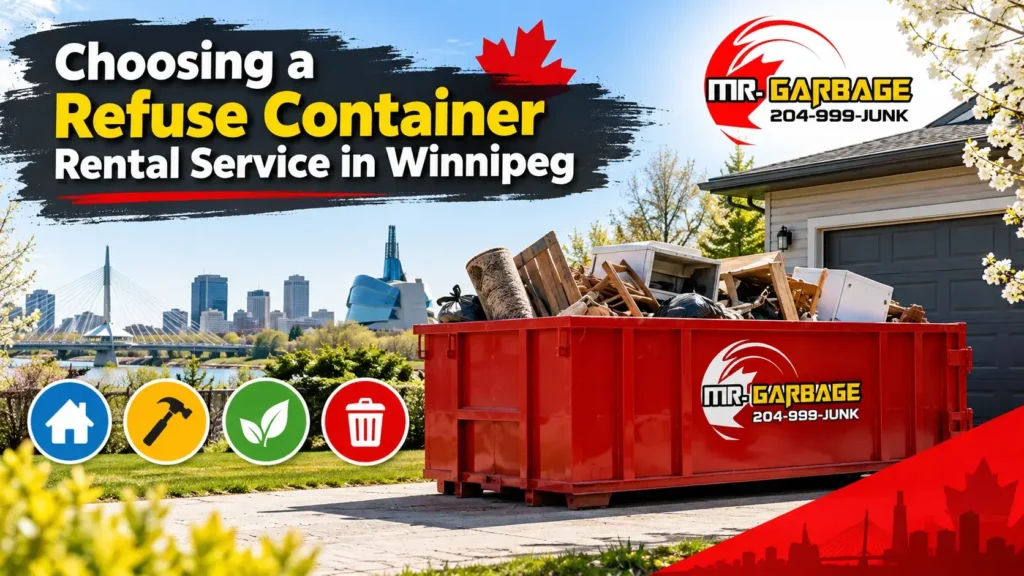
Home cleanouts, renovations, landscaping work, and construction projects can create more waste than a regular household garbage cart can handle.
That is when a temporary refuse container can make the job easier.
Instead of filling your vehicle with debris or making repeated trips to disposal facilities, you can keep the waste in one container until the project is finished. The right container also helps keep your driveway, yard, or work area more organized.
But choosing a container is not only about finding the biggest bin available. You need to think about the type of waste, the amount of material, available space, delivery access, and how different materials should be recycled or disposed of.
This matters across Winnipeg. A basement renovation in River Heights is different from a garage cleanout in St. Vital. A roofing project in Charleswood may create different waste from a landscaping project in North Kildonan.
This guide explains what homeowners should look for when choosing a refuse container rental in Winnipeg and how to avoid common problems.
What Does Refuse Container Mean?
The refuse container meaning is fairly simple. A refuse container is a temporary container used to collect and store unwanted materials or waste before the material is removed for disposal, recycling, or other processing.
You may hear several terms used for the same general type of service:
- Waste container
- Garbage container
- Dumpster
- Roll-off bin
- Debris bin
- Construction waste container
- Refuse container
The exact name can vary between companies and regions.
For homeowners, the important question is not what the container is called. It is whether the container is suitable for the material your project will produce.
A container used for household junk may have different requirements from one used for heavier renovation debris.
When Do Winnipeg Homeowners Need a Refuse Container?
A temporary container can be useful whenever your normal garbage service is not enough for the project.
Home Renovations
Renovations can create a steady stream of waste.
Common materials include:
- Drywall
- Flooring
- Cabinets
- Wood
- Shelving
- Packaging
- Old fixtures
- Non-hazardous demolition debris
This is common during basement renovations in Charleswood, kitchen upgrades in River Heights, or bathroom projects in St. Boniface.
Instead of allowing debris to build up around the property, homeowners can place it directly into a container as the work progresses.
Garage and Basement Cleanouts
Garages and basements often hold years of unwanted items.
You may find:
- Old furniture
- Cardboard boxes
- Broken shelving
- Exercise equipment
- Household clutter
- Old flooring
- Wood scraps
- General junk
A container gives you one place to put these materials while you sort through the property.
This can be useful in neighbourhoods such as Transcona, East Kildonan, Fort Garry, Linden Woods, and Garden City.
Yard and Landscaping Projects
Outdoor projects can also create significant waste.
Depending on the project, you may have branches, old fencing, landscaping materials, patio debris, or other unwanted material.
Homeowners in areas with larger residential lots, such as Charleswood and North Kildonan, may find that ordinary curbside collection does not meet the needs of a major cleanup.
However, yard waste should not automatically be mixed with general garbage. Winnipeg has specific recycling and yard-waste programs, so check how each material should be handled before loading a container.
Understanding Refuse Container Sizes
One of the most important parts of choosing a container is understanding refuse container sizes.
There is no single size that works for every project.
A container that is too small may fill before your work is complete. A container that is larger than necessary may take up more space on your property than you want.
The right choice depends on three basic factors:
- How much material you expect to remove
- What type of material you are disposing of
- Where the container can safely be placed
Mr. Garbage offers several walk-in, easy-load roll-off bin options for residential, commercial, and construction projects. Their available options range from smaller containers for household projects to larger containers for substantial cleanouts and construction debris.
Smaller Home Cleanouts
A smaller container may be appropriate when you are cleaning one garage, clearing a limited amount of household clutter, or completing a smaller project.
Think about the actual volume rather than choosing a container based only on the number of rooms involved.
Basement Renovations
Basement projects can produce a mixture of flooring, drywall, shelving, furniture, and other materials.
The amount can increase quickly once demolition starts.
For that reason, homeowners should discuss the project with the rental provider before selecting a container.
Larger Renovation and Construction Projects
Major renovations, demolition, roofing, and other construction work can generate bulky or heavy debris.
This is where construction refuse containers can be useful.
The container needs to be appropriate for the material being removed. Heavy materials should not simply be loaded without first confirming that they are accepted and suitable for the selected container.
What Are Construction Refuse Containers Used For?
Construction refuse containers are designed for projects that generate construction and renovation debris.
Typical projects include:
- Basement development
- Kitchen renovation
- Bathroom demolition
- Roofing replacement
- Flooring removal
- Deck removal
- Garage demolition
- Home additions
- General construction cleanup
Materials may include lumber, drywall, flooring, cabinets, roofing materials, and other non-hazardous debris.
However, not every construction material belongs in a general waste container.
Asbestos, certain chemicals, hazardous materials, and other restricted items may require separate handling. Always confirm accepted materials before putting them into the container.
For a homeowner, this simple step can prevent a problem later.
How to Choose the Right Refuse Container Rental Service
Choosing the container is only part of the decision. The company providing it matters too.
Here are several things to check before booking.
1. Ask About Available Container Sizes
A good provider should be able to explain the differences between its available containers.
Tell them:
- What project you are completing
- What materials you expect to remove
- Where the container will be placed
- Roughly how much waste you expect
You do not need to guess everything yourself.
A local provider can use the information about your project to help identify a suitable option.
2. Confirm What Materials Are Accepted
Do not assume that everything can go into a general refuse container.
Before delivery, ask about items such as:
- Batteries
- Paint
- Chemicals
- Propane tanks
- Electronics
- Tires
- Appliances
- Yard waste
- Concrete
- Soil
- Treated wood
Winnipeg provides several disposal and recycling options for materials that should not go into ordinary garbage.
The City’s 4R Winnipeg Depots accept many recyclable, reusable, compostable, and special materials. The accepted list includes items such as batteries, electronics, household hazardous waste, appliances, clean lumber, scrap metal, glass, and other materials. The list can change, so residents should check the current requirements before making a trip.
3. Check Delivery Access
Think about where the container will sit before ordering it.
A driveway is often the most convenient location, but the provider needs enough room to safely deliver and pick up the container.
Look for:
- Overhead branches
- Utility lines
- Narrow access points
- Vehicles blocking the area
- Soft ground
- Gates
- Low structures
Older neighbourhoods such as Wolseley, Osborne Village, Crescentwood, and West Broadway can have tighter property layouts than newer developments such as Bridgwater, Prairie Pointe, Sage Creek, and Bonavista.
A local company familiar with Winnipeg properties can help you think through placement.
4. Ask About Street Placement
If you do not have enough private property space, you may consider placing the container somewhere on or near a public right-of-way.
Do not assume that this is automatically allowed.
Ask the rental provider about current permit and placement requirements before delivery.
Mr. Garbage states that its hook-lift trucks can place bins on driveways, parking lots, and tight locations. Its service information also addresses street placement and permits.
5. Look for Local Experience
Local knowledge can be useful in Winnipeg.
Weather, snow, road access, back lanes, property layouts, and seasonal conditions can all affect waste container placement and pickup.
A company serving Winnipeg regularly is more likely to understand the practical issues homeowners face in neighbourhoods such as St. Vital, River Heights, Charleswood, St. James, Fort Garry, Transcona, North Kildonan, East Kildonan, St. Boniface, and Garden City.
Recycling Should Be Part of the Plan
Renting a container does not mean everything should automatically go to landfill.
Some materials may have another disposal or recycling option.
The City of Winnipeg operates 4R Depots where residents can take a wide range of materials for recycling, reuse, composting, and special handling. Community recycling depots have a narrower list and mainly accept materials that are part of the city’s regular recycling program.
For example, Winnipeg’s 4R Depots accept certain appliances, electronics, clean lumber, scrap metal, glass, household hazardous materials, and other materials. Community recycling depots do not accept items such as furniture, appliances, construction materials, household hazardous waste, or garbage.
So, before starting a large cleanup, separate materials where practical.
You may have:
- General non-hazardous waste
- Cardboard
- Metal
- Electronics
- Appliances
- Yard waste
- Reusable household items
- Hazardous or special waste
This makes the disposal process easier and can keep useful materials out of landfill.
Canada continues to deal with a large volume of waste. Statistics Canada reported that 27.5 million tonnes of non-hazardous waste were sent to disposal facilities in Canada in 2024, including 11.1 million tonnes from Canadian households.
The federal government also identifies reuse, repair, recycling, and composting as important ways to divert materials from disposal and keep resources in use longer.
Common Mistakes to Avoid
A few simple mistakes can make a cleanup harder than it needs to be.
Choosing a Container Without Checking the Waste
Do not select a container based only on its size.
The type of debris matters too.
Heavy materials can require different handling from bulky household junk.
Overfilling the Container
Do not pile material above the permitted fill level.
Loose or overloaded material can create transportation and safety problems.
Heavy debris should also be distributed rather than concentrated in one area.
Mixing Restricted Materials With General Waste
Paint, chemicals, batteries, propane tanks, electronics, and other special materials may need separate disposal.
Winnipeg specifically advises residents not to place hazardous items in regular garbage or recycling carts. These materials should be taken to an appropriate 4R Depot when accepted there.
Leaving Booking Until the Last Minute
If your renovation begins on a specific date, plan the container before demolition starts.
This gives you time to:
- Confirm the right size
- Prepare the delivery area
- Ask about accepted materials
- Organize recycling
- Coordinate delivery and pickup
It is much easier to deal with waste when there is already a place for it.
Why Winnipeg Homeowners May Prefer a Local Provider
A local waste company can offer more than a container sitting in your driveway.
The service may include delivery, pickup, guidance about container selection, and waste management support.
Mr. Garbage has served Winnipeg since 2002 and provides residential, commercial, and industrial junk collection, including steel bin rentals. The company also states that it keeps reusable material out of landfills whenever possible.
That experience can be useful for homeowners working on everything from a garage cleanout in Sage Creek to a basement renovation in River Heights.
Mr. Garbage also provides demolition, site cleanup, junk removal, and construction job-site cleanup services. So, if a project becomes larger than expected, homeowners have more than one waste management option to consider.
Is Refuse Container Rental Better Than Multiple Disposal Trips?
It depends on the project.
For a small amount of household waste, regular garbage collection or a trip to an appropriate recycling or disposal location may be enough.
For a larger cleanup, a temporary container can be more practical.
Instead of:
- Loading a vehicle
- Driving to a disposal location
- Unloading
- Returning home
- Repeating the process
You can place suitable waste into one container as the project continues.
That can be especially useful during renovations where debris is produced over several days.
The key is to choose a container that matches the job and follow the provider’s rules for accepted materials.
A Simple Checklist Before Booking
Before choosing a refuse container rental, ask yourself these questions:
- What type of waste will I produce?
- How much material will I remove?
- Do I need a smaller or larger container?
- Are there heavy materials involved?
- Are any items hazardous or restricted?
- Can the container fit safely on my property?
- Will the delivery truck have enough access?
- Do I need to ask about street placement?
- Which materials can be recycled separately?
- When should the container be delivered?
- When will the project be finished?
Having these answers ready makes it easier for the rental company to recommend the right option.
Refuse Container Rental Across Winnipeg
Waste needs can look different from one part of Winnipeg to another.
Homeowners in St. Vital, St. Boniface, River Heights, Charleswood, Fort Garry, Tuxedo, Linden Woods, Whyte Ridge, Fort Richmond, South Pointe, Bridgwater, Sage Creek, Royalwood, Transcona, East Kildonan, North Kildonan, Garden City, St. James, Westwood, Silver Heights, Wolseley, Crescentwood, Osborne Village, and Elmwood may all use temporary containers for different reasons.
The same applies to nearby communities such as Headingley, Oak Bluff, East St. Paul, and West St. Paul, depending on the provider’s service area.
A local company can help account for the practical details of your property and project rather than treating every job the same.
Conclusion
Choosing the right container starts with understanding your project.
Think about the type of waste, the amount of debris, available space, delivery access, recycling options, and any materials that require special handling.
Understanding the refuse container meaning also helps. It is simply a temporary way to collect suitable waste before it is removed for disposal, recycling, or other processing.
For smaller cleanouts, you may need only a modest container. Larger renovations, demolition projects, and construction work may require larger options or construction refuse containers designed for the type of debris being generated.
If you are planning a home renovation, garage cleanout, basement cleanup, landscaping project, or construction job in Winnipeg, Mr. Garbage provides residential and construction bin rental services along with junk removal and site cleanup options.
Contact Mr. Garbage to discuss your project and choose a container that fits your waste and property needs.
Frequently Asked Questions (FAQs)
1. What does refuse container mean?
A refuse container is a temporary container used to collect suitable waste, debris, or unwanted materials before they are removed for disposal, recycling, or other processing. The term can refer to containers commonly called dumpsters, roll-off bins, garbage bins, or waste containers.
2. How do I choose the right refuse container size?
Consider the amount and type of material your project will create. A garage cleanout may need a different container from a basement renovation or construction project. Tell the rental provider what you are removing and where the container will be placed so they can help you select an appropriate size.
3. What are construction refuse containers used for?
Construction refuse containers are commonly used for non-hazardous renovation and construction debris such as drywall, lumber, flooring, cabinets, roofing materials, and other project waste. Always confirm accepted materials before loading the container.
4. Can I put recyclable materials in a refuse container?
Some recyclable materials may be suitable for a waste container, but separating recyclable items can be a better option. Winnipeg’s 4R Depots accept a broad range of recyclable, reusable, compostable, and special materials. Check the current City requirements before disposing of an item.
5. Does Mr. Garbage provide refuse containers in Winnipeg?
Mr. Garbage provides residential, commercial, and industrial bin rental services in Winnipeg and the surrounding area. Its available containers include several walk-in, easy-load options for different project types, including household cleanouts and construction debris.
Sources
- City of Winnipeg – 4R Winnipeg Depots
- City of Winnipeg – How Recycling Works in Winnipeg
- Statistics Canada – Waste Management Survey: Waste Disposal, 2024
- Government of Canada – Solid Waste Diversion and Disposal