
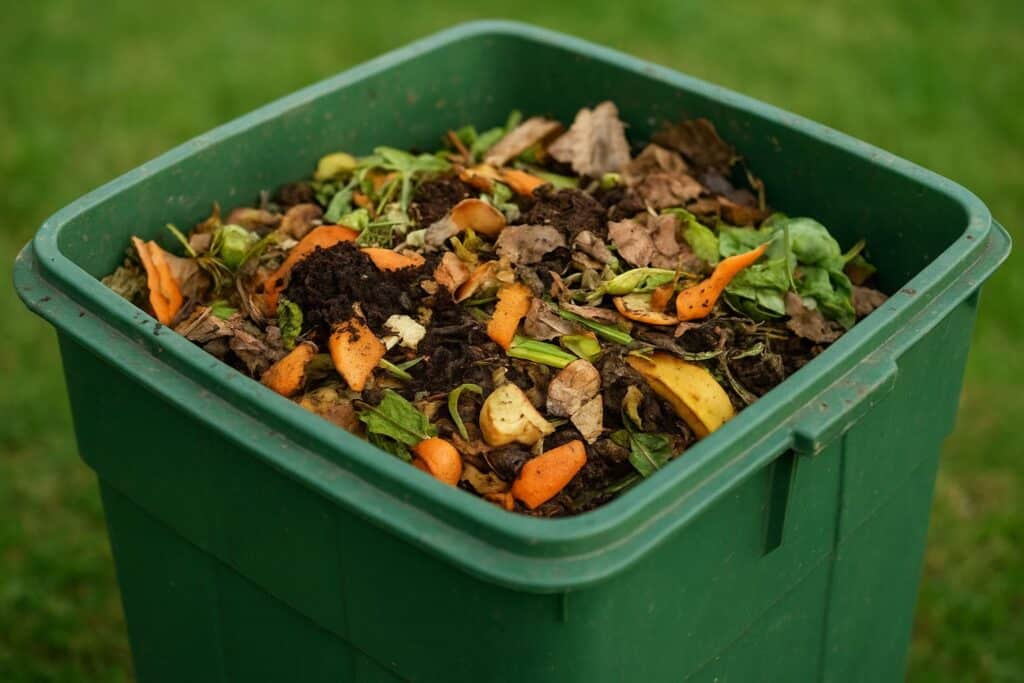
If you live in Winnipeg and want to reduce waste and help the environment, a compost bin is a smart choice. A compost bin turns kitchen scraps, yard waste, and organic matter into useful compost. That compost can improve soil, support gardens, and cut the amount of trash you send to the landfill.
This post explains the many benefits of a compost bin. It shows how composting helps your home, community, and environment. We also cover how a service like Mr. Garbage can support composting, whether you want support with bin supply, pickup, or proper disposal.
What Is Composting and Why It Matters
Composting is a natural process. Microorganisms break down food scraps, yard waste, and other organic materials. The result is compost: a nutrient-rich, soil-like material.
When organic waste goes to a landfill, it decomposes without enough oxygen. That produces methane, a strong greenhouse gas. By composting instead, we avoid methane release and reduce environmental harm.
Also, composting recycles nutrients and returns them to the soil. That supports plant growth and reduces the need for chemical fertilizers.
In Winnipeg, where many households deal with food scraps, yard waste, and seasonal lawn/leaf debris, composting offers a practical, local solution to manage organics.
Key Benefits of a Compost Bin
Here are the main benefits of using a compost bin in Winnipeg (or any similar city).
Environmental Benefits
Reduces Greenhouse Gas Emissions
When organic waste sits in a landfill, it decomposes anaerobically and produces methane. Methane is far more potent than carbon dioxide in contributing to climate change.
Composting avoids that. Organic matter decomposes aerobically (with oxygen), producing compost, not methane. Environmental Protection Agency
By diverting organic waste from landfills, composting helps lower your home’s or community’s carbon footprint.
Diverts Waste from Landfill and Extends Landfill Life
Organic materials (food scraps, yard waste) make up a large portion of household waste. Canada
Using a compost bin reduces the volume of trash you send out. That lightens the demand on landfills and reduces the waste-transport burden on the city or waste services.
Builds Healthy Soil & Supports Local Green Spaces
Compost enriches soil with nutrients, improves soil structure, and boosts water retention. compostingcouncil.org
Adding compost to gardens, lawns, flower beds, or even potted plants helps plants grow better, stay healthy, and resist drought. It also supports local biodiversity by maintaining healthy soil ecosystems. addisoncountyrecycles.org
Compost can even reduce reliance on chemical fertilizers. That matters because synthetic fertilizers can harm soil and the environment over time. evanesce.com
Household & Community Benefits
Less Garbage, Less Mess
With a compost bin, your kitchen and yard waste has a place. Scraps, peelings, leaves, and grass clippings go into compost instead of trash. Over time, that reduces the number of garbage bags, bins, or pickups you need.
Fewer mixed-trash pickups means less hauling, less mess, and often fewer issues with odors or pests.
Support Local Waste-Smart Services
If you don’t want to handle composting yourself, a waste-management company like Mr. Garbage can help. They may offer bin delivery, pick-up, and disposal services. That makes composting easier for homeowners who want convenience.
Using a local service ensures composting follows local and provincial waste guidelines and waste gets sent to proper processing or composting facilities.
Boosts Local Gardens, Landscaping, and Community Green Areas
Compost supports gardens and lawns. Over time, widespread composting helps make neighbourhoods greener better soil, thriving plants, and healthier urban ecosystems.
For people growing vegetables, flowers, or trees, compost from a bin can be a free or low-cost soil amendment. It supports community gardens, home landscaping, and tree health.
Long-Term Benefits & Sustainability
Nutrient Cycling and Reduced Dependence on Chemical Fertilizers
Every meal produces organic waste. Over time, composting returns nutrients from scraps back to the soil. That helps complete a cycle — from food to soil to food, with less waste.
Using compost reduces the need for synthetic fertilizers. That saves on fertilizer costs (or reduces chemical impact), and supports sustainable gardening or lawn care.
Resilience for Winnipeg’s Soils and Climate Variability
Winnipeg faces seasonal changes like hot summers, cold winters, heavy snow, rain, and freeze-thaw cycles. Compost helps soil retain moisture in dry times, and improves drainage and resilience during wetter spells.
Compost enhances soil structure, helping lawns and gardens better withstand weather swings. That’s a long-term benefit for homeowners who want healthy yards year-round.
Support for a Circular, Local Waste System
By composting organic waste locally rather than sending it far away, we build a circular waste system. Waste becomes a resource. Soil gets renewed. Community green spaces benefit.
Local composting reduces pressure on landfills and aligns with sustainable waste-management goals at municipal and provincial levels.
Real-World Example: Winnipeg Home Composting in Action
Imagine a family in a Winnipeg suburb. They cook most meals at home. Over time, they collect kitchen scraps such as vegetable peelings, coffee grounds, eggshells, and leftover fruit in a small compost bin.
In their backyard, they store a covered compost bin. Every few weeks (or as per the service plan), the bin gets picked up by a waste-management provider.
After a few months, they apply the compost to their garden soil. Their plants grow stronger, soil retains moisture better, and their lawn looks greener.
Meanwhile, less garbage goes out. The regular trash bin gets lighter. The family feels good knowing scraps aren’t ending up in the landfill and contributing to methane emissions.
That’s a simple example, but it shows how a compost bin benefits a typical Winnipeg household.
Why a Service Like Mr. Garbage Matters for Compost Bin Use
For many people, composting isn’t just tossing scraps into a bin; it involves logistics. That’s where Mr. Garbage can help.
- They know local waste and compost regulations in Winnipeg and Manitoba.
- They can supply compost bins or containers suited for homes.
- They can manage waste pickup and transport to proper compost facilities.
- They help ensure composting meets environmental standards and avoids contamination or improper disposal.
By using a trusted local provider, composting becomes easier, not a chore.
Addressing Common Concerns & Challenges
You might wonder: “Will compost smell?” or “Is it too much work for a small house?”
Here are common concerns and how to handle them:
- Odour & pests: A covered bin and regular waste pickup (or occasional turning) keep odour down and avoid pests.
- Space or weather constraints: Use a manageable-size bin. In Winnipeg’s climate, indoor kitchen bins or compact outdoor compost bins can work.
- Sorting mistakes: Label bins clearly. Only add compostable items, food scraps, yard waste, and paper. Avoid plastics, chemicals, or non-organic items.
- Regulations or disposal rules: Work with a licensed service like Mr. Garbage. They know what’s allowed and where composting facilities are.
With simple practices, composting stays low-maintenance and effective.
Conclusion
Using a compost bin in Winnipeg delivers many benefits:
- Reduces greenhouse gas emissions and landfill waste.
- Creates rich compost that supports gardens, lawns, and soil health.
- Cuts garbage volume, mess, and waste-transport burden.
- Supports local green spaces, gardens, and sustainable waste systems.
- Offers a sustainable and long-term waste solution for homeowners.
If you want to get started but don’t want to manage composting logistics, Mr. Garbage can help. They supply bins, handle pickup, and ensure waste is processed properly.
Contact Mr. Garbage today to arrange a compost bin and start reaping the real benefits of composting in Winnipeg.
Frequently Asked Questions (FAQs)
Q1: What waste can I put into a compost bin at home?
A: Food scraps (vegetable/fruit peels, coffee grounds, eggshells), yard waste, leaves, grass clippings, non-glossy paper or cardboard, tea bags, and compostable kitchen waste. Avoid plastics, chemicals, meat, dairy, oils, or non-organic materials.
Q2: Does composting help reduce greenhouse gas emissions?
A: Yes. Composting prevents organic waste from entering landfills, where it decomposes and produces methane. Composting provides conditions for aerobic decomposition, preventing methane release.
Q3: Will compost from a home bin actually improve soil in Winnipeg yards?
A: Yes. Compost adds nutrients, improves soil structure, increases water retention, and boosts soil health. That helps lawns, gardens, and plants grow stronger.
Q4: What if I don’t have backyard space or time to compost regularly?
A: You can use a compact indoor kitchen bin or sign up with a compost-service provider (like Mr. Garbage) that offers bin pickup and transport to composting facilities. That makes composting easy, even without a yard.
Q5: Does composting really help with long-term environmental issues?
A: Yes. Composting reduces landfill burden, lowers methane emissions, returns nutrients to soil, and supports a circular waste system. That contributes to climate, soil, and community health over time.