
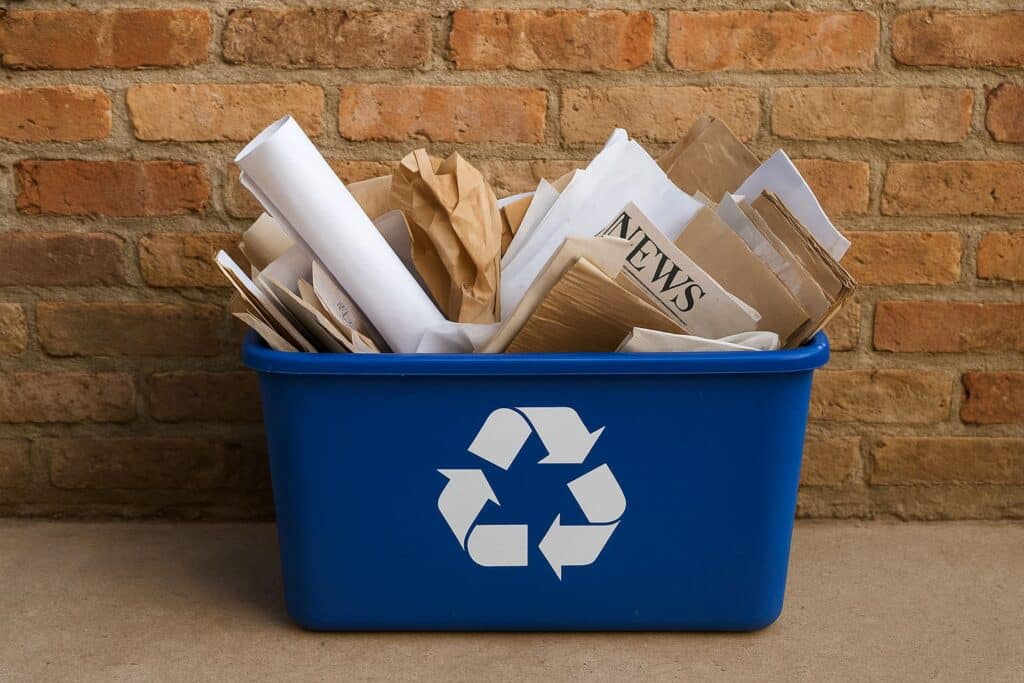
If you’re a homeowner in Winnipeg, Manitoba, wondering what items can be recycled in your neighbourhood, this guide is for you. We’ll walk through what items can be put in the blue recycle bin, clarify what non-recyclable items are, explore what can you make out of recycled items, and explain what happens to the recycled items in the recycling bins. And yes, we’ll also show how your local service provider, Mr. Garbage, can make this simpler for you.
Let’s dive in, step-by-step.
Understanding What Items Can Be Recycled in Winnipeg
The Basics of Your Blue Recycle Bin
In Winnipeg, the city’s curbside recycling program accepts a broad range of materials through your blue bin or cart. According to the municipal website:
- After collection, items go to a Material Recovery Facility (MRF) where machines and staff sort the materials.
- It’s important to know what items can be recycled and equally important to know what can’t, because misplaced items can cause damage, contamination, and additional cost.
So, when you ask “what items can be recycled?”, we’ll break it into material groups.
Paper and Cardboard
Here are examples of what are recyclable items in the paper/cardboard category:
- Newspapers, flyers, magazines, and mail. Winnipeg Free Press
- Cardboard boxes, boxboard packaging, flattened to save space. Multi-Material Stewardship Manitoba
- Paper tubes (from toilet roll), empty cereal boxes (if free from heavy grease).
- According to the local guide from the city, “Paper and cardboard products are recycled into … newspaper, household paper, cardboard, egg cartons.” City of Winnipeg
Glass, Plastics, Metal & Cartons
Next up: the mixed containers. These are also part of what items can be recycled if done correctly.
Glass bottles and jars: Clear and coloured food or beverage containers are accepted.
Metals: Aluminium and steel food and drink cans. The city site notes “aluminum and steel cans are recycled into auto parts … steel building products”.
Plastics: Most rigid plastic containers (bottles, jugs, tubs) are accepted. For example, rigid plastic water bottles, shampoo bottles, and detergent jugs.
Cartons: Milk and juice cartons or aseptic cartons are accepted as per provincial guidance.
Local Example & Real-World Insight
In Winnipeg, a report showed the sorting facility uses laser beams, air jets, magnets, and a mix of human labour to separate the materials from your blue bin.
One staff member noted that “about 17 per cent of Winnipeg’s blue-bin items end up sorted to the landfill,” showing the importance of reducing contamination and putting only the right items in.
What Are Non-Recyclable Items in Winnipeg?
Even though many items are accepted, some items are not accepted, and knowing what non-recyclable items are can prevent mistakes.
Common Non-Recyclables
Examples you should keep out of your blue bin:
- Plastic bags, soft plastics, cellophane, and Styrofoam. These are commonly rejected because they jam machines. Multi-Material Stewardship Manitoba
- Black plastics, plastics without a recycling code, or code 6 in some cases (depending on material). University of Winnipeg
- Ceramics, broken glass, mirrors, light bulbs, and glass items that are not food/beverage containers are not accepted. Simply Recycle
- Items heavily contaminated with food waste, liquids, or nested inside other containers. The city guide emphasizes you must empty containers, remove inserts, or bags. MyUtility
Why It Matters: Contamination & Wish-cycling
Placing non-recyclables into the blue bin causes “wish-cycling” — hoping an item can be recycled even though it cannot. That practice can:
- Damage sorting machines
- Increase rejection/landfill rate.
- Reduce overall recycling efficiency, Wikipedia.
For example, in Winnipeg, 17 % of materials end up being sent to landfill because they were unaccepted items, contaminated, or incorrectly sorted. The Narwhal
Quick Reference Table
| Material Group | Common Acceptable Items | Common Non-Recyclable Items |
|---|---|---|
| Paper & Cardboard | Newspapers, magazines, flattened boxes | Greasy pizza boxes, wet cardboard, foil-lined boxes |
| Glass | Food/beverage bottles & jars | Broken glass, ceramics, mirrors, and light bulbs |
| Plastics | Rigid bottles, jugs, tubs (with codes) | Soft plastics, black plastics, plastic bags |
| Metals | Aluminum/steel food & drink cans | Pots/pans, scrap metal, aerosol cans |
What Can You Make Out of Recycled Items?
So you now know what items can be recycled and what are non-recyclable items. But you may wonder: what can you make out of recycled items? — meaning, what happens to those materials after collection.
From Bin to New Product
According to the city’s “How recycling works in Winnipeg” page:
- Glass is recycled and turned into road base.
- Plastic products are recycled into items like plastic bottles, plastic trays, carpet fibre, sewage pipes, and plastic lumber.
- Aluminum and steel cans get recycled into auto parts, more cans, and steel building products.
- Paper and cardboard products get recycled into newspaper, household paper, and egg cartons.
Local Application & Impact
For Winnipeg homeowners, that means the empty glass jar you drop off might eventually become part of a road-base mix, helping local infrastructure. Or the plastic detergent jug you recycled may get turned into plastic lumber for decking or outdoor furniture. This shows your actions at home connect to broader environmental outcomes and support municipal waste-diversion targets.
What Happens to the Recycled Items in the Recycling Bins?
Understanding the flow helps reinforce good habits, and it answers another key question: what happens to the recycled items in the recycling bins?
Collection, Sorting, Processing
Here’s the process in Winnipeg:
- Curbside or drop-off collection of your blue bin recyclables.
- Materials are delivered to a Materials Recovery Facility (MRF). At this facility, machines and staff separate the stream into categories: paper, plastics, metals, and glass. For example, Winnipeg uses infrared beams, air jets, magnets, and robotic arms.
- Once sorted, materials are baled (compressed) and sold to brokers or processing companies. Some stay locally, some are shipped out of province or internationally.
- Finally, these materials are turned into new products, as we saw above (plastic lumber, road base, etc).
Why It’s Important to Recycle Right
Because the process is fairly complex, putting the wrong items in your bin can cause trouble:
- Contaminated batches may be rejected and end up in a landfill instead of being recycled.
- Machines can be damaged by non-approved items, which means higher cost and slower processing times.
Homeowner Actions That Help
Since you’re a homeowner in Winnipeg, here are immediate actions you can take:
- Ensure containers are empty of food or liquid before placing them in your blue bin. MyUtility
- Remove liners, bags, inserts, and don’t nest containers together (which can trap food/leak). The Narwhal
- Place items loosely into the bin/cart; don’t stuff or pack them tightly, which could hamper sorting. MyUtility
How Mr. Garbage Supports Recycling in Winnipeg
As a homeowner exploring waste-management solutions, knowing what items you can put in the blue recycle bin and what are non-recyclable items matters a lot. That’s where Mr. Garbage comes in, offering tailored pickup and sorting services around Winnipeg, Manitoba, to help streamline your waste and recycling process.
When you partner with Mr. Garbage:
- You get guidance on accepted materials and how to prepare recyclables properly (so fewer items end up rejected).
- Their service can handle overflow or large-item recycling tasks, ensuring items go to the right drop-off or depot when your curbside bin isn’t sufficient.
- You’ll get peace of mind that your recycling practices align with the city’s program and the broader goal of diverting waste from landfills.
If you’re ready to ensure your household recycling is maximised, compliant, and efficient, reach out to Mr. Garbage and let their team help you take the next step.
Tips for Winnipeg Homeowners to Recycle Smarter
- Check your local bin schedule and abide by it. Oversized bins or missed pickup can lead to mess and confusion.
- Keep a small ‘acceptable items’ list in your home so everyone knows what items can be recycled.
- Use the city’s Recyclepedia tool (via the city website) to quickly check uncertain items.
- Flatten cardboard boxes to save space. If you have extra recyclables, use the community recycling depots or the 4R Winnipeg Depot.
- Avoid placing items like plastic bags or soft plastics in your cart — take them to retail drop-off locations if available.
- Consider Mr. Garbage’s service if you have bulky recyclables, frequent overflow, or need a more customised recycling plan for your household.
Conclusion
To wrap up: if you’ve been wondering what items can be recycled in Winnipeg, you now have a clear roadmap. You know the difference between what items can be put in the blue recycle bin, and what are non-recyclable items. You’ve seen what can you make out of recycled items, and what happens to the recycled items in the recycling bins.
As a homeowner in Winnipeg, your efforts truly matter: each correctly recycled bottle, carton, or box contributes to the city’s waste diversion efforts and helps transform materials into new products like plastic lumber, road base, or auto parts.
And for those times when recycling gets tricky, overflow, large items, or simply seeking expert support, Mr. Garbage is ready to help. Reach out to them for a smooth, efficient waste-management plan tailored for Winnipeg homes.
Let’s all be better recyclers together, your bin, your city, your future.
Ready to streamline your recycling and waste plan? Contact Mr. Garbage today to find out how their services in Winnipeg can make a real difference for your household.
Frequently Asked Questions (FAQs)
Q1. What items can be recycled in Winnipeg’s blue bin?
A1. In Winnipeg, you can recycle empty paper and cardboard (newspapers, flattened boxes), glass food/beverage jars and bottles, rigid plastic containers (bottles, jugs, tubs), aluminum and steel food or drink cans, and cartons like milk or juice containers. Always ensure the items are empty and free of food residue.
Q2. What are non-recyclable items in Winnipeg’s curbside program?
A2. Items not accepted include plastic bags and soft plastics, black plastics without a recycling code, broken glass or ceramics, foam packaging (like Styrofoam), food-contaminated containers, mirrors, light bulbs, and other specialty glass.
Q3. What can you make out of recycled items collected in Winnipeg?
A3. After collection in Winnipeg, items are sorted and processed: glass may be turned into road base; plastic containers might become plastic lumber, trays, or sewage pipes; aluminum and steel cans may be transformed into auto parts or building materials; paper and cardboard may be made into new household paper or boxes.
Q4. What happens to the recycled items in the recycling bins in Winnipeg?
A4. Once collected, materials go to a Material Recovery Facility (MRF) where machines and staff sort them. The sorted materials are baled and sent to processing facilities or brokers. From there, they are made into new products as described above. It’s key to recycle properly so items don’t end up in the landfill due to contamination.
Q5. How can a service like Mr. Garbage help Winnipeg homeowners with recycling?
A5. Mr. Garbage offers tailored waste-management and recycling support in Winnipeg. They help homeowners ensure their recyclables meet city requirements, manage overflow or large recyclables, and provide guidance on acceptable items. Using their service can simplify your recycling routine and improve recycling outcomes.