
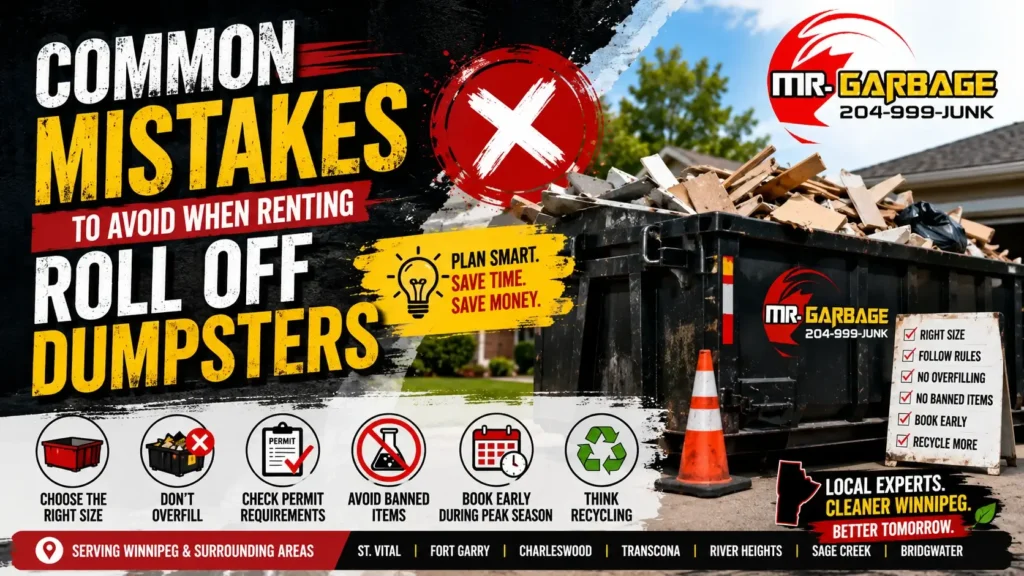
Renting a dumpster sounds simple. You book a container, load the debris, and schedule pickup.
But many homeowners in Winnipeg run into problems because they overlook important details before renting roll off dumpsters.
Some choose the wrong container size. Others overload the bin or place prohibited materials inside. And many people wait too long to book during busy renovation seasons.
These mistakes can create delays, safety issues, and unnecessary stress during cleanup projects.
That’s why proper planning matters.
Whether you are handling a basement renovation in Fort Garry, replacing a roof in St. Vital, or cleaning out a garage in Charleswood, understanding how roll off dumpsters work helps the project run more smoothly.
This guide explains the most common mistakes homeowners make when renting roll-off dumpsters in Winnipeg, Manitoba. It also covers dumpster placement, recycling practices, permit requirements, construction cleanup, and how local waste management companies help homeowners avoid common problems.
Why Roll Off Dumpsters Are Popular in Winnipeg
Large cleanup projects create more waste than most homeowners expect.
Regular curbside garbage collection usually cannot handle:
- Renovation debris
- Roofing shingles
- Drywall
- Lumber
- Landscaping waste
- Furniture removal
- Construction materials
That’s why many homeowners search for:
- roll off dumpsters near me
- construction roll off dumpsters
- roll off trash dumpsters
Roll off dumpsters are designed for large cleanup projects because they can safely handle bulky and heavy debris.
And in Winnipeg, they are commonly used during:
- Basement renovations
- Roofing projects
- Garage cleanouts
- Landscaping work
- Estate cleanups
- Construction projects
Mistake #1: Choosing the Wrong Dumpster Size
One of the most common mistakes is choosing the wrong container size.
Some homeowners rent bins that are too small.
Others choose oversized containers that take up unnecessary driveway space.
Different size roll off dumpsters exist for a reason.
The right size depends on:
- Type of debris
- Weight of materials
- Length of project
- Available space
- Volume of waste
For example:
- Roofing projects create heavy debris
- Landscaping cleanup creates bulky outdoor waste
- Basement renovations create mixed materials over several weeks
Companies that rent roll-off dumpsters usually help homeowners choose the correct size based on the project type.
Waste Management Winnipeg notes that temporary roll off dumpsters are commonly available in several sizes for construction and renovation projects.
Mistake #2: Overfilling the Dumpster
Many homeowners try to fit too much debris into the container.
This creates safety problems.
Roll off dumpsters should never be filled above the top edge.
Overloaded containers become dangerous during transportation because debris can fall onto roads or sidewalks.
Heavy materials should also be spread evenly throughout the bin.
This matters even more during Winnipeg winters when frozen debris shifts during transport.
Most companies refuse pickup if containers are overloaded.
Heartland Recycling Services, Winnipeg, specifically warns homeowners not to fill bins above the top because dumpsters must be tarped safely during transportation.
Mistake #3: Ignoring Permit Rules
Many homeowners assume dumpsters can be placed anywhere.
That’s not always true.
Private Driveways Usually Do Not Need Permits
If the container stays fully on private property, permits are usually not required.
This is the most common setup for residential projects in Winnipeg.
Still, homeowners should check for:
- Tree branches
- Overhead power lines
- Tight driveway access
- Soft ground conditions
Street Placement Often Requires Approval
If the dumpster sits on:
- Streets
- Sidewalks
- Boulevards
- Public lanes
City approval may be required.
The City of Winnipeg issues street-use and right-of-way permits for the temporary placement of materials and waste containers on public property.
This becomes especially important in areas like:
- Osborne Village
- Exchange District
- Downtown Winnipeg
- West Broadway
Older neighborhoods often have limited driveway space.
Mistake #4: Throwing Away Prohibited Materials
Not everything can go into roll off trash dumpsters.
Certain materials require special disposal because they can harm the environment or create safety risks.
Restricted materials often include:
- Paint
- Batteries
- Chemicals
- Tires
- Propane tanks
- Fuel containers
- Hazardous waste
- Asbestos materials
Manitoba continues to regulate hazardous waste disposal and waste diversion programs across the province.
If homeowners are unsure about an item, they should always ask before loading the container.
Mistake #5: Waiting Too Long to Book
Spring and summer are extremely busy cleanup seasons in Winnipeg.
Roofing projects, landscaping work, and home renovations increase demand for roll off dumpsters across areas like:
- Sage Creek
- Bridgwater
- River Heights
- North Kildonan
- St. Vital
Many homeowners wait until the last minute to schedule delivery.
That can create delays during peak renovation months.
Booking early helps homeowners secure the right dumpster size and preferred delivery dates.
Mistake #6: Not Thinking About Recycling
Many homeowners assume all dumpster waste goes directly to the landfill.
That’s not always true.
Recycling and waste diversion are becoming more important across Manitoba.
The Manitoba government reports that waste diversion programs continue expanding to reduce landfill pressure and support recycling initiatives.
Many construction materials can often be recycled, including:
- Metal
- Cardboard
- Clean wood
- Concrete
- Yard waste
Mr. Garbage also highlights construction material recycling and waste diversion practices for Winnipeg renovation projects.
Proper sorting helps reduce landfill waste and supports cleaner disposal practices.
Mistake #7: Placing the Dumpster in the Wrong Spot
Dumpster placement matters more than many homeowners realize.
A poorly placed container can:
- Block driveways
- Damage landscaping
- Interfere with snow clearing
- Block back lanes
- Create safety hazards
This is especially important during Winnipeg winters.
Snow-clearing routes and icy conditions can affect dumpster access quickly.
Local companies familiar with Winnipeg neighborhoods understand these placement challenges better than out-of-area providers.
Mistake #8: Ignoring Weight Limits
Different materials create different weight loads.
For example:
- Concrete
- Dirt
- Roofing shingles
- Bricks
- Soil
They are much heavier than household junk or yard waste.
Heavy debris may require smaller containers even if the project creates less visible volume.
Concrete and heavy debris bins are often handled differently because of transportation safety limits.
That’s why homeowners should explain the project clearly before booking a dumpster.
Mistake #9: Assuming All Dumpster Companies Are the Same
Many homeowners only search for:
- Roll off dumpsters near me
- Companies that rent roll-off dumpsters
Then they book the first result they find.
But local experience matters.
A Winnipeg-based company understands:
- Winter weather conditions
- Back lane access
- Local permit rules
- Recycling systems
- Snow-clearing routes
- Neighborhood layouts
This matters in older areas like:
- Wolseley
- St. Boniface
- River Heights
- West Broadway
where access can become challenging during certain seasons.
Mistake #10: Not Protecting the Driveway
Roll off dumpsters are heavy.
Some homeowners forget to protect driveway surfaces before delivery.
Most professional drivers place containers carefully. Still, homeowners sometimes use wood boards underneath containers for extra protection.
Heartland Recycling Services Winnipeg also notes that homeowners can place boards under bins if they want additional driveway protection.
This becomes especially important for:
- New concrete driveways
- Decorative surfaces
- Soft asphalt during summer heat
Mistake #11: Mixing Yard Waste With Construction Debris
Some projects create multiple waste streams.
Mixing recyclable yard waste with construction debris can reduce recycling opportunities.
For example:
- Clean wood
- Branches
- Soil
- Concrete
- Metal
may require separate handling depending on local disposal systems.
The City of Winnipeg continues to encourage waste diversion and recycling through local waste management strategies.
Proper sorting helps reduce landfill pressure and improve recycling efficiency.
Mistake #12: Trying to Handle Everything Alone
Many homeowners underestimate how exhausting cleanup projects become.
Repeated landfill trips take time.
Loading debris manually becomes physically difficult.
And disposal rules can become confusing.
Roll off dumpsters help simplify cleanup because waste stays contained in one location throughout the project.
This becomes especially helpful during:
- Basement renovations
- Roofing projects
- Estate cleanouts
- Large landscaping jobs
Why Construction Roll Off Dumpsters Matter for Winnipeg Renovations
Construction waste continues to become a larger environmental issue across Canada.
Manitoba has launched initiatives focused on improving construction material diversion and recycling systems.
That’s why organized construction cleanup matters.
Construction roll off dumpsters help contain:
- Drywall
- Concrete
- Lumber
- Roofing materials
- Packaging waste
- Flooring debris
Without organized disposal systems, debris spreads quickly across properties and job sites.
How Mr. Garbage Helps Winnipeg Homeowners Avoid Dumpster Problems
Most homeowners want cleanup projects to feel organized and simple.
They want:
- Reliable delivery
- Proper dumpster sizing
- Safe placement
- Recycling support
- Flexible scheduling
- Local expertise
Mr. Garbage helps homeowners across Winnipeg with:
- Roll off dumpsters
- Construction waste removal
- Roofing debris cleanup
- Renovation waste handling
- Junk removal
- Waste management support
The company also helps homeowners understand local permit requirements and recycling practices for residential cleanup projects.
Why Proper Waste Planning Matters
Cleanup projects create more waste than most homeowners expect.
And without proper planning, small mistakes can quickly create larger problems.
Proper waste planning helps:
- Improve safety
- Reduce clutter
- Support recycling
- Prevent delays
- Simplify cleanup
- Protect driveways and property
It also helps homeowners avoid unnecessary stress during already busy renovation projects.
Final Thoughts
Roll-off dumpsters make cleanup projects much easier.
But homeowners still need to plan carefully before booking a container.
The most common mistakes usually involve:
- Wrong dumpster sizing
- Overfilling
- Ignoring permit rules
- Poor placement
- Improper waste sorting
- Waiting too long to schedule delivery
And because Winnipeg has unique weather conditions, neighborhood layouts, and waste management regulations, local experience matters.
Whether you are handling a roofing project in St. Vital, renovating a basement in Fort Garry, or cleaning out a garage in Charleswood, proper dumpster planning helps the project run more smoothly from start to finish.
To learn more about roll-off dumpsters, waste management services, and recycling support in Winnipeg, visit Mr. Garbage.
Frequently Asked Questions (FAQs)
What are roll-off dumpsters used for?
Roll-off dumpsters are commonly used for renovations, roofing projects, garage cleanouts, landscaping debris, construction waste, and large residential cleanup projects.
Do I need a permit for roll-off dumpsters in Winnipeg?
You usually do not need a permit if the dumpster stays fully on private property, like a driveway. Public street placement often requires city approval.
What items cannot go into roll-off dumpsters?
Restricted materials often include paint, chemicals, batteries, tires, propane tanks, fuel containers, and hazardous waste materials.
Why should I avoid overfilling roll-off dumpsters?
Overfilled dumpsters create transportation safety risks and may delay pickup because debris cannot safely be tarped during transport.
How do I choose the right size roll-off dumpster?
The right dumpster size depends on the type of debris, project length, available property space, and weight of materials involved in the cleanup project.