
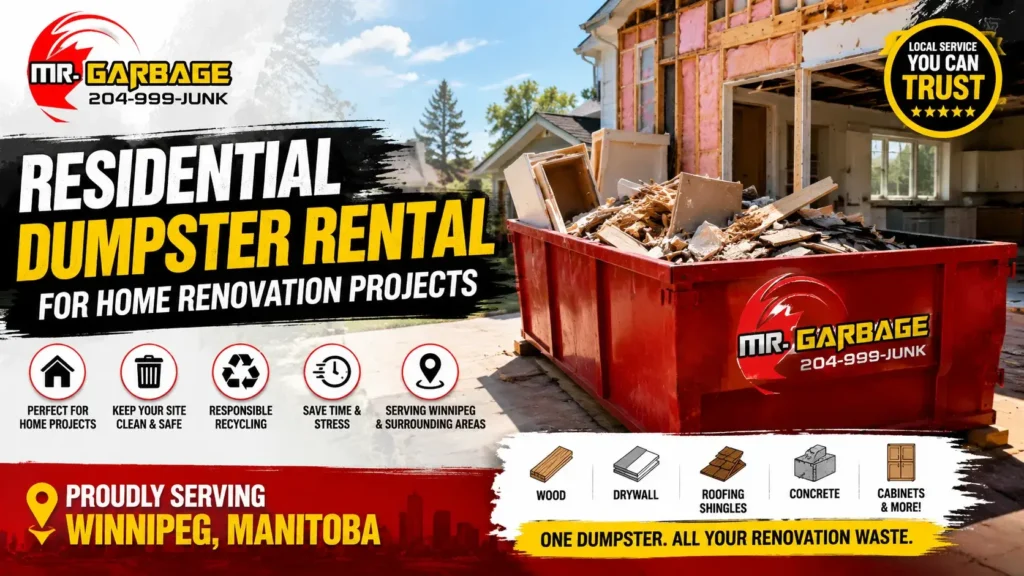
Home renovation projects create more waste than most homeowners expect.
Old drywall, flooring, wood, cabinets, shingles, concrete, and broken furniture pile up fast. And regular curbside garbage pickup usually cannot handle that amount of debris.
That’s why many homeowners in Winnipeg use residential dumpster rental services during renovation projects.
A dumpster keeps waste in one place. It helps keep the property cleaner and safer. And it saves time because you do not need multiple trips to disposal facilities.
But before booking a bin, homeowners should understand a few important things:
- What size dumpster makes sense?
- Do you need a permit?
- What materials can go into the bin?
- How does recycling work?
- Where should the dumpster be placed?
This guide explains how residential dumpster rental works for home renovation projects in Winnipeg, Manitoba. It also covers local rules, recycling practices, and common mistakes homeowners should avoid in areas like St. Vital, River Heights, Transcona, Fort Garry, Charleswood, Sage Creek, North Kildonan, Bridgwater, and St. Boniface.
Why Residential Dumpster Rental Makes Renovation Projects Easier
Renovations create constant waste.
Even smaller projects can fill garages, driveways, and yards with debris.
That’s why many Winnipeg homeowners book a residential dumpster before demolition work begins.
A residential dumpster helps with:
- Kitchen renovations
- Basement remodeling
- Bathroom upgrades
- Roofing replacement
- Flooring removal
- Deck demolition
- Garage cleanouts
- Landscaping cleanup
- Estate cleanups
Instead of stacking debris around the property, everything goes directly into one container.
And that matters during Manitoba’s weather conditions. Rain, snow, and wind can quickly spread loose materials across a yard or driveway.
Local providers like Mr. Garbage work with homeowners across Winnipeg to manage renovation waste safely and efficiently.
Common Renovation Projects That Need Residential Dumpster Rental
Kitchen Renovation Waste Adds Up Fast
Kitchen renovations create heavy mixed debris.
That usually includes:
- Cabinets
- Countertops
- Tiles
- Drywall
- Wood
- Plumbing materials
- Packaging waste
Many homeowners in neighborhoods like Linden Woods and River Heights underestimate how quickly debris builds up during kitchen demolition.
A residential dumpster rental service helps keep the project organized from the beginning.
Basement Renovation Projects Create Large Volumes of Debris
Basement renovations are common across Winnipeg, especially in areas like Fort Richmond and North Kildonan.
These projects often involve:
- Framing lumber
- Insulation
- Old carpet
- Concrete debris
- Ceiling materials
- Drywall
And because basement projects usually last several days or weeks, having onsite waste removal becomes important.
Without a dumpster, renovation waste can block access areas and create safety issues.
Roofing Projects Need Safe Waste Disposal
Roofing debris becomes messy very quickly.
Old shingles, nails, wood, and underlayment materials should not sit loose around the property.
A residential dumpster placed near the driveway makes cleanup much easier.
And during windy Winnipeg weather, keeping roofing waste contained matters even more.
Choosing the Right Residential Dumpster for Your Project
Not every renovation needs the same dumpster size.
The right residential dumpster depends on:
- Type of renovation
- Amount of debris
- Weight of materials
- Available space
- Length of project
For example:
- Small bathroom renovations usually create less waste
- Basement renovations often need larger bins
- Roofing shingles are heavier than household junk
Mr. Garbage offers multiple dumpster sizes for Winnipeg homeowners handling residential cleanup and renovation projects.
Where to Place a Residential Dumpster
Driveway Placement Is Usually the Best Option
Most homeowners place the dumpster on private property.
That often means:
- Driveways
- Garage pads
- Private lots
This setup is usually the simplest because city permits may not be required for private property placement.
Still, homeowners should check for:
- Low tree branches
- Power lines
- Tight spaces
- Soft ground
- Vehicle access
Street Placement May Require a Permit
Some Winnipeg homes do not have enough driveway space.
This is common in:
- Wolseley
- Osborne Village
- Downtown Winnipeg
- West Broadway
- Older North End neighborhoods
If the dumpster sits on a public street, sidewalk, or boulevard, a permit may be required from the City of Winnipeg.
Street placement rules exist for safety reasons.
Dumpsters should never block:
- Traffic lanes
- Fire hydrants
- Sidewalk access
- School crossings
- Bus stops
Some local providers already carry street-use permits for certain placements, which can help simplify the process for homeowners.
Residential Dumpster Rental and Recycling in Winnipeg
Many homeowners assume dumpsters are only for garbage.
But recycling now plays a major role in waste management across Manitoba.
Construction and renovation waste create large amounts of landfill material every year. Winnipeg continues working toward better recycling and waste diversion systems through local waste management planning.
That’s why responsible sorting matters during renovation projects.
Materials That Can Often Be Recycled
Depending on the project, recyclable materials may include:
- Metal
- Cardboard
- Concrete
- Clean wood
- Yard waste
- Electronics
- Appliances
- Asphalt shingles
Mr. Garbage mentions responsible disposal and recycling support as part of its waste management approach in Winnipeg.
And many homeowners now prefer companies that help divert recyclable materials away from landfills whenever possible.
What Cannot Go Into a Residential Dumpster?
Not every material is accepted in standard bins.
Restricted items may include:
- Paint
- Chemicals
- Fuel
- Batteries
- Tires
- Propane tanks
- Hazardous waste
- Asbestos materials
The Manitoba government and local waste facilities regulate how hazardous materials must be handled.
If you are unsure about an item, always ask before loading the dumpster.
That helps avoid disposal delays and environmental problems.
Why Local Residential Dumpster Service Matters
Many homeowners search online for:
- residential dumpster rental near me
- dumpster service residential
- residential dumpster service
But local experience matters more than people think.
A Winnipeg-based company understands:
- Local permit rules
- Neighborhood access challenges
- Winter road conditions
- Back lane layouts
- Recycling requirements
- Snow clearing concerns
That becomes important in neighborhoods with tight access points like River Heights, St. Boniface, and the Exchange District.
A company unfamiliar with Winnipeg roads may struggle with placement planning during certain seasons.
Residential Dumpster Rental During Winnipeg Winters
Winter renovations still happen across Winnipeg.
But snow and ice create additional challenges for dumpster placement and pickup.
Winter conditions can affect:
- Driveway access
- Street parking
- Weight from snow buildup
- Pickup timing
- Frozen debris
Experienced local providers understand these seasonal conditions and can help homeowners choose safer placement areas.
That’s especially helpful in areas with narrow streets and active snow-clearing routes.
Common Mistakes Homeowners Make With Residential Dumpster Rental
Waiting Too Long to Book
Spring and summer are busy renovation seasons in Winnipeg.
Dumpster availability becomes limited during peak months.
Homeowners in neighborhoods like Sage Creek, Bridgwater, and South Pointe often schedule renovation projects during warmer weather.
Booking early gives better scheduling flexibility.
Choosing the Wrong Dumpster Size
A dumpster that is too small fills quickly.
A dumpster that is too large can waste space on the property.
Local residential dumpster rental service providers can usually recommend the right size based on the renovation type.
Overfilling the Dumpster
Debris should never extend above the fill line.
Overloaded dumpsters can become unsafe during transport.
Heavy materials like concrete and roofing shingles should also be distributed evenly.
Ignoring Permit Rules
Some homeowners assume dumpsters can be placed anywhere.
But public street placement may require approval from the city.
Ignoring permit rules can create project delays and complaints.
How Residential Dumpster Service Helps Keep Renovation Sites Safe
Renovation sites become dangerous when debris piles up.
Loose wood, nails, drywall pieces, and broken materials create tripping hazards.
A residential dumpster service helps reduce:
- Clutter
- Sharp debris exposure
- Blocked walkways
- Dust buildup
- Yard damage
And for families with children or pets, controlled waste storage becomes even more important.
Keeping debris contained also helps maintain better relationships with neighbors during long renovation projects.
Residential Dumpster Rental for Different Winnipeg Neighborhoods
Different areas of Winnipeg create different waste management challenges.
For example:
River Heights and Wolseley
Older homes often have narrow driveways and tighter lanes.
Bridgwater and Sage Creek
Newer developments usually allow easier driveway placement.
Downtown Winnipeg
Street permits may become more important because of limited private space.
St. Vital and Transcona
Large residential renovation projects are common in these growing neighborhoods.
Local knowledge helps avoid placement mistakes and scheduling problems.
Why Homeowners Choose Mr. Garbage for Residential Dumpster Rental
Homeowners usually want a simple process.
They want:
- Reliable delivery
- Flexible pickup
- Safe placement
- Clear communication
- Recycling support
- Local experience
Mr. Garbage provides residential dumpster rental service across Winnipeg and surrounding Manitoba communities. The company works with homeowners handling renovation projects, cleanup jobs, roofing waste, and construction debris removal.
And because the company understands Winnipeg neighborhoods and permit requirements, homeowners can avoid many common placement issues.
Final Thoughts
Home renovation projects create more waste than most homeowners expect.
That’s why residential dumpster rental has become one of the easiest ways to manage renovation debris safely and efficiently in Winnipeg.
A residential dumpster helps keep projects organized while reducing clutter, cleanup stress, and unnecessary trips to disposal facilities.
But homeowners should still plan carefully.
Before booking a bin, think about:
- Dumpster placement
- Permit requirements
- Recycling options
- Project size
- Restricted materials
- Seasonal weather conditions
And because Winnipeg neighborhoods vary so much, working with a local residential dumpster rental service often makes the process much smoother.
Mr. Garbage helps homeowners across Winnipeg with renovation waste removal, recycling support, and dumpster rental services for projects in St. Boniface, Charleswood, North Kildonan, River Heights, Fort Garry, Sage Creek, and surrounding communities.
If you are planning a renovation project, now is a good time to speak with a local Winnipeg dumpster provider before demolition work begins.
Frequently Asked Questions (FAQs
Do I need a permit for residential dumpster rental in Winnipeg?
You usually do not need a permit if the dumpster stays on private property, like your driveway. A permit may be required if the dumpster is placed on a public street, sidewalk, or boulevard.
What can I put into a residential dumpster?
Most renovation debris, like drywall, wood, flooring, roofing materials, furniture, and yard waste, can usually go into the dumpster. Hazardous materials may require special disposal.
How long can I keep a residential dumpster rental?
Rental periods depend on the provider and the type of renovation project. Many homeowners keep dumpsters for the duration of demolition and cleanup work.
Can a residential dumpster damage my driveway?
Heavy dumpsters may leave pressure marks on asphalt or concrete surfaces. Many homeowners place plywood boards under the dumpster for added protection.
Why should I choose a local residential dumpster rental service near me?
Local Winnipeg companies understand neighborhood layouts, permit requirements, seasonal road conditions, and recycling practices better than out-of-area providers.