
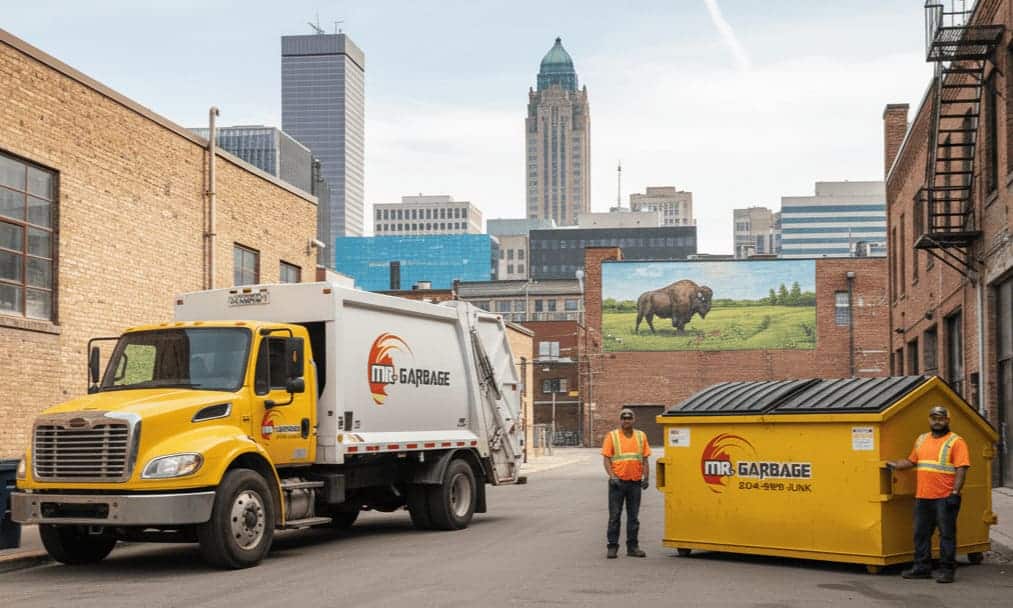
Renovations and cleanups create a lot of stuff. Choosing the right waste container rental keeps work moving and the site safe. This guide helps Winnipeg homeowners pick the right size, plan placement, follow city rules, and use local diversion options. It also explains how Mr. Garbage can help you pick and schedule a container that fits your project.
Why the right waste container rental size matters
- A correctly sized container keeps work areas clear.
- It reduces extra trips and surprises.
- It helps with safe loading and proper sorting.
When the container is too small, you pause work to call for another. When it’s too large, you may waste space on your property. Choosing the right size makes the project smoother from demolition to final pickup.
Common waste container rental sizes (what they mean for your project)
Small residential containers and walk-in bins
These are handy for small cleanups, garage clearouts, and minor renovations. They are easy to load by hand. Many local providers list 10–20 yard options for tight access and short projects. Mr. Garbage offers several walk-in, easy-load bin sizes suitable for small home jobs.
Mid-size containers for renovations and room-by-room projects
Mid-size roll-off bins are common for larger renovations. They suit kitchen guts, bathroom overhauls, and medium remodels. These bins give you room for bulky items like old cabinetry and tile. National and local haulers list mid-size roll-off options to match these needs.
Large containers for major renovations and construction debris
For whole-house cleanouts, major remodeling, or large landscaping jobs, the largest roll-off containers are best. These are used on bigger construction sites and large clearouts. If your project creates bulky waste or large volumes, these sizes prevent multiple hauls. Major providers show 30–40 yard bins as the go-to choice for big jobs.
How to pick the right size: a simple process
Step 1: Inventory what you expect to throw away
Make a short list. Is it mostly drywall? Old cabinets? Yard waste? Mixed debris? Different materials pack differently. Take photos and note bulky items. This helps your rental company recommend the right size.
Step 2: Think about how easy it is to load
If you or your crew can toss items by hand, a walk-in bin helps. If you need to shove heavy pieces or use a wheelbarrow, a larger roll-off bin can be faster. Consider whether you need a container with doors or a tub style for different loading methods. Mr. Garbage’s walk-in bins can speed hand loading for smaller jobs.
Step 3: Check access and overhead clearance
Measure driveway length and check for low wires or trees. Roll-off trucks need room to place and remove the bin. If access is tight, ask for a smaller or specialized container. Some providers offer longer but lower containers for tight spots. Mr. Garbage
Step 4: Decide whether to mix materials
If you mix organics, wood, and construction rubble, explain that to your hauler. Mixed loads sometimes need different handling or routing. If you have mostly yard waste, the City of Winnipeg operates organics and yard waste programs that may be a better match for those materials alone. For mixed volumes, a private waste container rental can collect and route organics and construction waste appropriately.
Local rules: permits, placement, and what to expect in Winnipeg
Do you need a permit?
If the container sits on private property, such as your driveway, you generally do not need a city permit. If you place the bin on a public street, sidewalk, or boulevard, you usually need a right-of-way or street placement permit from the City of Winnipeg. Confirm with your hauler so you avoid fines or delays.
Where waste goes after pickup
Most loads go to local transfer stations or processing sites. Organics and yard material are routed to composting facilities when applicable. Winnipeg’s Brady Road Resource Management Facility and the city’s 4R depots are key parts of local waste handling. Ask your provider where they bring material and whether diversion is part of their process.
Material rules: what you can and cannot put in a waste container rental
Typical items accepted by rental containers
- Demolition debris (drywall, wood, tile)
- Old cabinetry and furniture
- Yard waste and brush (when the service accepts organics)
- Metals and non-hazardous household junk
Local haulers usually sort metals and recyclables for diversion. Mr. Garbage lists commonly accepted items and notes exceptions for hazardous materials. Mr. Garbage
Items that need special handling
Hazardous materials like solvents, gasoline, paint containers with liquid, asbestos, and certain electronics require specialized disposal. Keep these items separate and follow city or provincial guidance. Your hauler can advise on safe disposal options when in doubt.
Waste diversion and local context: why sorting matters
Winnipeg and Canada are improving how they divert organics and recyclables from landfills. National data shows a strong focus on organics diversion from residential sources. Choosing a waste container rental that sorts or routes materials to recycling and composting helps reduce landfill methane and supports local reuse programs. Ask your rental company about diversion rates and processing facilities.
Practical tips for loading and using your container
Load heavy items first and flat
Put heavy, flat items like tile or concrete pieces at the bottom. This stabilizes the load.
Break down large items where possible
Disassemble cabinets and large furniture. Break down doors and trim to save space.
Keep hazards out of the container
Set aside anything that looks hazardous. Label and store these items until you can get safe disposal advice.
Use the right bin for yard waste
If your load is mostly leaves and branches, consider the city’s yard waste programs or tell your hauler so organics can go to composting rather than landfill. Winnipeg’s drop-off and compost programs accept yard waste and support local compost production.
How Mr. Garbage helps with your waste container rental
Mr. Garbage serves Winnipeg homeowners with local container options and guidance. They can:
- Recommend a container size after you describe the project.
- Advise on driveway placement and street permits.
- Route materials to local sorting, recycling, or composting facilities when possible.
If you send photos or a quick list, Mr. Garbage can suggest the best container and loading method for your job. This reduces surprises on delivery day and helps you meet local rules.
Choosing between renting and hiring a junk removal service
When to rent a container
Rent a container when you have steady output over days or weeks. It works well when crews are on site, and you need continuous disposal.
When to hire a pick-up service
A junk removal service is often simpler for one-off cleanouts or when you don’t have space for a bin. Services can be quicker but may not give you the same control over sorting or diversion.
Decide by the volume, access, and how hands-on you want to be. Mr. Garbage offers both container rental and removal options, so you can choose what fits your schedule and workload.
Expert perspective
“Picking the right container size comes down to honest planning. Count bulky items, check access, and pick a hauler who will route materials responsibly. That reduces rework and landfill trips.” — Sarah Patel, Waste Management Consultant, Winnipeg.
This advice reflects how local operators and city programs handle materials in Winnipeg. Good planning makes a project faster and greener.
Final checklist before you book a waste container rental
- Take photos and list the main items you’ll discard.
- Measure access and check overhead clearance.
- Decide if you need the bin on private property or the street (permit may be needed).
- Separate hazardous items and organics as needed.
- Ask your hauler where materials will be taken and whether diversion is part of their process.
Book early in the busy season to secure delivery dates. If you want help choosing a size, Mr. Garbage can review photos and recommend the best option for your Winnipeg project.
Conclusion
Choosing the right waste container rental size avoids delays and keeps your renovation or cleanup safe. Think about volume, access, and materials. Follow Winnipeg’s placement rules and prefer providers who explain diversion. Mr. Garbage can guide you from planning to pickup. If you want a recommendation, send photos of your site and a short list of what you’ll discard. Mr. Garbage will advise on the best container and how to handle permits and routing.
Ready to pick the right bin for your project? Contact Mr. Garbage to get local advice and schedule your waste container rental for Winnipeg.
Frequently Asked Questions (FAQs)
Q1: What size waste container rental do I need for a kitchen renovation?
A1: It depends on how much cabinetry, drywall, and tile you remove. For typical kitchen renovations, many homeowners use mid-size roll-off bins. Send photos to your hauler for a tailored recommendation.
Q2: Do I need a permit to place a waste container on the street in Winnipeg?
A2: Yes. If the container will occupy a public right-of-way like a street, sidewalk, or boulevard, you typically need a street placement or right-of-way permit. If it sits fully on private property, a permit usually is not required. Confirm with your rental company and the City of Winnipeg.
Q3: Can I put yard waste in the same container as construction debris?
A3: You can mix them, but mixing may change how the load is handled. If diversion of organics to composting is important, separate yard waste or confirm that your hauler will route organics appropriately. Winnipeg has city organics and yard drop-off programs for mostly green waste.
Q4: What items are not allowed in a standard rental container?
A4: Hazardous materials such as liquid paint, solvents, batteries, asbestos, and certain electronics require special disposal. Keep these separate and ask your hauler for guidance.
Q5: How do rental companies help with recycling and diversion?
A5: Many haulers bring loads to sorting facilities or partner with local processors. They separate metals, wood, and sometimes organics for recycling or composting. Ask your provider where they bring materials and how much is diverted from the landfill.
Sources and local references
- Mr. Garbage: Dumpster and waste container rental guides and size options. Mr. Garbage
- City of Winnipeg: permits and right-of-way rules for street placement. City of Winnipeg
- Brady Road Resource Management Facility: local compost and depot information. City of Winnipeg
- Waste Connections / Waste Management: dumpster sizes and use cases for roll-off containers. wasteconnections.com
- Government of Canada / Statistics Canada: national waste diversion context and organics trends. Canada