
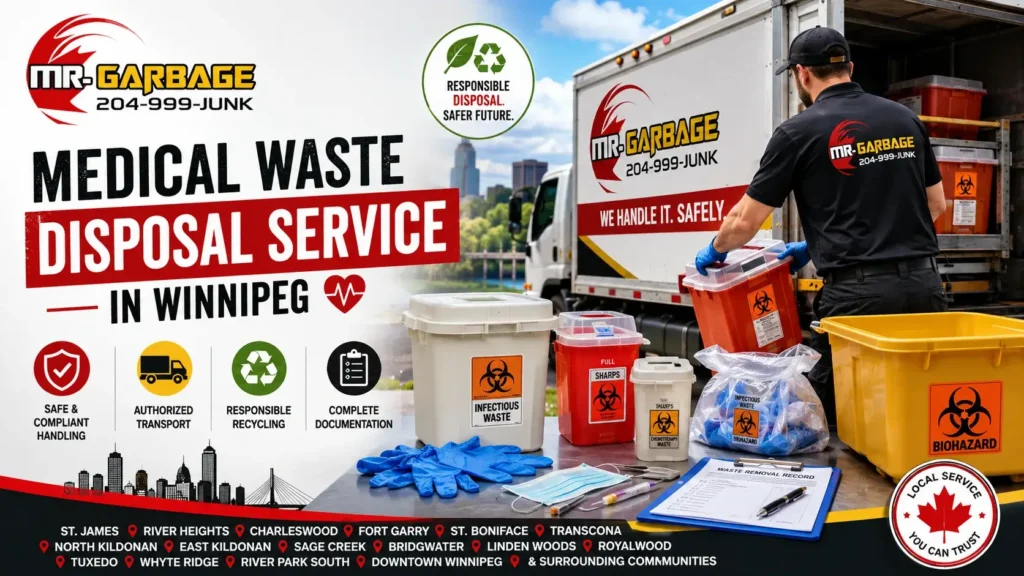
Medical waste needs to be handled differently from ordinary household or commercial garbage. Clinics, dental offices, veterinary practices, laboratories, and other healthcare facilities can produce waste that may be infectious, hazardous, or capable of causing injury.
That makes choosing the right medical waste disposal service an important decision.
A good provider should do more than simply collect bags or containers. The service should have a clear process for segregation, containment, storage, transportation, treatment, and final disposal. It should also understand the rules that apply in Manitoba and Winnipeg.
Manitoba treats biomedical waste as part of its hazardous waste framework. The province says hazardous waste must be handled, stored, transported, treated, and disposed of properly, with controls that follow the waste from generation through its final treatment or disposal.
Winnipeg also has a specific Biomedical Waste Sharps By-law covering biomedical waste sharps. The by-law includes requirements around carrier permits and treated biomedical waste sharps.
So, if you’re comparing medical waste disposal companies in Winnipeg, don’t choose based on convenience alone. You need to understand what the provider actually does with your waste and whether the right permits, containers, carriers, treatment methods, and records are involved.
This guide explains what Winnipeg healthcare businesses should look for.
What Is Medical Waste Disposal?
Medical waste disposal refers to the safe handling and final management of waste generated through healthcare activities.
Canadian guidance identifies biomedical waste as waste generated by human or animal healthcare facilities, medical and veterinary research or teaching facilities, clinical testing or research laboratories, and certain vaccine-related facilities.
Depending on the facility, medical or biomedical waste can include:
- Used sharps
- Needles and syringes
- Contaminated dressings
- Certain laboratory materials
- Blood-contaminated materials
- Anatomical waste
- Certain animal healthcare waste
- Other regulated infectious materials
Not every item produced in a clinic is biomedical waste. Ordinary office paper, packaging, and uncontaminated general garbage should normally remain in their appropriate waste streams.
That distinction matters.
Good waste management starts where the waste is generated. Different waste streams should be separated rather than mixed together.
Why Choosing the Right Medical Waste Disposal Service Matters
Healthcare facilities have a responsibility to protect employees, patients, waste handlers, visitors, and the environment.
Poor handling can create risks such as:
- Needlestick injuries
- Exposure to infectious materials
- Cross-contamination
- Leaking containers
- Improper disposal
- Regulatory problems
- Unnecessary environmental impact
The Public Health Agency of Canada recommends separating biomedical waste from general waste and using appropriate containment and decontamination practices. Sharps should be placed directly into suitable puncture-resistant containers rather than being mixed with other waste.
This is why a healthcare business should look beyond the words “medical waste pickup” when comparing providers.
Ask how the entire waste stream is managed.
Understand What Type of Medical Waste Your Facility Produces
Before choosing a provider, identify the waste your facility generates.
A family medical clinic may produce a different waste stream from a dental practice or veterinary clinic.
Sharps Waste
Sharps can include items such as:
- Needles
- Syringes with needles attached
- Lancets
- Certain blades
- Other sharp medical instruments
Sharps can cause puncture injuries, so they need appropriate containers at the point where they are used.
Canadian biosafety guidance recommends puncture-resistant sharps containers and says they should not be overfilled.
Infectious Waste
Some healthcare waste may be contaminated with blood, body fluids, or infectious materials.
This can include certain:
- Dressings
- Swabs
- Gloves
- Laboratory materials
- Disposable medical supplies
The exact classification depends on the material and the circumstances in which it was generated.
Laboratory Waste
Laboratories can generate cultures, specimens, contaminated materials, and other waste requiring special handling.
The Canadian Biosafety Handbook notes that microbiology laboratory waste should be segregated and managed according to the nature of the infectious material involved.
Veterinary Medical Waste
Veterinary practices can produce biomedical waste too.
This may include animal tissues, blood-contaminated materials, surgical waste, and other materials associated with animal healthcare.
A veterinary clinic should make sure its disposal provider understands the waste streams specific to animal healthcare.
Check the Provider’s Compliance and Permits
One of the first questions to ask a medical waste provider is simple:
Are you authorized to handle and transport the type of waste my facility produces?
This is especially important in Winnipeg.
The City of Winnipeg’s Bio-Medical Waste Sharps By-law includes a Carrier Permit system for the transportation of biomedical waste sharps.
Manitoba also maintains a hazardous waste program under the Dangerous Goods Handling and Transportation Act and related regulations. The province provides information for generators, carriers, and receivers of hazardous waste.
A reputable provider should be able to explain which regulatory requirements apply to your waste.
Don’t be afraid to ask for documentation.
Ask How Medical Waste Is Packaged and Stored
Proper containment is a major part of safe medical waste management.
Waste should be placed in containers appropriate for its type.
For example, sharps require puncture-resistant containers. Containers should also remain secure during storage and transportation.
The Canadian government notes that transportation of infectious and biomedical waste is subject to federal transportation requirements, including requirements for appropriate means of containment.
Before signing a service agreement, ask:
- What containers are provided?
- Are containers suitable for the waste type?
- How should containers be closed?
- Where should filled containers be stored?
- What happens if a container leaks?
- How often are containers collected?
- Who replaces full containers?
These questions can reveal how prepared a provider really is.
Look at the Complete Chain of Custody
Medical waste disposal doesn’t end when someone picks up a container.
There is a chain of responsibility from the point where waste is generated through transportation, treatment, and final disposal.
A strong medical waste disposal provider should be able to explain each stage.
The basic process may include:
- Waste is separated at the point of generation.
- Appropriate containers are used.
- Waste is securely stored before collection.
- An authorized carrier transports the material.
- Waste is treated using an appropriate method.
- Treated material is sent for its permitted final disposal route.
- Relevant documentation is retained.
The exact process depends on the type of waste and applicable requirements.
That’s why healthcare businesses should avoid providers that give vague answers about where waste goes after pickup.
Ask About Treatment Methods
Medical waste may require treatment before final disposal.
Depending on the waste stream and applicable requirements, treatment can involve methods such as:
- Autoclaving
- Incineration
- Other validated treatment technologies
The appropriate method depends on the type of material.
Canadian biosafety guidance states that decontamination methods should be selected based on the nature of the infectious material and the waste itself.
A good provider should be able to tell you:
- What treatment method is used
- Where treatment occurs
- Whether the facility is authorized
- Which waste streams are accepted
- What happens after treatment
You don’t need to be a waste management expert to ask these questions.
Documentation Should Be Part of the Service
Healthcare businesses should keep appropriate records relating to their regulated waste.
Ask your provider what documentation is supplied after collection and treatment.
Depending on the waste stream and service arrangement, records may include:
- Pickup documentation
- Waste movement records
- Treatment records
- Certificates
- Service logs
Good documentation creates a clear record of where waste went and how it was handled.
It can also help a clinic respond to internal reviews, inspections, or compliance questions.
Choose a Provider Familiar With Winnipeg
Local knowledge matters when dealing with regulated waste.
A Winnipeg provider should understand the local requirements that affect healthcare facilities.
This is particularly important because Winnipeg has its own Bio-Medical Waste Sharps By-law, while Manitoba has provincial hazardous waste legislation and regulations.
Healthcare businesses in Downtown Winnipeg, St. Boniface, St. Vital, River Heights, Charleswood, Fort Garry, Transcona, East Kildonan, North Kildonan, St. James, Garden City, West Kildonan, Linden Woods, Whyte Ridge, Bridgwater, Sage Creek, and surrounding communities should choose a provider that can clearly explain how its service fits the applicable local and provincial requirements.
A local provider can also make scheduling and communication easier.
Medical Waste Disposal Canada: Why Local Rules Still Matter
Searching for medical waste disposal Canada can bring up national guidelines, industry information, and service providers from different provinces.
That’s useful for general research, but healthcare businesses need to pay attention to the rules that apply where their facility operates.
Canadian guidance provides an important framework for biomedical waste management, but the Public Health Agency of Canada notes that CCME biomedical waste guidelines are enforced where they have been adopted through provincial legislation or municipal bylaws. Local requirements can be more specific.
For a Winnipeg facility, that means looking at:
- Federal transportation requirements where applicable
- Manitoba hazardous waste requirements
- City of Winnipeg bylaws
- Facility-specific policies
- Applicable standards and guidance
Don’t assume that a service designed for another province automatically meets Manitoba requirements.
How Mr. Garbage Can Help Winnipeg Healthcare Facilities
Mr. Garbage works with Winnipeg healthcare facilities to coordinate biomedical waste services with permitted carriers.
The company explains that it supports facilities with preparation, packaging guidance, scheduling, and coordination rather than replacing permit-required biomedical waste carriers.
This distinction is important.
A general waste hauler should not simply collect regulated biomedical waste unless it has the appropriate authorization and follows the applicable requirements.
For clinics and other healthcare businesses, Mr. Garbage can help coordinate the process with permitted biomedical waste carriers and help organize the service around the facility’s needs.
This can be useful for:
- Medical clinics
- Dental practices
- Veterinary clinics
- Healthcare offices
- Laboratories
- Other facilities generating regulated biomedical waste
The goal is to make the waste management process easier to coordinate while keeping the regulated portions of the service with the appropriate permitted providers.
Questions to Ask Before Hiring a Medical Waste Disposal Company
Before signing an agreement, ask these questions.
1. Are you authorized to handle my waste type?
Don’t assume all waste companies can handle regulated medical waste.
2. Who actually transports the waste?
Ask whether the company uses its own authorized carrier or coordinates with another permitted carrier.
3. Where is the waste treated?
You should understand where treatment takes place and what method is used.
4. What containers do you provide?
Make sure containers are appropriate for the waste stream.
5. What documentation will we receive?
Ask what records are supplied after collection and treatment.
6. How are emergencies handled?
Ask what happens if a container leaks, breaks, or is damaged before pickup.
7. Can you support recurring pickups?
Regular collection may be useful for clinics that generate medical waste continuously.
A provider that answers these questions clearly is easier to evaluate.
Common Mistakes When Choosing Medical Waste Disposal
Choosing Based Only on Convenience
Fast pickup is useful, but compliance and proper handling matter more.
Mixing Different Waste Streams
Different types of medical waste may require different containment and treatment.
Ignoring Sharps Requirements
Sharps should never be treated like ordinary garbage. They require appropriate puncture-resistant containers.
Not Checking Carrier Authorization
Ask who is responsible for transportation and whether the necessary authorization applies to your waste.
Failing to Keep Records
Good documentation helps demonstrate how regulated waste was managed.
Conclusion
Choosing the right medical waste disposal service requires more than finding a company that offers pickup. Winnipeg healthcare facilities should look for a provider that understands waste segregation, secure containment, authorized transportation, appropriate treatment, and documentation.
Manitoba’s hazardous waste framework requires proper handling, storage, transportation, treatment, and disposal of hazardous wastes, including biomedical waste. Winnipeg also has specific requirements for biomedical waste sharps.
For clinics, dental practices, veterinary facilities, laboratories, and other healthcare businesses, the safest approach is to understand exactly what waste you generate and confirm that your service provider has the appropriate process and authorized partners to manage it.
If your Winnipeg facility needs help coordinating biomedical waste pickup and working with permitted carriers, Mr. Garbage can help organize the process.
Contact Mr. Garbage to discuss your medical waste disposal requirements and arrange a service that fits your Winnipeg facility.
Frequently Asked Questions (FAQs)
1. What is considered medical or biomedical waste?
Biomedical waste can include sharps, certain infectious materials, anatomical waste, laboratory waste, and other waste generated through human or animal healthcare activities. The exact classification depends on the material and applicable requirements.
2. Can medical waste go into regular garbage?
Not necessarily. Regulated biomedical waste should be segregated from general waste and managed according to the requirements that apply to that waste stream. Sharps, in particular, require appropriate puncture-resistant containers.
3. Does Winnipeg have specific rules for medical waste?
Yes. Winnipeg has Bio-Medical Waste Sharps By-law No. 6001/92, which regulates the handling and disposal of biomedical waste sharps and includes requirements related to carrier permits.
4. How should a clinic choose a medical waste disposal company?
Ask about authorization, containers, transportation, treatment, documentation, emergency procedures, and the provider’s experience with your specific waste stream. The company should clearly explain how the waste moves from collection through treatment and final disposal.
5. Does Mr. Garbage directly transport all biomedical waste?
Mr. Garbage states that it coordinates with permitted biomedical waste carriers rather than replacing permit-required carriers. This allows regulated transportation and treatment to be handled through the appropriate authorized providers.