
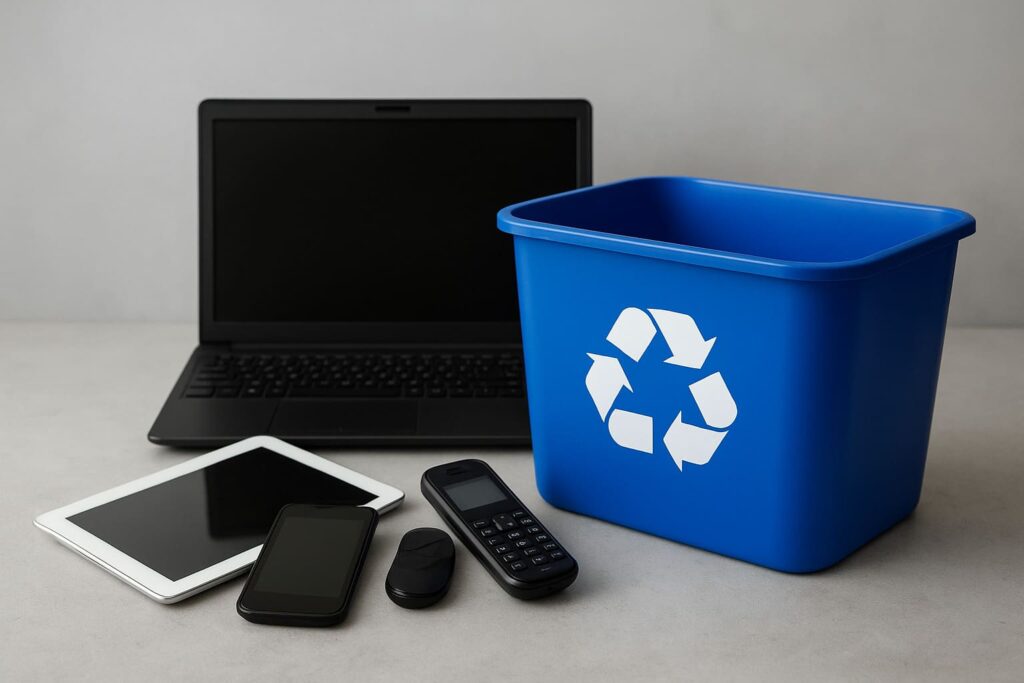
Electronics are part of daily life, such as phones, laptops, TVs, printers, and small appliances. Over time, many accumulate in households, unused or broken. When they reach the end of their life, they become e-waste. Proper e waste recycling matters now more than ever. If you live in Winnipeg and are wondering where to recycle e-waste, how to recycle old electronics, or need e-waste recycling near me, this guide is for you. We cover the options available, how to prepare and recycle your electronics responsibly, and how a full-service waste partner like Mr. Garbage can simplify the process.
Why E Waste Recycling Matters For You and the Environment
The Scale of the Problem
E-waste is among the fastest-growing waste streams worldwide. Globally, much of it contains hazardous materials like lead, mercury, cadmium, and flame retardants, and when thrown in the trash or landfill, these toxins risk contaminating soil, water, and air. World Health Organization
Canada is no exception. A recent study estimates that e-waste generation per capita surged from about 8.3 kg in 2000 to over 25 kg in 2020, a dramatic rise. uwaterloo.ca
Recycling electronics isn’t just about clearing clutter. It recovers valuable materials like copper, gold, plastics, and keeps hazardous elements from harming communities. Wikipedia
Health and Environmental Risks
Improper disposal, landfill dumping, burning, or unregulated recycling often leads to the release of toxic substances. These threaten groundwater, wildlife, and human health.
Because electronics often hold precious metals and plastics that can be recycled or reused, disposing of e-waste via recycling makes environmental and economic sense.
Benefits of Responsible E-Waste Recycling
- Prevent toxic substances from entering soil and water.
- Recover valuable metals and materials, reducing demand for virgin resources.
- Reduce landfill burden and support circular economy practices.
- Support safe, regulated recycling rather than informal or illegal dumping or recycling operations.
E-Waste Recycling Options in Winnipeg
If you’re searching for “e waste recycling near me” in Winnipeg, you have several solid options depending on the type and amount of electronics you want to dispose of.
Public Drop-Off Locations: 4R Winnipeg Depots and EPRA/Recycle My Electronics
One of the primary resource networks in Winnipeg is the public depot system. The 4R Winnipeg Depots accept many residential electronics, TVs, computers, small appliances, and peripherals for recycling when they’re properly prepared.
Additionally, the national program Recycle My Electronics (also known as EPRA in some areas) supports a network of authorized drop-off points across the province. These are designed to accept old electronics, ensure safe processing, and divert e-waste from landfills. Recycle My Electronics
Public drop-off is straightforward and often free for residents, a convenient way for regular households to dispose of outdated or broken electronics without complicated logistics.
Specialized Recyclers & Charitable Reuse Networks
If you want to ensure data destruction, refurbishment, or donation rather than disposal, services like Electronic Recycling Association (ERA) offer ethical recycling, secure data wiping, and redistribution or donation of working devices. era.ca
Non-profit or social-enterprise recyclers also operate in Winnipeg. For instance, Mother Earth Recycling accepts a wide range of electronics and refurbishes devices where possible. motherearthrecycling.ca
These options are especially suitable if you have old computers, phones, or electronics with data stored on them, or devices that may still function, enabling reuse rather than destruction.
Convenience Through Pickup or Consolidated Services
Not everyone has the time, vehicle, or energy to haul electronics to depots. That’s where waste-management services like Mr. Garbage come in. As noted on their site, they can coordinate pickup from your home, sort waste streams correctly, and deliver to appropriate e-waste facilities. Mr. Garbage
This makes the process easier, especially for larger loads, mixed waste (electronics + household waste), or situations where transport is a challenge.
What Kind of Electronics Can You Recycle, And What to Check
Common Acceptable Items
Most e-waste programs in Winnipeg accept:
- Computers, laptops, tablets, monitors, and peripherals (keyboards, mice)
- Televisions and video monitors (subject to size/age limitations, check depot rules, especially for older CRTs).
- Printers, scanners, desktop printers, and small office electronics.
- Small household appliances with electronic components (toasters, coffee makers, etc.), depending on depot policy,
- Cables, chargers, power supplies, accessories, and batteries (where accepted by the recycler)
What to Verify Before You Drop Off
- Items should typically be non-hazardous when accepted (i.e., no leaking batteries, mercury lamps, or hazardous components unless the recycler handles these).
- Check size and age restrictions — older CRT TVs or large appliances may not be accepted at all drop-off points. For example, some locations limit TVs to a certain screen size. Recycle My Electronics
- For working devices you wish to donate or refurbish, choose recyclers offering secure data destruction and refurbishment services (e.g., ERA or Mother Earth Recycling) rather than landfill disposal. era.ca
- Always confirm depot hours, stacking rules, and whether you need to pre-book drop-off or pickup (some depots are popular and may have restrictions).
What Happens to Electronics After You Recycle — The Process & Why It Matters
Disassembly, Material Recovery & Hazardous Waste Handling
E-waste recycling is more than just tossing old devices in a bin. Electronics often contain valuable materials, such as copper, aluminum, rare earths, precious metals, along with hazardous substances like lead, mercury, cadmium, and flame-retardants.
Authorized recyclers dismantle devices, separate components (metals, plastics, circuit boards, glass), and route each stream appropriately: metals for smelting/recovery, plastics for reprocessing, circuit boards for precious-metal recovery, and hazardous components for safe disposal. This reduces demand for virgin materials and prevents toxic waste from leaching into ecosystems. Wikipedia
Repair, Refurbishing & Reuse Circular Economy in Action
Some electronic items, especially phones, laptops, and monitors, can still function with minor repair. Recyclers like ERA or Mother Earth Recycling refurbish and donate these to individuals or non-profits. This extends product life, reduces resource use, and supports community access to technology.
This reuse-first approach aligns with waste-reduction and circular economy principles: reducing landfill pressure while maximizing the value extracted from electronics.
Environmental and Community Benefits in Winnipeg
By properly recycling e-waste:
- Hazardous materials are prevented from contaminating Winnipeg’s soil, rivers, including the Red River and Assiniboine River, protecting water quality.
- Valuable metals are recovered, reducing mining demand and lowering the carbon footprint associated with manufacturing new electronics.
- Items are diverted from landfills such as Brady Road Landfill, preserving landfill space and reducing methane emissions from electronic components.
- Refurbished electronics donated through recycling programs improve access to technology for charities, families, and underserved communities.
These benefits make e-waste recycling a powerful step toward sustainable waste management in Winnipeg.
How Homeowners in Winnipeg Can Recycle E-Waste
Step 1: Sort Your Electronics at Home
Gather all old or unwanted electronics: phones, laptops, monitors, TVs, small appliances, cables, batteries. Separate working items (donation/refurbish) from broken or obsolete items.
Remove batteries if possible and separate rechargeable from single-use. Keep cords, accessories, and devices together to avoid confusion for recyclers.
Step 2: Choose the Right Drop-Off or Recycling Service
- Use public drop-off locations (4R Depots or authorized EPRA/Recycle My Electronics sites) for typical residential electronics.
- For data-bearing devices (computers, phones, drives), consider a recycler that offers secure data destruction and refurbishment (e.g., ERA, Mother Earth Recycling).
- If you have mobility issues, many items, or lack a vehicle, consider scheduling a pickup with a full-service waste company such as Mr. Garbage.
Step 3: Prepare for Drop-Off or Pickup
- Check depot requirements: ensure items are clean, intact, and meet size/age limits (especially TVs).
- Back up and wipe data from devices if you plan to donate or recycle.
- For pickup services, compactly organize devices and make them accessible.
Step 4: Drop Off or Schedule Pickup
- Bring items to the depot or schedule a pickup. Public depots are often free for residential electronics.
- If using a private service, confirm that they sort and route items to proper recyclers, especially important for mixed loads or larger quantities.
Step 5: Verify Recycling or Data Destruction Completion
For devices containing personal data, request a certificate or confirmation that the data was securely wiped or destroyed. For large volumes, make sure recyclers follow environmental standards.
Common Misconceptions & Mistakes to Avoid
“I can just throw electronics in the trash.”
Wrong. Most electronics contain materials hazardous to the environment, such as metals, flame retardants, and plastics, which should not go to landfills. E-waste needs special handling.
“All recyclers are the same.”
No, quality and compliance vary. Always choose authorized or certified recyclers who follow proper dismantling, hazardous-component handling, and data-destruction protocols.
“My donation is just clutter, so disposal is fine.”
If devices still work, consider donating or refurbishing. Many charities or organizations refurbish electronics for reuse. Recycling should only be a last resort.
“I don’t need to wipe my old hard drives or phones.”
Wrong. If devices contain personal data, ensure secure data destruction before recycling or donating. Many reputable recyclers provide data-wiping services.
“Small devices don’t matter; only big ones do.”
Every bit of e-waste adds up. Collectively, small electronics contribute significant volume and toxins. Proper recycling helps overall waste-management efforts.
How Mr. Garbage Supports E-Waste Recycling for Winnipeg Homeowners
Full-Service Pickup & Sorting
Mr. Garbage offers pickup services for electronics, especially useful if you have multiple items, such as computers, TVs, monitors, or lack transport. They coordinate with authorized recyclers to ensure items are properly processed. Their service saves you time and reduces hassle compared to driving to multiple drop-offs. Mr. Garbage
Consolidated Waste & Recycling Runs
If you’re decluttering, renovating, or cleaning out an entire home, you might produce mixed waste: electronics, furniture, renovation debris, hazardous items, etc. Mr. Garbage helps sort and route each type of electronics correctly to e-waste recycling, general trash, or recyclables to proper facilities, giving you a one-stop solution.
Responsible, Transparent Recycling
Mr. Garbage partners with certified e-waste handlers and drop-off networks. They follow disposal protocols and can provide documentation, ensuring responsible handling and accountability. This builds trust and ensures that your e-waste doesn’t end up in a landfill by mistake.
Growing E-Waste & Why Action Matters
Rising E-Waste Generation
A study forecasting Canada’s electronic consumption found that e-waste per person is rising sharply and expected to grow even more, highlighting the need for widespread recycling infrastructure and responsible programs. ScienceDirect
If recycling behavior doesn’t keep pace, toxic waste in landfills and environmental damage could grow significantly.
Precious Materials & Sustainable Resources
Electronics often contain valuable metals and materials. Properly recycling e-waste recovers these resources and reduces demand for mining and virgin raw material extraction. This supports sustainable development and reduces the carbon footprint linked to manufacturing. MDPI
The Role of Homeowners & Local Services
As a resident, you play a key role in diverting e-waste from landfills. By recycling properly using public depots, authorized recyclers, or pickup services, you help protect Winnipeg’s land, soil, and water. And with partners like Mr. Garbage offering convenient, comprehensive services, it’s easier than ever to make the right choice.
Conclusion
E-waste recycling in Winnipeg is not just an option; it’s a responsibility. With rising amounts of electronics reaching end-of-life, improper disposal risks serious environmental and health consequences. But the good news is that Winnipeg has a robust infrastructure to handle e-waste responsibly. Whether through public drop-off sites like 4R Depots, authorized networks like Recycle My Electronics / EPRA, charitable refurbishers, or full-service providers like Mr. Garbage, residents have accessible, safe, and effective recycling choices.
If you’re cleaning out old devices, upgrading your home electronics, or simply trying to declutter, consider recycling instead of tossing items in the garbage. And if you want a simple, comprehensive solution, including pickup, sorting, and responsible disposal, Mr. Garbage has you covered. Reach out today to arrange your e-waste recycling pickup and help keep Winnipeg cleaner, greener, and safer.
Ready to recycle your old electronics responsibly? Contact Mr. Garbage now to schedule your e-waste pickup and do your part for Winnipeg’s environment.
Frequently Asked Questions (FAQs)
Q1. What kinds of items count as e-waste?
A1. E-waste includes electronic devices and equipment such as desktop computers, laptops, monitors, TVs, printers and scanners, phones, small appliances, cables, chargers, and other electronics. Batteries and power supplies may also be included under some recycling programs.
Q2. Where can I take e-waste for recycling in Winnipeg?
A2. Winnipeg homeowners can drop off electronics at publicly accessible places like the 4R Winnipeg Depots or use authorized programs under Recycle My Electronics / EPRA. Private recyclers and organizations such as the Electronic Recycling Association and Mother Earth Recycling also accept electronics for recycling, refurbishment, or donation.
Q3. Can I schedule a pickup for my e-waste instead of transporting it myself?
A3. Yes. Services like Mr. Garbage offer pickup for household electronics, especially useful when you have many items, bulky devices, or no transport. They sort and route items to proper e-waste recyclers and handle logistics for you.
Q4. Why is e-waste recycling important instead of just throwing electronics in the trash?
A4. Electronics often contain hazardous materials (lead, mercury, cadmium, flame retardants) that can leach into soil and water if dumped. E-waste recycling ensures these materials are separated and treated, prevents pollution, recovers valuable metals and plastics for reuse, and reduces landfill load.
Q5. Can working electronics be reused instead of being recycled or thrown away?
A5. Yes, many devices can be refurbished, donated, or resold. Recyclers such as ERA or Mother Earth Recycling offer refurbishment and donation services, extending the life of electronics and reducing waste.