
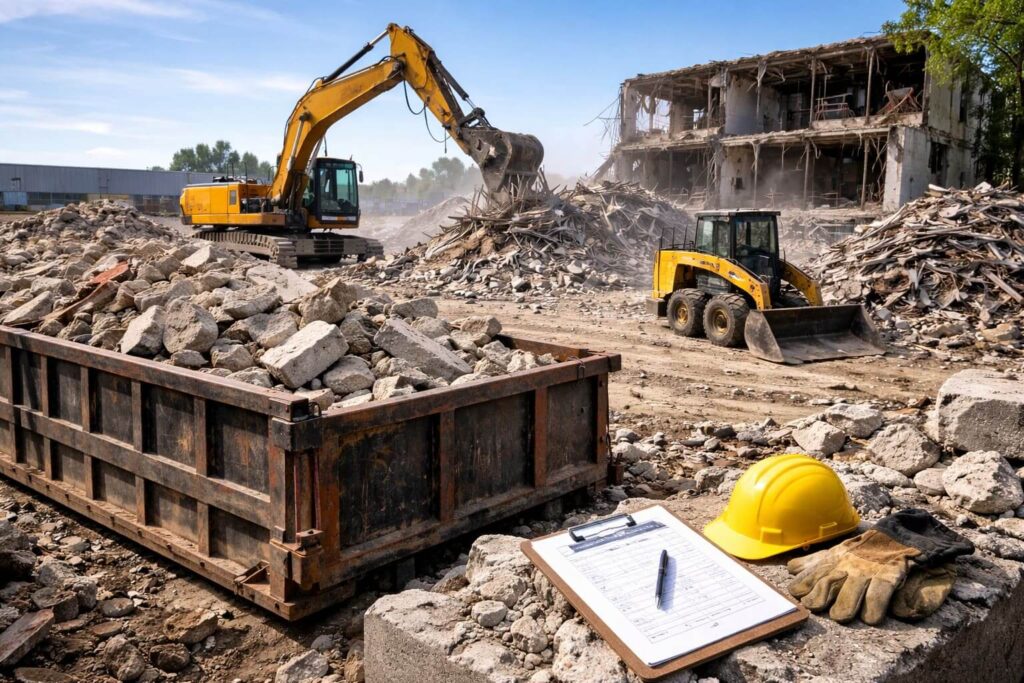
Commercial demolition waste disposal covers material from demolishing buildings and large structures. That includes concrete, metal, wood, gypsum, asphalt, and sometimes hazardous materials like asbestos. How you handle this waste matters for safety, the environment, and compliance with local rules. In Winnipeg and across Manitoba, careful handling and recycling are becoming standard practice.
What counts as commercial demolition waste disposal?
When we say commercial demolition waste disposal, we mean the collection, transport, and final management of materials from demolition work. This is different from normal household trash. It’s heavier and often mixed with recyclable and hazardous items.
Common materials include:
- Concrete and masonry
- Scrap metal and rebar
- Lumber and wood products
- Gypsum board and insulation
- Asphalt roofing and paving
- Potentially hazardous items (asbestos, lead, PCBs)
Why proper disposal matters
There are three main reasons to plan commercial demolition waste disposal properly.
1. Safety and compliance
Demolition sites can contain hazardous materials. Improper handling puts workers and neighbours at risk. Manitoba requires special handling for demolition debris that may contain asbestos, lead, or PCBs. Follow provincial guidance for safe management.
2. Environmental impact
Construction and demolition waste is a big part of Canada’s solid waste stream. National data show that a large share of waste still goes to landfills. Reducing and recycling C&D waste helps lower that number and supports local circular-economy goals.
3. Local rules and city planning
Winnipeg runs the Brady Road Resource Management Facility and 4R depots. These sites handle heavy or special loads and have rules about what they accept. If you plan to drop off demolition waste, check depot rules and prepare your load properly.
Steps to plan commercial demolition waste disposal for your project
A clear plan reduces risk and saves time. Follow these steps.
Step 1: Audit the site
Walk the job site and list likely waste types. Note potential hazardous materials. If your work involves older buildings, test for asbestos and lead before disturbance. Manitoba’s guidance explains how to manage hazardous demolition debris.
Step 2: Separate materials when possible
Sorting on site makes recycling easier. Keep concrete, metal, and clean wood separate from mixed loads. Sorted loads often go to recycling yards rather than landfills. This lowers the amount of waste that gets disposed of and helps with reuse.
Step 3: Choose proper containers and transport
Use heavy-duty bins for concrete and large debris. Regular curbside bins aren’t suitable for heavy materials. Roll-off bins and specialized containers protect crews and equipment. Local providers can advise on the right bin type and placement. (Mr. Garbage provides heavy debris and concrete bins in Winnipeg.)
Step 4: Engage a recycler or take sorted loads to a processing yard
Many yards accept concrete and metal for recycling. When loads are clean and sorted, recyclers can crush concrete for base material or recycle metal. This diverts material from landfill and returns value to local projects.
Step 5: Document and follow rules
Keep records of where material goes and how hazardous materials were handled. This documentation helps with permits and can be needed for site reclamation or future audits.
Local rules and resources in Winnipeg and Manitoba
If you’re working in Winnipeg, the city and province have specific guidance and facilities.
City of Winnipeg facilities
The Brady Road Resource Management Facility accepts certain loads and has rules about clean fill and concrete without metal. 4R Winnipeg Depots handle various recyclable and reusable items; check the Brady Road depot rules for large or heavy waste. Always verify acceptance rules and tipping requirements before hauling.
Provincial guidance
Manitoba’s guide on managing demolition debris explains how to handle materials that may contain asbestos, lead, or PCBs. If you suspect hazardous materials, follow provincial steps for testing, containment, and transport. This avoids fines and protects workers.
National guidance and policy
The Canadian Council of Ministers of the Environment has published guidance on policies to influence construction, renovation, and demolition waste management. This highlights that C&D waste is one of Canada’s largest waste streams and that policy tools can boost reuse and recycling.
Recycling options for demolition waste
Recycling is realistic for many demolition materials. Here’s how different materials are handled.
Concrete and masonry
Concrete is often crushed and reused as road base or fill. If concrete is clean and mostly free of metal, most processing yards will accept it for crushing and reuse. In Winnipeg, local processors and private yards handle concrete loads and return crushed aggregate to the supply chain.
Metal
Steel, copper, and aluminum are highly recyclable. Scrap metal dealers accept sorted metal. Separating metal at the site speeds processing and raises reuse rates.
Wood and lumber
Clean wood can be reused or processed into mulch or engineered products. Treated or painted wood may need special handling. Separate treated wood from clean wood.
Gypsum and drywall
Drywall can often be recycled into gypsum products or used in soil amendments if processed correctly. Avoid mixing drywall with other debris.
Hazardous materials
Asbestos, paints with lead, and PCB-containing items need special handling. Manitoba’s guidance explains proper management and testing. Follow provincial rules and hire licensed abatement crews when needed.
Who to hire for commercial demolition waste disposal
Hire companies with experience in commercial demolition and disposal. Look for:
- Local knowledge of Winnipeg depots and provincial rules.
- Experience handling hazardous materials when needed.
- Clear recycling pathways and documentation.
- Heavy-duty bin options and safe placement advice.
A local provider can also handle permits for street placement of bins and coordinate with recycling yards. Mr. Garbage offers bin rental and supports construction material recycling in Winnipeg. They can advise on bin type and routing to local processors.
Expert note: “Sorting material on site and routing concrete and metal to local processors cuts disposal and environmental risk,” says Sarah Patel, Waste Management Consultant. “This small start on site can save time at the gate and reduce landfill use.” (Local consultant quote for practical guidance.)
Common mistakes to avoid
Small errors cause big delays on demolition jobs. Avoid these issues.
- Mixing hazardous waste with regular loads.
- Using the wrong bin types for heavy debris.
- Not testing or identifying asbestos and lead before demolition.
- Failing to check depot acceptance rules.
- No paperwork or tracking of disposal and recycling.
Fixing these early prevents fines and extra hauling. Contact local experts if you’re unsure.
A Winnipeg homeowner case study (short)
A Winnipeg business demolished an old storefront and hired a local waste company. They sorted concrete, metal, and wood on site. Concrete went to a crusher yard. Metal was recycled. Treated wood and small hazardous items were handled separately under provincial rules. The site kept documentation and avoided fines. This approach cut landfill loads and returned material to local projects. (Representative local example.)
How commercial demolition waste disposal supports the local economy
Recycling demolition materials creates a local supply for construction projects. Crushed concrete becomes the base for roads and driveways. Recycled metal feeds scrap yards and mills. This lowers demand for new raw materials and supports local processors and haulers. National policy work and provincial programs also encourage diversion of C&D waste away from landfills.
Quick checklist for Winnipeg projects
Use this printable checklist for your demolition project:
- Audit materials for hazardous items.
- Test for asbestos and lead if the building is old.
- Separate concrete, metal, wood, and gypsum on site.
- Order heavy-duty bins for concrete and heavy debris.
- Confirm depot acceptance and transport routes.
- Keep disposal and recycling records.
- Hire a licensed abatement contractor for hazardous waste.
- Work with a local hauler that knows Winnipeg rules. (Mr. Garbage can help with bins and routing.)
FAQs (short answers)
- What is the first step for commercial demolition waste disposal? Start with a site audit and test for hazardous materials.
- Can concrete be recycled in Winnipeg? Yes. Clean concrete is commonly crushed and reused as aggregate by local processors.
- Who regulates hazardous demolition debris in Manitoba? The provincial government provides guidance and rules for managing asbestos, lead, and PCBs.
- Do I need special bins for demolition waste? Yes. Heavy debris requires heavy-duty or roll-off bins, not curbside containers.
- How can Mr. Garbage help? Mr. Garbage offers heavy debris and concrete bin rental, pickup, and guidance on recycling in Winnipeg.
Conclusion
Commercial demolition waste disposal matters for safety, the environment, and local rules. In Winnipeg, use the Brady Road facility and 4R depots properly. Follow provincial guidance for hazardous materials. Sort on site, use proper bins, and choose a local hauler with experience. Mr. Garbage provides heavy debris and concrete bins, routing to local processors, and guidance on permits and placement. If you’re planning a demo, get site advice and a bin plan before you start. Contact Mr. Garbage to discuss bin rental and a disposal plan tailored to your Winnipeg project.
Frequently Asked Questions (FAQs)
What is commercial demolition waste disposal
Commercial demolition waste disposal is the collection, transport, and management of materials from the demolition of buildings or large structures. It includes concrete, metal, wood, gypsum, and any hazardous materials found on site.
How do I recycle concrete from a demolition site in Winnipeg?
Sort concrete on site and deliver it to a local recycling yard, or use a heavy-duty concrete bin from a local waste company. Clean concrete without large metal pieces is commonly accepted for crushing and reuse.
Do I need to test for asbestos before demolition?
Yes. Buildings built in earlier decades may contain asbestos or lead. Follow provincial guidance for testing and hire licensed abatement contractors when hazardous materials are found.
Can a homeowner hire a company to handle commercial demolition waste disposal?
Yes. Local haulers and waste companies provide bin rental, pickup, routing to recycling yards, and help with permits and paperwork. Choosing an experienced local provider is recommended.
Where can I find rules for demolition waste disposal in Manitoba?
Manitoba’s government website and guidance documents outline how to manage demolition debris that may contain hazardous materials. The City of Winnipeg also lists local depot and landfill rules for large loads.
Sources and further reading
- City of Winnipeg: Brady Road Resource Management Facility and 4R Winnipeg Depot rules and drop-off info.
- Manitoba government: Managing Demolition Debris Containing Hazardous Materials (guidance).
- Environment and Climate Change Canada: Solid waste diversion and disposal indicators.
- Canadian Council of Ministers of the Environment: Construction, renovation, and demolition waste policy guidance.