
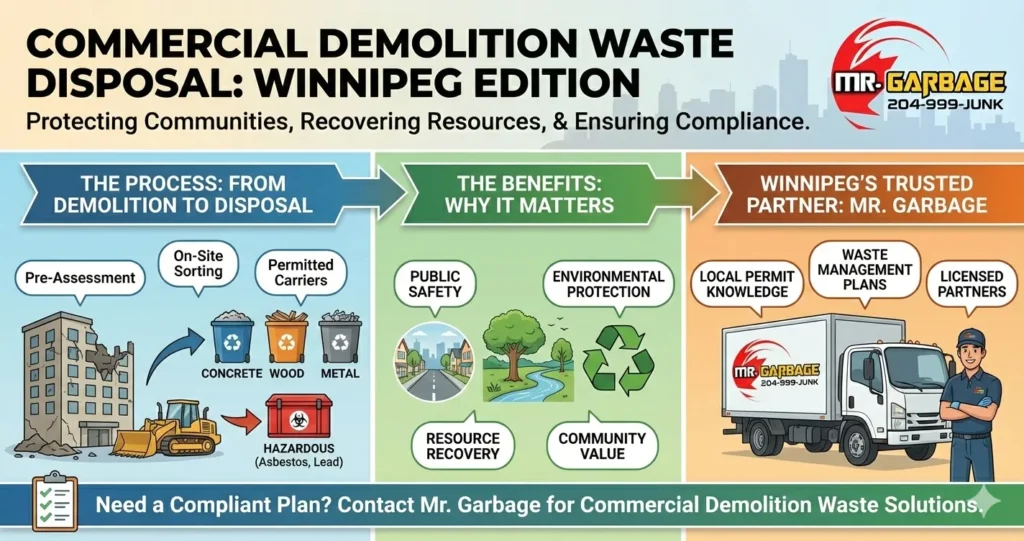
Commercial demolition waste disposal covers the collection, sorting, transport, treatment, and final disposal of materials from demolished commercial buildings and structures. This includes concrete, wood, metals, insulation, roofing, fixtures, and sometimes hazardous materials like asbestos, lead paint, or PCBs. Handling these streams correctly keeps people safe and reduces environmental harm. It also helps projects stay legal and on schedule.
Municipal permits and provincial guidance shape how demolition projects must manage their debris. For example, demolition permits and rules for debris cleanup are part of local building and property standards.
Why commercial demolition waste disposal matters for homeowners and communities
Commercial demolition might sound like a business issue, but its effects reach local neighborhoods. Here’s why it matters for homeowners:
- Public safety. Proper disposal prevents sharp objects, nails, and unstable rubble from creating hazards in adjacent sidewalks, yards, or alleys.
- Environmental protection. Some demolition materials contain hazardous substances. If mishandled, those can leach into soil or waterways. Provincial guidance requires special handling for hazardous demolition debris.
- Traffic and dust control. Well-run disposal plans limit dust, debris scatter, and heavy truck congestion in nearby streets.
- Property values and curb appeal. Clean, contained demolition reduces eyesore effects for neighbours.
- Resource recovery. Much of demolition waste can be recycled or reused, like concrete into aggregate, metal salvaged for scrap, and wood repurposed, which cuts landfill use and supports local circular economy efforts.
What falls under commercial demolition waste disposal?
Common non-hazardous demolition materials
- Concrete, brick, masonry
- Lumber and engineered wood
- Metals (steel, copper, aluminum)
- Roofing materials (shingles, underlayment)
- Drywall and gypsum board
These streams are usually sorted on-site or at a transfer station and then sent to recycling processors, yards, or landfills, depending on condition and local facilities. Policies and available markets determine the final path.
Hazardous demolition materials to watch for
- Asbestos-containing materials
- Lead-based paint chips and dust
- Polychlorinated biphenyls (PCBs) in older caulking or transformers
- Contaminated soils or liquids
- Mercury-containing devices (thermostats, fluorescent tubes)
Materials that may contain these hazards must be identified before demolition and handled under provincial hazardous-waste rules. Manitoba’s guidance explains how to manage demolition debris that may contain hazardous wastes.
The regulatory picture in Manitoba and the local rules in Winnipeg
If you’re near a commercial demolition site in Winnipeg, the project must meet municipal and provincial requirements. The city requires permits for demolition and expects owners to clean up debris. Improper cleanup can trigger enforcement actions.
At the provincial level, Manitoba requires that demolition waste suspected of containing hazardous materials be handled under hazardous-waste regulations. This “cradle-to-grave” approach means generators and contractors must document where waste goes and how it’s treated. The province also supports CR&D (construction, renovation, and demolition) waste diversion through its Green Building Program and related guidelines.
These rules matter because mismanaged demolition waste can create lasting contamination and legal liability. They also shape what demolition waste disposal companies can and cannot accept.
Environmental and economic reasons to manage demolition waste properly
Reduce landfill pressure and conserve materials
Construction and demolition (C&D) waste is one of Canada’s largest waste streams. Managing it properly recovers materials and reduces landfill demand. Studies and national guidance show that diverting C&D materials saves resources and energy.
Prevent contamination
Leftover paints, solvents, asbestos, and treated wood can leach chemicals into soil and groundwater if landfilled improperly. Proper sorting and hazardous waste handling prevent these pollutants from entering local ecosystems.
Support local reuse markets
Crushed concrete becomes road base. Salvaged wood and fixtures can be reused in renovations. Recycling keeps value in the local economy and reduces the need for virgin materials.
How commercial demolition waste disposal is typically handled
1. Pre-demolition assessment and planning
Before work starts, contractors survey the site. They check for hazardous materials, salvageable items, and logistics for trucks and storage. This assessment sets the plan for disposal and recycling. Provincial guidance recommends identifying hazardous materials early, so they are removed and treated correctly.
2. Permits and notifications
Demolition permits and any required environmental notifications are secured. The permit process often requires a brief waste management plan.
3. On-site segregation and salvage
Materials are separated where possible: metal, concrete, wood, gypsum, and hazardous items. Salvageable items like doors, fixtures, and cabinetry are removed for reuse or donation.
4. Secure temporary storage
Hazardous materials and any regulated wastes are stored securely on site until pickup by permitted carriers.
5. Transport by permitted carriers
Haulers with appropriate permits and insurance move materials to recycling facilities, hazardous waste depots, or landfills. For hazardous demolition debris, chain-of-custody and manifests are common requirements.
6. Treatment, recycling, or disposal
Materials go through their selected path: metals to scrap yards, concrete to crushing plants, hazardous solids to licensed treatment or disposal facilities.
Special cases: hazardous demolition waste and what to watch for
Hazardous demolition debris needs extra care. Manitoba’s guidance lays out how to manage materials that may contain lead, PCBs, asbestos, or other regulated materials. If hazardous materials are present, work often involves licensed abatement contractors and hazardous-waste carriers. This prevents accidental spread of contaminants and keeps the project compliant.
Homeowners living near demolition sites should confirm whether the contractor has done pre-demolition testing and abatement. Local complaints about dust or white sheets of debris scattered around a site can signal poor practices. Enforcement can require cleanups and remediation if contamination occurs.
Recycling, reuse, and circular options for demolition projects
There’s growing interest in recovering materials from commercial demolition. Common options include:
- Concrete and masonry: crushed for aggregate or road base.
- Metals: recovered and sold to recyclers.
- Wood: if untreated, can be reused or processed into engineered products.
- Fixtures and fittings: doors, windows, and hardware can be salvaged for reuse.
- Gypsum: can sometimes be recycled into new gypsum products.
Manitoba’s Green Building Program and CR&D guidelines encourage diversion planning and tracking to support these flows. Projects that plan for salvage and recycling often reduce their environmental footprint while supporting secondary markets.
How to choose a commercial demolition waste disposal company
When a project searches for “commercial demolition waste disposal,” look for firms that:
- Know local permits and regulations in Winnipeg and Manitoba.
- Provide a written waste management plan and diversion targets.
- Offer documented chain-of-custody for hazardous materials.
- Have relationships with local recyclers and salvage markets.
- Provide references from other commercial projects in the area.
A good company makes permit compliance simpler and reduces the chance of environmental or neighbour complaints.
What homeowners should expect near demolition sites?
If a commercial building near you is being demolished:
- Expect a permit posted or available through municipal records. The city requires permits for most demolitions.
- Expect dust-control measures, fenced sites, and secure storage of hazardous materials.
- Expect trucks for material removal, and possible temporary traffic adjustments.
- Reach out to the site manager if you have questions or observe unsafe practices. The city will enforce cleanup and safe handling if rules are broken.
A local example (realistic scenario)
A former warehouse in Winnipeg was cleared for redevelopment. The developer hired a contractor who completed an asbestos survey before demolition and arranged licensed abatement. Metal beams and fixtures were salvaged and sold to local recyclers. Concrete was crushed on-site and used as base material for a future parking pad. Hazardous materials were transported by permitted carriers to licensed facilities with documentation. Because the team planned for salvage and recycling, less material went to landfill, and the neighbourhood saw fewer truck trips overall. This type of planning matches provincial and municipal guidance and shows how good demolition waste practices benefit everyone.
Expert perspective
“Good demolition planning starts with identification. When hazardous materials are found early, and salvage is prioritized, projects avoid delays, protect neighbours, and recover resources,” says Dr. Emily Carter, environmental health specialist. “Communities see real benefits when demolition waste is treated as a resource, not just garbage.”
This viewpoint aligns with national guidance that treats construction and demolition as a major recoverable waste stream.
Practical checklist for commercial demolition waste disposal (for project managers)
- Conduct pre-demolition hazardous-material surveys.
- Secure required demolition permits.
- Create a waste management plan with diversion goals.
- Arrange licensed carriers for hazardous loads.
- Separate materials on-site for recycling and salvage.
- Keep records, manifests, and certificates for disposal and recycling.
- Communicate with neighbours about schedules and dust controls.
How Mr. Garbage can help commercial projects in Winnipeg
Mr. Garbage can coordinate commercial demolition waste disposal for developers and contractors in Winnipeg. We work with permitted carriers, local recyclers, and licensed hazardous-waste handlers. We can help build a waste management plan that fits municipal permit requirements and provincial guidance. For homeowners, we can explain what to expect during nearby demolition and who to contact if you see unsafe handling.
Conclusion
Commercial demolition waste disposal matters because it prevents dangerous materials from entering the environment, recovers valuable materials, and helps projects meet legal and community expectations. Whether you’re a developer, a contractor, or a neighbour watching a site near your home, good planning and the right partners make a big difference.
If you’re managing a demolition project or worried about a local site, Mr. Garbage can help connect you with permitted carriers, recycling partners, and licensed hazardous-waste firms. A clear plan for commercial demolition waste disposal is the quickest way to reduce risk and improve outcomes for everyone involved.
Need help with commercial demolition waste disposal in Winnipeg? Contact Mr. Garbage to get a compliant waste plan, arrange permitted pickups, or learn how demolition can be cleaner and safer for your neighbourhood.
Frequently Asked Questions (FAQs)
Q1: What is commercial demolition waste disposal?
A1: It’s the process of collecting, sorting, transporting, treating, and disposing of materials from demolished commercial buildings. This includes recycling and managing hazardous demolition debris in accordance with provincial rules.
Q2: Do demolition sites need permits in Winnipeg?
A2: Yes. Winnipeg requires permits for most demolitions, and property owners must clean up debris and follow bylaw rules. Check the city’s demolition permit pages.
Q3: How are hazardous materials handled during demolition?
A3: Hazardous materials are identified in pre-demolition assessments, abated by licensed teams if needed, and transported by permitted carriers to licensed treatment facilities with proper documentation. Manitoba provides guidance on these procedures.
Q4: Can demolition materials be recycled?
A4: Yes. Many materials, like concrete, metal, wood, and fixtures, can be recycled or reused. Planning for salvage and recycling reduces landfill use and supports local markets.
Q5: What should neighbours expect during a commercial demolition?
A5: Expect dust controls, fenced sites, truck traffic, and posted permits. If you see unsafe handling or debris left in public areas, contact the city’s bylaw enforcement.
Sources
- City of Winnipeg: Demolitions and demolition debris rules.
- Manitoba Sustainable Development: Managing demolition debris containing hazardous wastes.
- Manitoba Green Building Program: Construction, Renovation, and Demolition Waste Management Guidelines.
- Council of Canadian Ministers of the Environment (CCME)/national guidance on construction and demolition waste.