
Renovations and moves are busy times. Waste accumulates fast. If your business does not plan for business waste collection, you may face delays, safety issues, or rejected loads at recycling depots. Planning the collection early keeps your site clean and helps you recycle or donate reusable items. This saves time and reduces landfill waste.
This guide walks through:
- What counts as commercial renovation and moving waste?
- Local Winnipeg rules and municipal services.
- How to choose containers and schedule pickups.
- Sorting, recycling, and donation tips.
- A realistic Winnipeg case and a checklist you can use today.
What is business waste collection, and why does it matter during renovations
Business waste collection means the organized removal of waste from companies and institutions. It covers regular garbage, recyclables, and specialized streams such as construction debris and electronics.
Why it matters during renovations and moves:
- Renovations generate mixed waste that municipal curbside pickup won’t accept.
- Improper disposal risks fines and site delays. The city limits certain materials to designated depots and programs.
- The non-residential sector produces a large share of disposed waste nationally, so commercial projects are a key place to reduce landfill loads.
Good business waste collection keeps projects on schedule and helps your company meet environmental goals. It also makes your workplace safer during heavy activity.
Know the local rules and Winnipeg’s approach to commercial waste
Before you hire anyone, know what the city offers and what it does not.
City services and limits for small businesses
Winnipeg provides a service for small businesses and registered charities with set limits on weekly collections. If your renovation or move will exceed those limits, you’ll need a private commercial collection. Check the city’s small business service rules to confirm whether your project fits the municipal collection.
Extra garbage and large-item rules
The City of Winnipeg has rules for extra garbage and large items. For large appliances and bulky furniture, residents request extra pickups ahead of time. Businesses should not assume the same rules apply; for larger volumes or construction debris, private business waste collection is usually required.
Provincial and environmental rules
Some waste needs special handling, like paint, solvents, refrigerant-containing appliances, and regulated construction materials. The Province of Manitoba and federal guidance outline how to manage hazardous components. Make sure your hauler follows those rules or refers you to licensed processors.
Plan your business waste collection before work starts
A little planning avoids big problems. Use this simple schedule.
Step 1: Audit your waste
Identify expected waste streams:
- General refuse (paper, packaging).
- Recyclables (cardboard, metal).
- Construction debris (drywall, wood, insulation).
- Bulky items (furniture, cabinets).
- Hazardous/special items (paints, batteries, refrigerant appliances).
Document volumes roughly and note any special handling needs.
Step 2: Choose containers and frequencies
Decide on containers:
- Smaller commercial bins for office waste and recyclables.
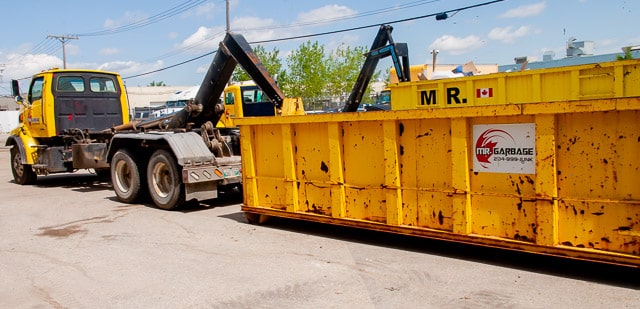
- Roll-off bins or big bins for demo debris and demolition.
- Palletized bins for cardboard.
Match pickup frequency to the project phase. Renovation demolition needs a faster turnover than a staged office move.
Step 3: Permit and placement checks
If a bin will sit on a public right-of-way or street, confirm permit rules. Some haulers carry permits and manage placement for you. Ask the hauler if they handle permits to simplify logistics. Mr. Garbage, for example, provides permit support for street placements.
Step 4: Communication and signage
Prepare clear signage at the site that shows where materials go. Train staff and contractors on the sorting plan. This small step increases diversion and reduces contamination of recycling streams.
Choosing the right partner for business waste collection
Picking the wrong hauler costs time. Use this checklist to vet providers.
What to ask prospective haulers
- Do you offer commercial business waste collection for renovations and office moves?
- What containers and pickup windows do you offer?
- Can you handle mixed construction debris and hazardous materials?
- Do you document disposal and provide diversion reporting?
- Do you have the required licences, insurance, and local permits?
Providers that offer audits and documented routing to recycling partners help you track environmental performance. Mr. Garbage offers audits and routing to certified processors for commercial clients.
Compare services, not just price
Focus on reliability, safety practices, and diversion rates. A hauler with strong recycling partnerships reduces landfill waste and improves your company’s sustainability.
Sorting, recycling, and donation: how to divert more from landfill
Renovation projects can divert a lot if you plan.
Separate early on-site
Set up zones: salvage, recycle, landfill, hazardous. Keep reusable fixtures and furniture in a clear salvage area. This improves donation and reuse rates.
Work with donation and salvage partners
Many charities accept working furniture, fixtures, and appliances. Work with a hauler who can coordinate donations to local groups. It often saves time compared to separate donation logistics.
Recycle construction materials
Materials like metal, clean wood, and concrete often have local recycling streams. A dedicated roll-off for metal and another for mixed demolition makes separation easier.
Handle special waste correctly
E-waste, refrigerant appliances, paints, and solvents must go to managed depots or certified processors. Your hauler should be able to route those items correctly or advise you where to take them. The province and municipal pages have lists of acceptable routes.
Real Winnipeg example of office renovation done right
A mid-sized Winnipeg office scheduled a floor renovation. They followed a plan:
- Performed a quick waste audit with their chosen hauler.
- Booked two roll-off bins: one for clean wood/metal, one for mixed demo.
- Set aside reusable desks for donation and arrange pickup with a local charity.
- Labeled zones in the workspace and gave crews a one-page sorting guide.
- Asked the hauler for a disposal report after the job.
Result: the site was cleared on schedule, most metal and wood went to recycling, and usable desks were donated. The company used the hauler’s disposal receipts for internal reporting and sustainability records. This kind of planning reduces landfill waste and keeps the project moving.
(This example reflects common best practices used across Winnipeg businesses and mirrors guidance from local haulers and municipal sources.)
Health and safety: protect workers and the public during waste collection
Safety matters during busy projects.
Basics to require from your hauler
- Trained crews for lifting heavy items safely.
- Proper PPE is on site for workers handling debris.
- Secure loading and covered bins to prevent debris escape.
- Procedures for hazardous or potentially contaminated materials.
Include safety language in the contract so crews and contractors follow the same rules. A safe site reduces injuries and avoids project delays.
Documentation and compliance with what you should expect
Keep records for accountability.
Disposal and diversion receipts
For commercial projects, ask for a disposal manifest or diversion report that shows where the material went. These documents help with audits and sustainability reporting. Mr. Garbage and similar commercial providers can provide routing documentation when requested.
Permits and municipal compliance
If your bin sits on a boulevard or street, save the permit info. If you work with a hauler that holds permits, ask for confirmation that they have the right permit for your placement.
Expert perspective
“Renovation and move waste is where good planning pays off,” says Dr. Sarah McIntyre, environmental management specialist. “A quick waste audit and the right containers cut handling time and increase recycling. Small businesses that set rules for sorting early avoid most common delays.”
This captures the experience of waste managers and municipal guidance across Canada. Use audits and documented routing to make your project cleaner and faster.
Quick checklist of business waste collection for renovation and move day
- Audit waste streams and identify hazardous items.
- Book appropriate containers early (roll-off or commercial bins).
- Confirm permits for street placement if needed.
- Set up clear sorting zones and signage.
- Coordinate donation and recycling partners for reusable items.
- Require disposal and diversion documentation from your hauler.
- Ensure safety rules for lifting and hazardous handling.
Use this checklist at project start and keep it visible to crews and contractors.
Conclusion
Renovations and office moves don’t have to be messy. Plan business waste collection early, pick the right containers, train crews, and work with a trusted local hauler who provides diversion documentation. Winnipeg’s municipal services help smaller businesses, but larger projects need private commercial collection for a smooth result. Mr. Garbage offers audits, roll-off bins, pick up schedules, permit support, and routing to certified processors for commercial clients, a useful partner when projects run large or include mixed debris. If you’re planning a renovation or office move, contact Mr. Garbage to discuss bin options and a collection plan that fits your timeline and compliance needs.
Frequently Asked Questions (FAQs)
Q1: What is included in business waste collection during renovations?
A1: It typically covers general refuse, recyclables, construction debris, bulky items, and special waste streams (like e-waste or appliances). Plan separate containers for different streams to maximize recycling.
Q2: Can my small business use Winnipeg’s municipal collection during a renovation?
A2: Winnipeg offers limited small-business services. If your renovation creates more waste than the city accepts, you’ll need private commercial business waste collection. Check the City of Winnipeg small business rules.
Q3: How do I handle hazardous materials during a renovation?
A3: Hazardous items like paints, solvents, and refrigerant appliances require special handling. Work with a hauler experienced in routing such items to licensed processors or follow provincial guidance for disposal.
Q4: Should I get a permit to place a bin on the street?
A4: If the bin occupies public right-of-way, you may need a permit. Some haulers hold permits on behalf of customers. Confirm permit rules with your hauler or the city before delivery.
Q5: What documentation should my waste hauler provide after pickup?
A5: Request disposal receipts and diversion reports that show where materials were taken and recycled. These documents help with compliance and sustainability tracking.
Sources
- City of Winnipeg: Extra garbage & large-item pickup and small-business services.
- Mr. Garbage: Commercial waste management and bin rental services in Winnipeg.
- Statistics Canada/Environment and Climate Change Canada: Waste diversion and disposal indicators (national context for non-residential sector).
- Province of Manitoba: WasteWise guidance on recycling and provincial rules for special wastes.