
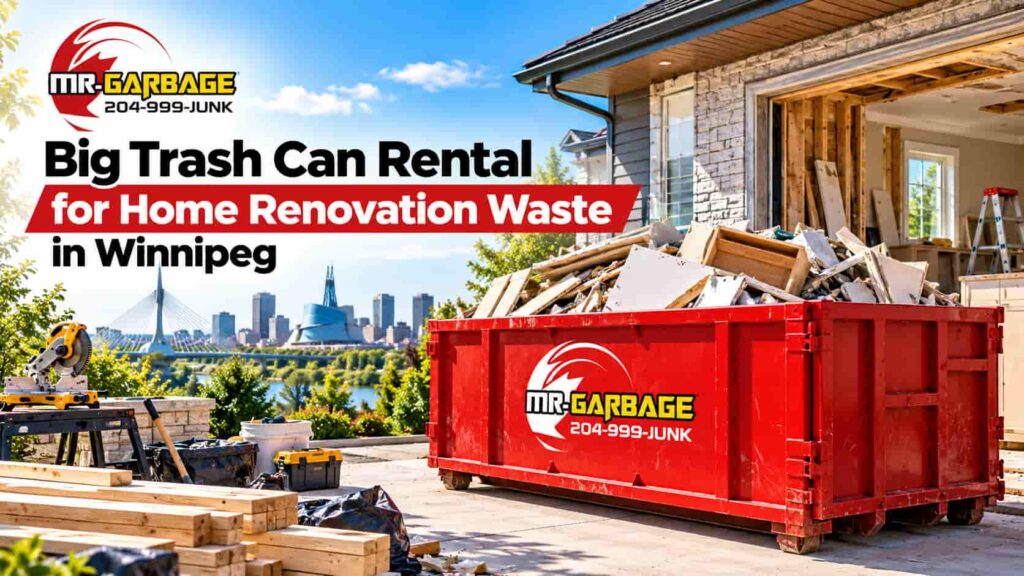
Home renovations can create more waste than many homeowners expect. Removing old cabinets, replacing flooring, tearing out drywall, or updating a bathroom can leave you with piles of debris. Regular household garbage collection may not be suitable for this type of cleanup.
A big trash can rental gives you a convenient place to collect renovation waste while work is underway. Instead of filling your regular garbage cart or making repeated trips to disposal facilities, you can put suitable materials in a dedicated bin and arrange for collection when your project is finished.
For homeowners in Winnipeg, choosing the right container also means considering the type of debris, available space, and local disposal rules. Some materials can go into a rental bin, while others need separate handling.
Mr. Garbage provides residential garbage bin rentals for home improvement, renovation, and cleanup projects in Winnipeg and surrounding communities. Whether you’re updating a kitchen in River Heights, finishing a basement in St. Vital, or renovating a home in Charleswood, planning waste removal early can help keep your project organised.
Why Home Renovations Need a Big Trash Can Rental
Even a small renovation can produce bulky materials that are difficult to manage with regular household collection.
For example, replacing kitchen cabinets may leave you with old cupboards, broken trim, packaging, and pieces of wood. A bathroom renovation can produce damaged tiles, flooring, drywall, and removed fixtures. Larger projects may create waste from several rooms at once.
A dedicated bin helps keep suitable waste in one place. It also reduces the need to move debris around your property as work progresses.
Common renovation projects that create bulky waste
A rental bin may be useful for projects such as:
- Kitchen renovations involving old cabinets, countertops, and flooring
- Bathroom upgrades that remove tiles, vanities, and drywall
- Basement renovations involving framing, drywall, and old carpets
- Flooring replacement throughout several rooms
- Interior demolition before a home remodel
- Garage conversions and storage-area cleanouts
- Deck, fence, or other home improvement projects that create bulky debris
The right container depends on the materials being removed and how much waste the project will produce. Heavy materials also need special consideration because a bin can reach its weight limit before it looks full.
What Can You Put in a Renovation Waste Bin?
Before ordering a bin, make a list of the materials you expect to remove. This helps you discuss the project with your rental provider and confirm which items are accepted.
Common household renovation materials
Depending on the provider’s rules, renovation bins may accept materials such as:
- Old cabinets and shelving
- Non-hazardous wood scraps
- Drywall and plasterboard
- Flooring and carpet
- Interior trim and doors
- Packaging and cardboard
- Non-hazardous household junk
- Certain construction and demolition debris
Do not assume every item is accepted simply because it comes from a home renovation. Materials may have different handling requirements, and some items can affect how the load is transported or processed.
For example, a load of bulky cabinets is different from a load of dense concrete or masonry. Tell the rental company what you plan to discard before filling the container.
Materials that may need separate disposal
Paint, solvents, fuel, batteries, pesticides, and other household chemicals should not automatically go into a general renovation bin. Electronics and certain appliances may also require separate recycling arrangements.
Asbestos-containing materials need particular care. Do not disturb or dispose of suspected asbestos-containing material as ordinary renovation waste. Seek qualified advice about safe assessment and removal.
The City of Winnipeg’s 4R Winnipeg Depots accept various recyclable, reusable, compostable, and household hazardous materials. Accepted items vary by category, so check the current list before transporting anything.
When in doubt, ask your waste management provider how to handle the material safely.
How to Choose the Right Big Trash Can Rental
Choosing a bin is not just about finding the largest container available. You need one that suits your project’s waste volume, material type, and available placement space.
Match the bin to the renovation.
Start by listing the rooms you plan to renovate and the materials you expect to remove.
A bathroom update may produce a different mix of waste from a basement renovation. A whole-home project may create debris over several stages, so you should consider how much material will be removed throughout the work.
Mr. Garbage offers walk-in, easy-load bins in several sizes, including options for residential renovations and larger cleanup projects. You can review its home renovation bin rental services in Winnipeg and discuss your project’s requirements before choosing a container.
Avoid choosing a bin based only on the size of the room. Heavy materials, bulky furniture, and long pieces of timber all take up space in different ways.
Consider the type and weight of the waste.
Volume is only one part of the decision.
Concrete, bricks, tiles, and other dense materials can become heavy quickly. Large quantities of drywall, wood, or mixed demolition debris may also require a different approach from a light household cleanout.
Tell your provider whether the project includes masonry, roofing materials, soil, or other heavy debris. Ask whether these materials are accepted and whether any loading limits apply.
Check the available space.
Before delivery, look at where the bin will sit. A driveway may be suitable, but the placement area must provide enough room for delivery and collection.
Consider:
- The width and length of your driveway
- Access for the delivery truck
- Nearby vehicles and parked equipment
- Garage doors, gates, and walkways
- Low branches or overhead obstructions
- Safe access for people working around the bin
If your property has limited space, share the details with the rental company before booking. A suitable placement plan can help prevent delays and keep access to your home clear.
How to Prepare Your Home Before Bin Delivery
A little preparation can make renovation waste removal easier.
First, choose a suitable location. Remove parked vehicles and movable items from the planned delivery area. Make sure the truck can reach the spot without being blocked by landscaping, narrow gates, or overhead obstacles.
Next, organise the work area. Keep tools, building materials, and items you plan to reuse away from the bin. This reduces the chance of throwing away something useful by mistake.
You should also decide how waste will be moved from the renovation area to the container. If workers are carrying debris from a basement or upper floor, plan a clear route that avoids unnecessary lifting and tripping hazards.
Before delivery, confirm the following with your provider:
- The bin’s approximate dimensions
- The materials accepted
- Any restrictions on heavy or bulky items
- The expected delivery and collection arrangements
- The loading level and safety requirements
- Whether your proposed placement location is suitable
These checks are useful whether you’re renovating a bungalow in St. James, updating a townhouse in Bridgwater, or improving a property in North Kildonan.
Managing Renovation Waste Responsibly in Winnipeg
Waste removal is about more than getting debris off your property. Some materials can be reused or recycled, while others need special handling.
Statistics Canada reported that 27.5 million tonnes of non-hazardous waste were sent to public and private disposal facilities across Canada in 2024. Household waste accounted for 11.1 million tonnes of that total. These figures show why thoughtful waste management matters across the country.
You can read the figures in Statistics Canada’s Waste Management Survey: Waste Disposal, 2024.
Homeowners can make better disposal choices by separating suitable materials before throwing everything into a mixed load.
Reuse and recycle what you can
Before discarding old cabinets, doors, fixtures, or usable building materials, consider whether someone else could use them. Donations or resale may be possible if the items are in suitable condition.
Clean cardboard, empty metal containers, and other accepted recyclables should be separated when practical. Check the current City of Winnipeg guidance to find the correct destination for each material.
The City’s community recycling depots accept items such as cardboard, paper, and empty containers. They do not accept general garbage, furniture, appliances, or construction materials. Some of these items may be accepted at a 4R Winnipeg Depot instead.
Review the City’s community recycling depot guidelines before taking materials to a drop-off location.
Keep hazardous materials separate.
Do not mix chemicals, paint, batteries, or other restricted items with ordinary renovation debris unless a provider has specifically confirmed that the material is accepted.
Keep hazardous products in their original containers where possible, and follow the disposal instructions for each item. Never pour chemicals into a drain or leave them loose in a container.
A professional waste management service can explain which renovation materials its bins accept. For items that need specialist handling, use an appropriate collection or disposal programme.
Why Local Waste Management Services Matter
Searching for waste management services near me can help you find providers that serve your area and understand local collection needs. But location should not be your only consideration.
Look for a company that explains its bin options, confirms accepted materials, and provides clear instructions for delivery, loading, and collection.
Local knowledge can also help with practical issues such as residential access, driveway placement, and busy streets. These details matter in established neighbourhoods like Wolseley, Crescentwood, Fort Garry, and St. Boniface, as well as newer communities such as Sage Creek, South Pointe, and Prairie Pointe.
Residential waste management services for renovation projects
Residential waste management services can help homeowners manage bulky waste that does not fit into regular household collection.
A rental bin is useful when debris is produced over several days or when a project involves more material than a standard garbage cart can hold. It gives workers a designated place to put accepted waste as the renovation progresses.
Mr. Garbage offers bin rental services for home renovation, construction debris, and general cleanup projects. Its walk-in, easy-load containers are designed to make loading more accessible than reaching over a tall container wall.
Before booking, explain the size and nature of your project. The provider can then help you identify a suitable bin option and clarify the rules for your materials.
Common Mistakes to Avoid When Renting a Renovation Bin
A few simple mistakes can make waste removal harder than it needs to be.
Booking after demolition has started
If you wait until debris has already piled up, you may have to move materials more than once. Arrange waste removal before the main demolition work begins whenever possible.
Choosing a bin without checking the materials
Not every bin is suitable for every type of waste. Confirm whether your load can include drywall, treated wood, roofing debris, masonry, or other project-specific materials.
Overloading the container
Keep waste within the loading limits provided by the rental company. Do not allow debris to extend above the permitted fill line or create a load that cannot be transported safely.
Mixing restricted waste with general debris
Paint, chemicals, batteries, and other restricted materials may need separate handling. Identify these items early so they do not get mixed into the renovation load.
Blocking access to the bin
Leave a clear route for loading and collection. Avoid stacking building supplies, parking vehicles, or placing equipment where it prevents safe access.
Forgetting about recycling
Not everything removed during a renovation needs to become general waste. Set aside suitable items for reuse or recycling when practical, and check local disposal guidance for anything you’re unsure about.
Finding a Waste Management Provider in Winnipeg
When comparing waste management services, focus on whether the provider suits your project rather than choosing based on the bin alone.
Ask about the range of container sizes, delivery arrangements, collection procedures, and accepted waste types. Make sure you understand any restrictions before work begins.
You can also check whether the company serves your neighbourhood. Mr. Garbage serves Winnipeg and surrounding communities, including areas around East Kildonan, Transcona, St. Vital, Charleswood, Fort Garry, and St. James.
If you are planning a kitchen remodel, basement renovation, flooring replacement, or larger home improvement project, visit Mr. Garbage’s website to explore its services and contact the team about your requirements.
The goal is to have a practical waste-removal plan before debris begins to accumulate.
Conclusion
Home renovation projects can leave behind bulky materials that regular household garbage collection is not designed to handle. Choosing the right container, checking accepted materials, and preparing a safe placement area can make cleanup more manageable.
A big trash can rental can be a practical option for homeowners who need a dedicated place for suitable renovation debris. It also helps keep waste organised while work continues.
Remember to separate reusable and recyclable materials where possible. Keep hazardous products out of general waste containers unless their acceptance has been confirmed, and check local disposal guidance for items that need special handling.
If you’re renovating a home in Winnipeg, Mr. Garbage can help you explore bin rental options for your project. Visit Mr. Garbage or contact the team to discuss your renovation waste and find a suitable bin for your cleanup.
Frequently Asked Questions (FAQs)
1. What is a big trash can rental used for during home renovations?
A big trash can rental provides a dedicated container for accepted renovation debris, such as old cabinets, flooring, drywall, wood scraps, and other non-hazardous materials. The right option depends on the amount and type of waste your project produces.
2. What size bin should I rent for a home renovation in Winnipeg?
The suitable size depends on the rooms being renovated, the materials being removed, and the available placement space. Larger projects may need more capacity, while heavy materials can reach loading limits quickly. Explain your project to the rental provider before selecting a bin.
3. Can I put paint, batteries, or chemicals in a renovation waste bin?
Do not assume these items are accepted in a general renovation bin. Paint, batteries, household chemicals, and other hazardous materials may need separate handling. Check with your rental provider and consult the City of Winnipeg’s current disposal guidance.
4. Do I need to prepare my driveway before a rental bin arrives?
Yes. Make sure the planned location has enough space for the container and delivery truck. Clear away parked vehicles and other obstructions, and check for low branches or overhead obstacles. Confirm the placement requirements with the rental company before delivery.
5. Where can I find residential waste management services near me in Winnipeg?
Look for a provider that serves your neighbourhood, offers suitable bin options, explains accepted materials, and confirms delivery and collection arrangements. Mr. Garbage provides residential bin rentals for renovation and cleanup projects in Winnipeg and surrounding communities. Visit its website to learn more and discuss your needs.