
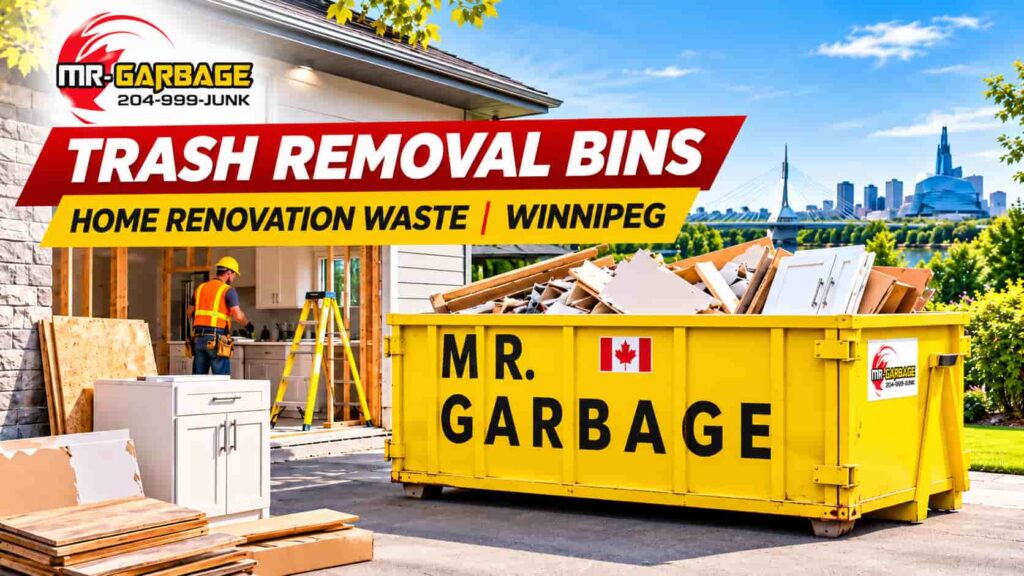
Home renovations can create a lot of waste. Removing old kitchen cabinets, replacing flooring, renovating a basement, or updating a bathroom can leave behind piles of unwanted materials. Regular household garbage collection is not designed to handle every type of renovation debris.
That is where trash removal bins can help. A rental bin gives you a dedicated place to collect suitable waste while your renovation is underway. Instead of filling your regular garbage cart or making repeated trips to disposal facilities, you can keep accepted materials in one container and arrange for pickup when the project is complete.
For homeowners in Winnipeg, choosing the right bin involves more than finding a container that looks large enough. You need to consider the type of waste, its weight, the available space on your property, and local disposal requirements.
Mr. Garbage provides residential garbage bin rentals for home renovations, cleanouts, and other cleanup projects. Whether you are updating a kitchen in River Heights, renovating a basement in St. Vital, or improving a property in Charleswood, having a waste removal plan can make the work easier to manage.
Why Do Home Renovations Need Trash Removal Bins?
Even a small renovation can produce more waste than homeowners expect. A kitchen update may leave old cabinets, countertops, flooring, packaging, and wood scraps. A bathroom renovation can produce broken tiles, drywall, vanities, and removed fixtures.
These materials can quickly take over your driveway, garage, or yard.
A dedicated bin gives workers and homeowners one place to put suitable debris. It also helps keep the renovation area organised and reduces the need to move waste around the property.
Common renovation projects that produce waste
You may need a rental bin for projects such as:
- Kitchen renovations involving cabinets, countertops, and flooring
- Bathroom upgrades involving tiles, vanities, and drywall
- Basement renovations involving framing, carpets, and drywall
- Whole-home renovations and interior demolition
- Garage conversions and storage-area cleanouts
- Deck and fence replacements
- Roofing and exterior improvement projects
- Removing old doors, shelving, and built-in furniture
For example, a homeowner in Fort Garry replacing kitchen cabinets may produce a mixture of wood, packaging, countertop material, and general renovation debris. Keeping these materials in a suitable container can make the cleanup easier.
A larger renovation may create waste over several days. In that situation, having a bin delivered before demolition begins gives you a place to put debris as the work progresses.
Why regular garbage collection may not be enough
Household garbage carts have limited capacity and are intended for regular residential waste. They are not a practical solution for large quantities of drywall, old flooring, cabinets, or demolition materials.
The City of Winnipeg also has rules about extra garbage and large-item collection. Some materials have to be handled through separate disposal or recycling programmes.
A rental bin may be a more suitable option when your renovation produces a steady amount of bulky waste that needs to be collected from your property.
What Can You Put in Renovation Trash Removal Bins?
Before arranging a rental, make a list of the materials your project will produce. This helps you confirm which items are accepted and whether any need separate handling.
Common household renovation debris
Depending on the rental provider’s acceptance rules, suitable renovation waste may include:
- Old kitchen cabinets and shelving
- Non-hazardous wood scraps
- Drywall and plasterboard
- Old flooring and carpet
- Interior doors and trim
- Packaging and cardboard
- Non-hazardous household junk
- Certain construction and demolition debris
These materials often come from projects where homeowners are replacing existing fixtures or removing old interior finishes.
However, acceptance rules can vary. A provider may have restrictions on certain types of wood, insulation, flooring, or mixed construction debris. Always confirm before loading the container.
Heavy renovation materials
Some materials are much heavier than they look. Concrete, bricks, tiles, soil, and masonry can add significant weight to a load.
For example, removing a tiled bathroom floor may not create a very large pile, but the material can be heavy. A bin that is suitable for light household debris may not be suitable for a large quantity of concrete or masonry.
Tell your rental provider if the project includes:
- Concrete and broken masonry
- Bricks and patio stones
- Ceramic tiles
- Soil and other clean fill
- Roofing materials
- Large quantities of plaster or drywall
Ask whether these materials are accepted and whether they need a dedicated container or separate disposal arrangement.
Items that need separate disposal
Not everything from a home renovation belongs in a general waste bin.
Paint, solvents, fuel, pesticides, batteries, and household chemicals may require special handling. Electronics and some appliances may also need separate recycling arrangements.
Asbestos-containing materials require particular care. If you suspect that old insulation, flooring, or another building material contains asbestos, do not disturb it or place it in a regular rental bin. Get advice from qualified professionals about assessment and safe removal.
The City of Winnipeg’s 4R Winnipeg Depots accept a range of recyclable, reusable, compostable, and household hazardous materials. Check the current accepted-item list before taking anything to a depot.
How to Choose the Right Trash Removal Bins for Your Project
Choosing a container is not simply about selecting the largest available option. The right choice depends on the amount of waste, the materials being removed, and the space available at your property.
Match the bin size to the renovation
Start by looking at the full scope of your project.
A bathroom renovation may produce a different amount of debris from a kitchen remodel. A basement renovation involving several rooms may require more capacity than a small flooring replacement.
Consider:
- How many rooms are being renovated
- Whether walls, cabinets, or flooring are being removed
- How much bulky material will be discarded
- Whether the project will produce waste over several days
- Whether heavy materials are part of the load
Mr. Garbage offers walk-in, easy-load bins in several sizes, ranging from smaller residential options to larger containers for major renovation and construction projects.
You can explore its home renovation bin rental services in Winnipeg to learn about the available containers and discuss your project requirements.
Consider the weight of your waste
Volume is only one part of choosing a bin. Weight matters too.
A container filled with old furniture and light wood scraps is different from one filled with concrete, bricks, or ceramic tiles.
Do not assume that a container can be filled to the top with every type of material. Ask the provider about weight limits and loading requirements.
Check the available placement space
Before delivery, decide where the container will be placed.
A driveway may be suitable, but the delivery truck needs enough room to reach the location and position the bin safely.
Check for:
- Parked vehicles
- Narrow gates and entrances
- Low tree branches
- Garage doors and overhead structures
- Walkways and access points
- Landscaping that could be affected by delivery
If you have limited space, explain the property layout before booking. Mr. Garbage uses hook-lift trucks to place bins in suitable driveways, parking areas, and tighter locations.
How Trash Removal Bin Rental Works
The rental process is straightforward when you plan ahead and provide clear information about your renovation.
Step 1: Describe your renovation project
Start by explaining what work you are doing and what materials need to be removed.
For example, tell the provider whether you are replacing kitchen cabinets, removing basement flooring, or completing a larger home renovation.
A clear description helps the company understand the type of container that may suit your project.
Step 2: Confirm accepted materials
Ask which materials can go into the bin. Mention any unusual or heavy items, including concrete, bricks, treated wood, or roofing debris.
Also ask about restricted materials such as paint, batteries, chemicals, and appliances.
It is better to confirm these details before delivery than to discover that some of your waste cannot be placed in the container.
Step 3: Arrange delivery and placement
Choose a suitable location and make sure the delivery area is clear.
If you want the bin placed on a public street, confirm the permit arrangements with your provider. Street placement is different from placing a container entirely on private property.
Mr. Garbage provides delivery and pickup for its rental bins and can discuss suitable placement based on your property and project.
Step 4: Load the container safely
As renovation work continues, place accepted materials in the bin.
Keep heavier items distributed as instructed. Do not allow debris to extend above the permitted fill line, and never overload the container.
Keep hazardous and restricted materials separate.
Step 5: Arrange pickup
When the renovation waste has been loaded, contact the provider to arrange collection.
Make sure the truck can access the container. Move vehicles and other obstructions away from the pickup area.
Planning the pickup around your renovation schedule can help keep the property clear for the next stage of work.
Why Local Trash Removal Services Matter in Winnipeg
Searching for trash removal services near your home can help you find a provider that understands local collection needs and serves your neighbourhood.
Local experience is useful because residential properties vary. Some homes have wide driveways, while others have narrow lanes or limited space. Placement arrangements can also differ between older neighbourhoods and newer developments.
For example, a renovation in Wolseley may have different access challenges from a project in Sage Creek or Bridgwater.
Residential waste removal across Winnipeg neighbourhoods
Homeowners in the following areas may need bin rental services for renovations and property cleanouts:
- River Heights and Crescentwood: Kitchen upgrades, basement renovations, and interior improvements.
- Charleswood and Tuxedo: Home extensions, garage cleanouts, and larger property projects.
- St. Vital and St. Boniface: Bathroom renovations, flooring replacement, and household cleanouts.
- Fort Garry and Whyte Ridge: Basement development, home remodelling, and general renovation debris.
- St. James and Wolseley: Older-home improvements, fixture replacement, and interior renovation work.
- Transcona and East Kildonan: Garage renovations, flooring projects, and property upgrades.
- North Kildonan and Garden City: Home improvement projects and larger household cleanouts.
- Linden Woods, Sage Creek, and Bridgwater: Kitchen, basement, and outdoor renovation projects.
Mr. Garbage serves Winnipeg and surrounding communities. Contact the company to confirm service availability for your address.
Responsible Disposal and Recycling During Home Renovations
Waste removal is not only about getting unwanted materials off your property. Some items can be reused or recycled, while others need special disposal.
Statistics Canada reported that Manitoba generated 925,185 tonnes of waste for disposal in 2024, including 307,475 tonnes from residential sources. These figures show that household waste is an important part of the province’s overall waste management system.
You can review the figures in Statistics Canada’s Disposal of waste, by source dataset.
Homeowners can make better disposal choices by separating suitable materials before loading a rental container.
Reuse materials that are still in good condition
Before throwing everything away, check whether some items can be reused.
You may be able to:
- Donate usable kitchen cabinets
- Give away working appliances
- Reuse doors and shelving
- Sell suitable fixtures and furniture
- Recycle clean cardboard and eligible metal items
Not every material will be suitable for reuse, but separating useful items can reduce the amount of waste that needs disposal.
Use the correct recycling and disposal facilities
The City of Winnipeg operates 4R Depots where residents can drop off various recyclable, reusable, and compostable materials.
The Brady Road 4R Depot accepts garbage as well as a range of other materials. The Pacific Avenue and Panet Road depots have different services and do not accept general garbage.
Community recycling depots accept materials from the City’s regular blue-cart recycling programme. They do not accept furniture, appliances, construction materials, household hazardous waste, or general garbage.
Check the City’s community recycling depot information before taking materials to a drop-off location.
Common Mistakes to Avoid When Renting a Trash Removal Bin
A few simple mistakes can make renovation waste management more difficult.
Waiting until demolition begins
If you wait until debris has already piled up, you may need to move it more than once.
Arrange the container before the main demolition work starts. This gives workers a designated place to put accepted materials.
Choosing a bin without checking the waste type
A bin suitable for household junk may not be suitable for heavy masonry or certain construction materials.
Tell the provider what you plan to discard. Ask about any restrictions before loading.
Overfilling the container
Do not load waste above the permitted fill line. Overfilled containers can create safety problems during transport.
Follow the provider’s instructions and keep the load within the allowed limits.
Mixing hazardous waste with regular debris
Paint, solvents, fuel, batteries, and chemicals should not be mixed with general renovation waste unless the provider specifically confirms acceptance.
Keep these items separate and use an appropriate disposal programme.
Blocking access for delivery or pickup
Do not park vehicles or store building materials where they block the container.
Keep the delivery and pickup area clear so the truck can access the bin safely.
How Mr. Garbage Supports Home Renovation Waste Removal
Managing renovation debris can be difficult when waste is produced over several days. A suitable container gives homeowners and contractors a central place to collect accepted materials.
Mr. Garbage provides residential garbage bin rentals for renovation projects, construction debris, and household cleanouts in Winnipeg.
Its walk-in, easy-load bins are available in several sizes. This design makes it easier to place bulky materials into the container without lifting everything over a high side wall.
The company also uses hook-lift trucks for delivery and pickup at suitable residential and commercial locations.
If you are planning a renovation, share the project details before booking. Explain the type of waste, the available placement area, and whether your load includes heavy or restricted materials.
You can visit the Mr. Garbage website to explore its services or contact the team about your project.
Conclusion
Home renovations often produce more waste than regular household collection can handle. Old cabinets, flooring, drywall, wood scraps, and other bulky materials need a suitable disposal plan.
The right container depends on your renovation, the type of debris, the available space, and any weight or loading restrictions. Sorting reusable and recyclable materials before disposal can also help reduce unnecessary waste.
For homeowners planning a renovation in Winnipeg, trash removal bins offer a practical way to collect accepted debris in one place while work continues.
Mr. Garbage provides residential bin rental services for home renovations, construction debris, and property cleanouts in Winnipeg and nearby communities.
Planning a home renovation? Visit Mr. Garbage or call (204) 999-5865 to discuss your project and find a suitable trash removal bin for your renovation waste.
Frequently Asked Questions (FAQs)
1. What are trash removal bins used for during home renovations?
Trash removal bins are used to collect suitable renovation debris, including old cabinets, drywall, flooring, wood scraps, and general non-hazardous construction waste. They provide a central place to store waste until the rental provider collects the container.
2. What size trash removal bin do I need for a home renovation?
The suitable size depends on the number of rooms being renovated, the amount of debris, and the type of materials being removed. Heavy materials such as concrete and tiles need special consideration. Explain your project to the rental provider before selecting a container.
3. Can I put old cabinets, drywall, and flooring in a rental bin?
These materials may be accepted by renovation bin rental providers, but acceptance rules vary. Confirm whether your specific cabinets, drywall, flooring, and other materials are allowed before loading the container.
4. Can hazardous materials go into trash removal bins?
Hazardous materials such as paint, solvents, fuel, batteries, and household chemicals should not be placed in a general rental bin unless the provider has specifically confirmed acceptance. These items may require separate disposal through an appropriate facility.
5. Where can I rent trash removal bins in Winnipeg?
Homeowners can contact local waste management companies that offer residential bin rentals. Mr. Garbage provides walk-in, easy-load bins for home renovations, construction debris, and household cleanouts in Winnipeg and surrounding communities. Visit its website or call the team to discuss your project.