
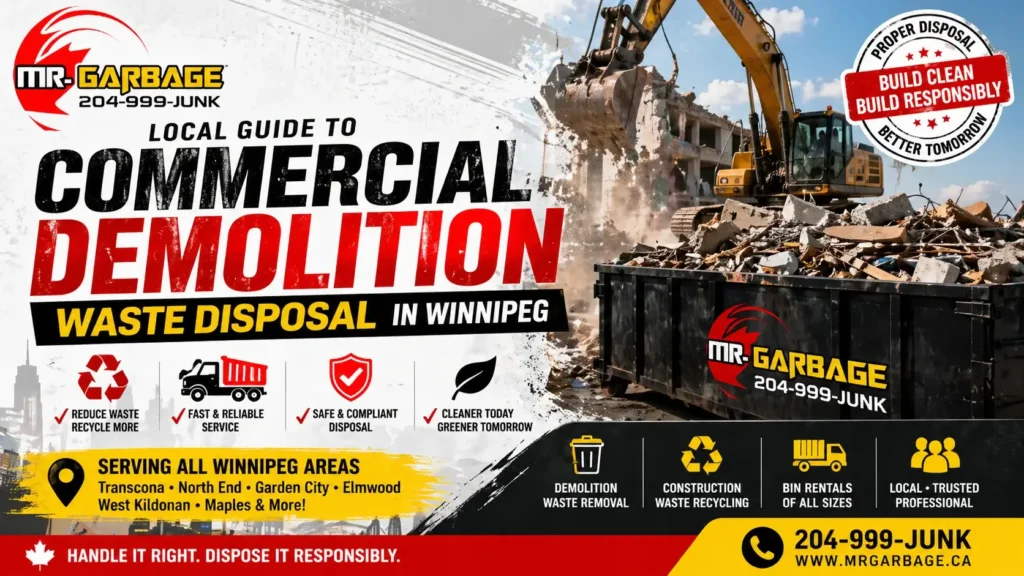
Handling demolition waste is not simple. When buildings are torn down or renovated, the amount of debris can be massive. Concrete, wood, metal, and mixed materials pile up fast. And regular waste collection cannot handle that.
That’s where commercial demolition waste disposal becomes important. It gives property owners and homeowners a structured way to manage large amounts of debris safely and properly.
Even if you are a homeowner in Winnipeg doing a major teardown or renovation, this applies to you. Many residential projects generate waste similar to small commercial jobs.
Across Canada, construction and demolition waste is a major issue. It can make up a large share of landfill material and often includes reusable resources.
So if you are working on a project in areas like Transcona, North End, or Garden City, understanding waste disposal is not optional. It’s part of doing the job right.
What Is Commercial Demolition Waste Disposal and Why Does It Matter
Commercial demolition waste disposal refers to collecting, sorting, and disposing of debris from demolition projects. This includes materials from buildings, structures, and major renovations.
Common Types of Demolition Waste
- Concrete and bricks
- Wood and drywall
- Metals and wiring
- Glass and plastics
- Roofing materials
Most of this waste falls under construction and demolition waste, often called C&D waste.
And here’s something important. In Canada, about 4 million tonnes of construction and demolition waste are produced each year, but a large portion still goes to landfill.
That shows why proper disposal and recycling matter.
How Commercial Demolition Waste Disposal Works in Winnipeg
The process is simple but requires planning.
Step-by-Step Process
- Waste is collected at the project site
- Materials are sorted where possible
- Recyclable items are separated
- Remaining waste is sent to disposal facilities
In Winnipeg, most waste eventually goes to sites like the Brady Road landfill if it cannot be recycled.
But not all materials should go there. Many can be reused or processed.
Why Commercial Demolition Waste Disposal Is Important in Winnipeg
Winnipeg, like other Canadian cities, faces pressure from growing waste volumes.
In 2022, Canada generated 36.5 million tonnes of waste, and only about 27% was diverted from landfill.
A large portion of that waste comes from non-residential sources, including construction and demolition projects.
That means proper demolition waste disposal is not just about convenience. It affects:
- Landfill capacity
- Environmental impact
- Local cleanliness
- Long-term sustainability
Construction and Demolition Waste Landfills in Winnipeg
Not all waste is treated the same way.
What Happens at Landfills
Landfills are designed to handle waste that cannot be reused or recycled. But they have limits.
- Space is limited
- Waste produces methane gas
- Environmental impact increases over time
In fact, landfills contribute to greenhouse gas emissions due to decomposing waste.
That’s why reducing landfill use is important.
Construction Demolition Waste Recycling in Winnipeg
Recycling is a key part of modern waste management.
Materials That Can Be Recycled
- Concrete can be crushed and reused
- Metal can be melted and repurposed
- Wood can be reused or processed
Studies show that over 75% of construction demolition waste has potential value and can be reused or recycled.
But this only works if waste is handled properly from the start.
How Commercial Demolition Waste Disposal Helps Homeowners
Even though the term sounds commercial, many homeowners in Winnipeg use these services.
When Homeowners Need It
- Full house teardown
- Basement reconstruction
- Major renovations
- Property cleanouts
In areas like Elmwood, West Kildonan, and Maples, older homes often require large-scale work. That creates more waste than regular bins can handle.
Using commercial demolition waste disposal ensures:
- Cleaner work areas
- Faster project completion
- Proper handling of materials
Challenges of Construction Industry Waste in Winnipeg
Waste management is not always easy.
Common Challenges
- Mixed materials that are hard to sort
- Limited recycling facilities for some items
- Space constraints in urban areas
- Lack of awareness about disposal rules
For example, construction projects can waste up to 30% of materials, adding unnecessary load to waste systems.
This makes planning even more important.
How to Choose the Right Commercial Demolition Waste Disposal Service
Choosing the right service can make a big difference.
What to Look For
- Experience in the local Winnipeg areas
- Knowledge of disposal regulations
- Ability to handle large volumes
- Support for recycling and sorting
A reliable provider helps you avoid delays and ensures proper handling of waste.
Local Winnipeg Areas That Need Demolition Waste Disposal
Certain areas see more demolition and renovation activity.
Northern Winnipeg
- North End
- Garden City
- Maples
- West Kildonan
Eastern Winnipeg
- Transcona
- Elmwood
- East Kildonan
- Mission Gardens
These areas often have older homes and ongoing development, which increases demand for construction demolition waste disposal services.
Benefits of Professional Demolition Waste Removal
Handling waste yourself is not always practical.
Why Professional Services Help
- No need for multiple landfill trips
- Safer handling of heavy debris
- Proper sorting and recycling
- Less time and effort
Companies like Mr. Garbage provide commercial demolition waste disposal services across Winnipeg.
They help manage everything from bin delivery to final disposal, making the process easier for homeowners and contractors.
You can learn more here: https://mrgarbage.ca/
Eco-Friendly Demolition Waste Recycling
Sustainability is becoming more important in waste management.
Why Recycling Matters
- Reduces landfill waste
- Conserves natural resources
- Lowers environmental impact
Globally, demolition activities generate a large share of construction waste, often more than 60% of total C&D waste.
That means better recycling can have a major impact.
Tips for Better Construction and Demolition Waste Management
Simple steps can improve waste handling.
Practical Tips
- Sort materials at the source
- Separate recyclables early
- Avoid mixing hazardous waste
- Plan disposal before starting the project
These steps help improve efficiency and reduce environmental impact.
Commercial Demolition Waste Disposal for Renovation Projects in Winnipeg
Renovation projects in Winnipeg often create more waste than expected. When offices, shops, or older buildings are upgraded, large amounts of debris come out at once. Materials like drywall, wood, tiles, and metal need proper handling.
That’s why commercial demolition waste disposal for renovation projects in Winnipeg is important. It helps manage waste in a structured way and keeps the site clean.
In areas like Transcona, Elmwood, and Garden City, renovation work is common. And without proper waste planning, projects can slow down or become unsafe.
Office and Retail Renovation Waste Disposal in Winnipeg
Office and retail renovations produce mixed materials. You often deal with partitions, fixtures, flooring, and wiring.
Using office and retail renovation waste disposal in Winnipeg helps:
- Keep commercial spaces organized
- Remove waste quickly
- Maintain safety during upgrades
This is especially useful in busy commercial zones like Downtown Winnipeg and the North End.
Commercial Demolition Waste Disposal for Interior Strip-Out Projects
Interior strip-out projects remove walls, ceilings, and fittings without touching the structure.
A commercial demolition waste disposal for interior strip-out projects ensures that all removed materials are handled properly and do not block workflow.
Managing Mixed Debris During Commercial Renovations
Renovation waste is rarely uniform. It includes wood, metal, plastics, and sometimes hazardous materials.
Proper construction and demolition waste management for mixed debris helps reduce sorting issues and improves recycling.
Step-by-Step Commercial Demolition Waste Disposal Process
Handling demolition waste works best when you follow a clear process.
Planning Commercial Demolition Waste Disposal Before Project Start
Planning early helps avoid delays. You need to estimate waste volume and identify disposal methods.
This step is critical because construction projects can waste up to 30% of materials if not planned properly.
Sorting and Separating Construction and Demolition Waste On-Site
Sorting waste at the site improves recycling rates.
- Separate wood, metal, and concrete
- Keep hazardous materials isolated
- Avoid mixing recyclables with general waste
This supports better construction demolition waste recycling.
Final Disposal and Recycling of Demolition Waste Materials
After sorting, materials are either recycled or sent to a landfill.
And this matters because Canada generates millions of tonnes of demolition waste each year, with much of it still going to landfill.
Environmental Impact of Commercial Demolition Waste Disposal
Waste disposal affects the environment in many ways.
How Construction and Demolition Waste Affects Landfills in Canada
Construction and demolition waste make up a large portion of landfill material. In fact, it can account for around 27% of total municipal solid waste.
This puts pressure on landfill space.
Reducing Greenhouse Gas Emissions from Demolition Waste Disposal
Landfills release methane, a strong greenhouse gas.
In Canada, landfill emissions contribute to climate change, with methane having a much higher warming impact than carbon dioxide.
Reducing waste sent to landfill helps lower emissions.
Why Demolition Waste Recycling Matters for Winnipeg
Recycling reduces landfill use and conserves resources.
And the potential is high. Over 75% of construction and demolition waste can be reused or recycled.
Commercial Demolition Waste Disposal for Different Property Types
Different properties create different types of waste.
Waste Disposal for Office Buildings and Commercial Spaces
Office buildings produce materials like drywall, glass, and wiring.
Using commercial demolition waste disposal for office buildings helps maintain clean and safe environments.
Demolition Waste Handling for Warehouses and Industrial Units
Industrial sites produce heavy debris such as metal and concrete.
Proper demolition waste handling for industrial units ensures safe removal and efficient disposal.
Commercial Demolition Waste Disposal for Multi-Unit Properties
Multi-unit buildings create large volumes of mixed waste.
Using structured disposal methods helps manage waste efficiently.
Construction and Demolition Waste Recycling Options in Winnipeg
Recycling is a key part of waste management.
Materials That Can Be Recycled from Demolition Projects
Common recyclable materials include:
- Concrete
- Wood
- Metal
- Asphalt
These materials can be reused in future construction.
How Construction Demolition Waste Recycling Works in Canada
Recycling involves collecting, sorting, and processing materials.
Canada has improved recycling efforts over time, but still sends a large share of waste to landfills.
Benefits of Recycling Concrete, Wood, and Metal Waste
Recycling helps:
- Reduce landfill waste
- Save natural resources
- Lower environmental impact
Common Mistakes in Commercial Demolition Waste Disposal
Mistakes can slow down projects and increase risks.
Mixing Hazardous and Non-Hazardous Demolition Waste
Hazardous materials must be handled separately. Mixing them can cause safety issues.
Underestimating Waste Volume in Demolition Projects
Many projects underestimate how much waste they will produce.
This leads to delays and extra work.
Ignoring Local Winnipeg Waste Disposal Regulations
Local rules must be followed to avoid fines and delays.
Commercial Demolition Waste Disposal Safety Guidelines
Safety is important during waste handling.
Safe Handling of Heavy Construction Demolition Waste
Use proper equipment and avoid lifting heavy items manually.
Protecting Workers During Demolition Waste Removal
Workers should use safety gear and follow proper procedures.
Preventing Accidents on Demolition Job Sites
Keeping the site clean and organized reduces risks.
How to Improve Efficiency in Commercial Demolition Waste Disposal
Efficiency helps projects run smoothly.
Reducing Waste Generation During Demolition Projects
Planning helps reduce unnecessary waste.
Using On-Site Containers for Faster Waste Removal
Containers allow quick disposal and keep the site organized.
Scheduling Waste Pickup to Avoid Project Delays
Timely pickup ensures work continues without interruption.
Comparing Construction and Demolition Waste Disposal Methods
Different methods suit different projects.
Landfill vs Recycling for Demolition Waste Disposal
Landfills handle non-recyclable waste. Recycling reduces environmental impact.
On-Site Sorting vs Off-Site Waste Processing
On-site sorting improves efficiency. Off-site processing handles large volumes.
Manual vs Professional Commercial Demolition Waste Disposal
Professional services are faster and safer than manual handling.
Commercial Demolition Waste Disposal for Sustainable Construction
Sustainability is becoming more important.
How Sustainable Practices Reduce Construction Industry Waste
Reducing waste helps conserve resources.
Role of Circular Economy in Demolition Waste Management
The circular economy focuses on reuse and recycling instead of disposal.
Long-Term Benefits of Responsible Waste Disposal in Winnipeg
Better waste practices support cleaner communities and long-term sustainability.
Local Regulations for Commercial Demolition Waste Disposal in Winnipeg
Understanding local rules is important.
Permits Required for Demolition Waste Disposal Projects
Some projects require permits, especially for large-scale work.
Rules for Transporting Construction Demolition Waste in Winnipeg
Waste must be transported safely and properly covered.
Compliance Tips for Commercial Waste Disposal in Manitoba
Follow local guidelines to avoid penalties.
Cost Factors That Affect Commercial Demolition Waste Disposal Services
Planning helps reduce unnecessary work.
Project Size and Waste Volume Considerations
Larger projects create more waste and need better planning.
Types of Materials in Construction and Demolition Waste
Different materials require different handling methods.
Importance of Planning to Avoid Delays and Extra Work
Good planning keeps projects on schedule.
Commercial Demolition Waste Disposal for Large-Scale Projects
Large projects need structured waste management.
Managing Waste for High-Rise Demolition Projects
High-rise projects generate large volumes of debris.
Handling Bulk Construction Demolition Waste Efficiently
Using containers and proper planning improves efficiency.
Coordinating Waste Disposal Across Multiple Project Phases
Waste handling should be planned for each stage of the project.
How Commercial Demolition Waste Disposal Supports Clean Communities
Proper waste management benefits everyone.
Reducing Illegal Dumping in Winnipeg Neighborhoods
Structured services reduce illegal dumping.
Keeping Commercial Areas Clean with Proper Waste Disposal
Clean spaces improve safety and appearance.
Community Benefits of Responsible Demolition Waste Management
Better waste handling supports healthier and cleaner communities.
Real Example: Winnipeg Demolition Project
A homeowner in East Kildonan removes an old garage.
Without proper disposal:
- Waste piles up
- Multiple trips are needed
- Project slows down
With commercial demolition waste disposal:
- One container handles all debris
- Work area stays clean
- Project finishes faster
This is why structured waste management is important.
How Mr. Garbage Supports Demolition Waste Disposal in Winnipeg
Mr. Garbage provides local waste solutions for Winnipeg residents.
Services Include
- Demolition waste container rental
- Junk removal services
- Recycling support
- Flexible pickup options
They serve areas like Transcona, North End, Elmwood, and Garden City.
And they understand local waste rules, which helps ensure proper disposal.
Conclusion
Demolition projects create large amounts of waste. Managing it properly is not just about convenience. It affects safety, efficiency, and the environment.
Using commercial demolition waste disposal in Winnipeg helps you:
- Keep your property clean
- Reduce landfill impact
- Save time during projects
- Handle waste the right way
With waste volumes increasing across Canada, better construction and demolition waste management is more important than ever.
If you’re planning a project, working with a local provider like Mr. Garbage can make the process simple and stress-free.
Book your waste solution today and keep your project on track.
Frequently Asked Questions (FAQs)
1. What is commercial demolition waste disposal?
It is the process of collecting, sorting, and disposing of waste from demolition and large renovation projects.
2. Can homeowners use commercial demolition waste disposal services in Winnipeg?
Yes, homeowners often use these services for major renovations, cleanouts, and teardown projects.
3. What materials are included in demolition waste disposal?
Materials include concrete, wood, metal, drywall, and other construction debris.
4. How does demolition waste recycling work in Winnipeg?
Recyclable materials are separated and processed, while non-recyclable waste is sent to landfill facilities.
5. Why is proper demolition waste management important?
It reduces environmental impact, improves safety, and ensures compliance with local waste regulations.