
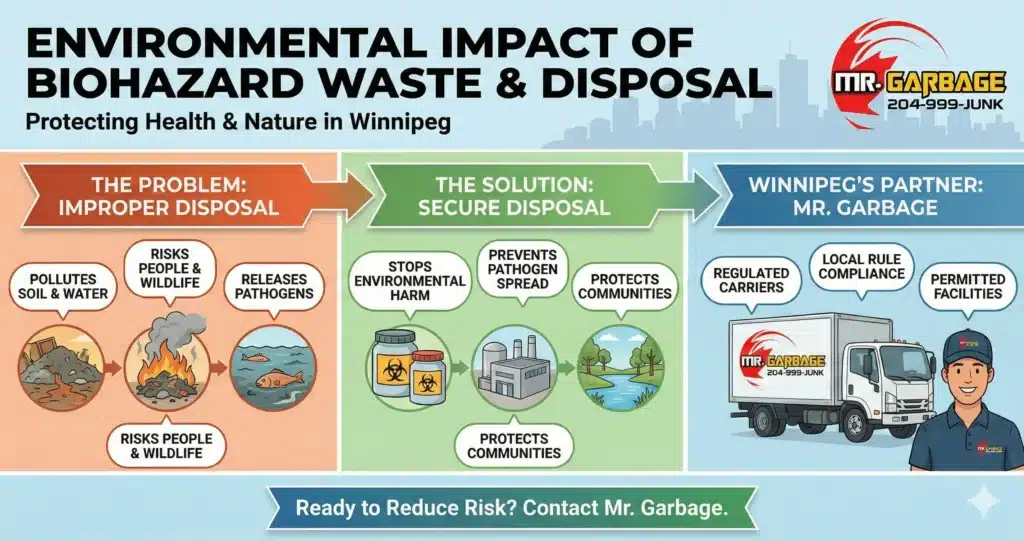
Biohazard waste disposal matters for public health and the environment. When infectious and medical wastes are handled badly, they can spread disease. They can also pollute the air, soil, and water. This article explains the main environmental risks. It shows how proper disposal reduces those risks. It also covers local rules for Winnipeg and practical steps you can take. If you manage a clinic, lab, or generate regulated waste at home, this guide is for you.
What counts as biohazard waste
Biohazard waste is any waste that poses an infection risk or biological hazard. Common examples are sharps (needles), contaminated dressings, cultures, and some body parts.
Some pharmaceuticals and lab reagents are also included. Different rules apply depending on the waste type. For clear guidance, international and national manuals spell out the categories and safe handling steps.
Why biohazard waste disposal matters for the environment
1. Preventing contamination of soil and water
If infectious waste reaches the ground or storm drains, it can contaminate local water and soil. Pathogens and chemicals can survive and spread. Proper containment and treatment stop that from happening.
2. Reducing harmful air emissions
Some treatment methods release pollutants if not properly controlled. Incineration of medical or biohazard waste can produce dioxins and other toxic byproducts when done poorly. Those emissions can affect air quality and public health. Choosing proper treatment and modern controls cuts this risk.
3. Stopping wildlife and domestic animal exposure
Improperly discarded clinical waste can harm animals. Wildlife may scavenge contaminated materials. That spreads contamination and harms ecosystems. Secure storage and correct disposal stop animals from accessing dangerous items.
4. Limiting chemical pollution and persistent pollutants
Some medical wastes contain heavy metals or persistent chemicals. If these enter landfills or incinerators without proper controls, they can move through the food chain. Careful routing to approved treatment facilities avoids this pathway.
Treatment methods and their environmental trade-offs
Different treatment methods suit different waste streams. Each has pros and cons.
Autoclaving (steam sterilization)
Autoclaves use high heat and pressure to sterilize infectious waste. They do not burn material. That reduces toxic air emissions. Autoclaving works well for many clinical wastes. But some materials still need special handling after autoclaving.
Incineration
Incineration destroys most biological material. But it can release air pollutants. Facilities with modern pollution controls and monitoring reduce these emissions. Where older incinerators run, the environmental risk is higher. Choosing facilities with strong emission controls is important.
Chemical disinfection
Some liquid or surface wastes are treated chemically. This is useful for lab liquids and certain solutions. Proper dosing and neutralization prevent environmental harm.
Microwave and other newer technologies
Some systems use focused heat or microwaves to inactivate pathogens. These are options for facilities seeking alternatives to incineration. Local availability varies, so check with permitted carriers.
Local rules matter: Manitoba and Winnipeg basics
If you are in Winnipeg or Manitoba, follow provincial and city rules. Manitoba treats hazardous wastes from “cradle to grave.” That means generators have responsibilities from the point waste is created to final treatment. The provincial compliance guide explains generator duties and shipping standards.
Winnipeg also has specific bylaw rules for treated biomedical sharps and other streams. Only permitted carriers may collect some types. Sharps must be in approved containers and kept secure until pickup. Check local bylaws before you plan disposal.
Following these rules helps protect local water, soil, and air. It also prevents illegal dumping and accidental exposure in our neighbourhoods.
How poor handling causes real environmental harm
Example: leaking sharps or contaminated bags
A clinic left a set of contaminated bags in an unsecured area. Rainwater leaked out. Contaminated liquid reached a storm drain. The local creek showed higher bacterial counts for a short time. This required additional municipal testing and cleanup. Proper storage and covered containment would have stopped the leak.
Example: low-standard incineration
In some regions, small or old incinerators emit more dioxins and persistent organic pollutants. These chemicals collect in soil and bodies of water. That raises long-term risks for human and animal health. Using permitted treatment facilities with modern emission controls avoids these problems.
What clinics, labs, and homeowners can do
1. Segregate waste at the point of generation
Keep sharps, infectious material, pharmaceuticals, and general trash separate. Use the right containers and colour codes. Segregation lowers contamination and makes treatment more effective.
2. Use approved biohazard waste disposal containers
Choose puncture-resistant sharps containers and secure bags for infectious material. Label containers clearly and never overfill them. Secure storage prevents animal access and accidental spills.
3. Work with permitted carriers and disposal companies
Use carriers that follow Manitoba’s hazardous-waste rules. They should provide chain-of-custody documents and route waste to permitted treatment centres. This reduces the chance that waste will be mishandled or sent to the wrong facility.
4. Ask treatment providers about environmental controls
If your waste is incinerated or otherwise treated, ask the provider how they control emissions. Modern controls and monitoring systems lower environmental harm. Good vendors will explain their methods.
5. Reduce waste where safe and allowed
Look for items that can be reduced or substituted with lower-impact alternatives. Some single-use items may now have reprocessing or take-back programs. Follow legal and safety guidance before changing products.
How biohazard waste disposal supports community health and local ecosystems
Proper disposal protects more than one site. It helps the whole city. When clinics and labs follow rules, fewer contaminants reach rivers, lakes, and soil. That keeps drinking-water sources safer. It also protects fish and wildlife. Good disposal practices reduce the need for costly environmental cleanups later on.
Choosing a responsible biohazard waste disposal company
When you search for “biohazard waste disposal companies,” use a simple checklist.
- Confirm they hold the required permits and follow Manitoba rules.
- Ask how they treat the waste (autoclave, incineration, chemical treatment).
- Ask what emission controls or environmental safeguards they use.
- Request proof of secure transport and chain-of-custody documents.
- Prefer companies with clear training programs for their staff and documented safety systems.
Local providers who understand Winnipeg rules make life easier. They can help you match waste types to the right treatment and stop environmental leakage. Mr. Garbage works with permitted carriers and can advise on compliant routing and container choices for the Winnipeg area.
Expert perspective
“Protecting the environment starts at the point where waste is created. Segregation and working with permitted carriers are the most effective steps a small clinic or lab can take,” says Dr. Amanda Reid, Environmental Health Specialist (Winnipeg). “Ask your provider about treatment methods and emissions controls. That simple question tells you a lot about their environmental commitment.”
This quote reflects the practical view many public health specialists share: prevention and correct routing matter more than last-minute fixes.
Measuring success: what good disposal looks like
Good biohazard waste disposal has clear signals:
- Secure containment and no spills on site.
- Regular, documented pickups with chain-of-custody records.
- Treatment at permitted facilities with modern controls.
- Low local reports of contamination or animal exposure.
- Transparent answers from your service provider about where waste goes.
If you see these signs, you know the system is working. If you do not, ask questions or change providers.
How Mr. Garbage can help in Winnipeg
Mr. Garbage supports clinics, labs, and property managers in Winnipeg. We help arrange compliant pickups and provide approved container options. We work with permitted carriers who know Manitoba rules. We also advise on segregation and storage so that waste does not end up in the wrong place. If you want local help to reduce environmental risks from clinical waste, we can review your current process and suggest improvements.
Conclusion
Biohazard waste disposal affects more than one building. It affects our air, water, soil, and local wildlife. Simple, practical steps at the source reduce large problems later. Use approved containers. Segregate waste. Work with permitted carriers. Ask how waste is treated and where it goes. Each good step cuts environmental risk in our city.
If you are in Winnipeg and want help making your biohazard waste disposal safer and cleaner for the environment, Mr. Garbage can help. We connect you to permitted carriers, supply approved containers, and guide you on local rules. Contact us to review your process and take practical steps toward safer disposal.
Frequently Asked Questions (FAQs)
Q1: What is biohazard waste disposal?
A1: Biohazard waste disposal is the safe handling, transport, treatment, and final destruction or neutralization of waste that can carry infection or biological hazards, such as sharps, infected dressings, lab cultures, and some pharmaceuticals.
Q2: How does proper biohazard waste disposal protect the environment?
A2: Proper disposal prevents pathogens and hazardous chemicals from entering soil, water, and air. It reduces the chance of contamination, limits harmful emissions from poor incineration, and lowers the risk of wildlife exposure.
Q3: What treatment methods are safest for the environment?
A3: Treatment choice depends on waste type. Autoclaving is widely used for infectious waste and avoids burning. Modern incineration with strict emission controls can be safe for certain waste types. Chemical disinfection and newer technologies are options in some cases. Ask your provider for details.
Q4: Who enforces biohazard waste rules in Manitoba and Winnipeg?
A4: Manitoba’s hazardous-waste program sets provincial rules and expectations. The City of Winnipeg has bylaws for certain waste streams, including sharps. Generators and carriers must follow these rules.
Q5: How can Mr. Garbage help my clinic or home with biohazard waste disposal?
A5: Mr. Garbage connects clients with permitted carriers, supplies approved containers, and advises on storage and segregation. We help ensure waste follows the right route to permitted treatment and provide documentation where needed.
Sources
- WHO: Safe management of wastes from health-care activities.
- Guidelines for the Management of Biomedical Waste in Canada (CCME/Government publications).
- Manitoba Sustainable Development: Compliance Guide to Manitoba’s Hazardous Waste Legislation.
- City of Winnipeg: Biomedical Waste Sharps Bylaw and collection rules.