If you run a small clinic or a dental practice in Winnipeg, you handle medical waste every day. That waste needs careful handling. It also needs compliant disposal. This article explains what small health-care providers must know about medical waste disposal in Manitoba. It shows practical steps, local rules, and how to choose a compliant service. Read on for clear, simple guidance you can use today.
What we mean by medical waste disposal
“Medical waste disposal” covers the safe handling, storage, transport, treatment, and final disposal of waste from health-care activities. This includes sharps, infectious waste, laboratory waste, and some pharmaceuticals. The aim is to protect staff, patients, waste workers, and the public. International guidance and Canadian recommendations set the standards that many facilities follow.
Why proper medical waste disposal matters
- It protects staff from infections and needlestick injuries.
- It prevents contamination of the local environment.
- It keeps your clinic compliant with provincial and city rules.
- It reduces legal and reputational risk for your practice.
The World Health Organization and Canadian authorities recommend strict segregation and secure handling of medical waste to avoid harm. Following those guidelines reduces the chance of incidents and fines.
Medical waste rules and guidance in Manitoba and Winnipeg
Manitoba controls hazardous wastes from “cradle to grave.” That means generators must track waste from the point it is created to final treatment or destruction. The provincial Hazardous Waste Program lists rules and permitting requirements.
Winnipeg has bylaws and rules for certain biomedical waste streams, such as sharps. Some treated biomedical sharps must be handled only by permitted carriers and kept separate from regular garbage. Your service provider should know these rules and follow them.
For facility-level practices, local health authorities follow national guidance and recommend point-of-generation segregation, secure storage, and partnership with permitted carriers.
Types of medical waste small clinics commonly generate
Sharps and needles (must be in approved sharps containers)
Sharps are high risk. Use rigid, puncture-resistant containers. Label them correctly and never overfill.
Infectious or biohazardous waste
This includes contaminated dressings, swabs, and other items that have contact with bodily fluids.
Pharmaceutical waste
Expired or unused drugs sometimes need special handling. Some items are hazardous and must not go in the regular trash.
Pathological or anatomical waste (less common in small clinics)
If your clinic produces this waste, follow strict storage and transport rules and use permitted treatment routes.
Each stream needs separate containers, clear labeling, and staff training. The CCME guidelines and the WHO handbook explain color-coding and segregation best practices.
Practical steps your clinic should follow for safe medical waste disposal
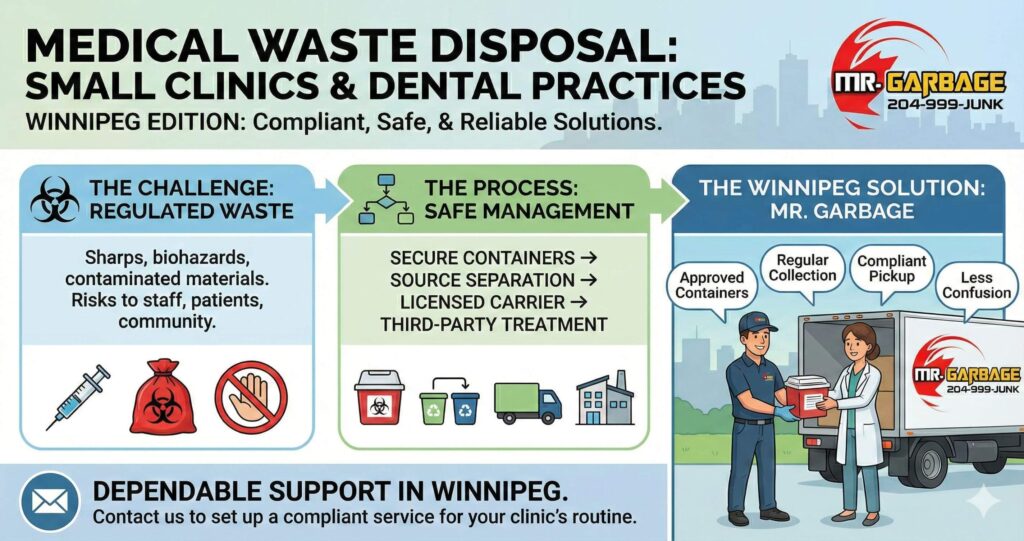
1. Segregate at the source
Keep sharps, infectious waste, pharmaceuticals, and general waste separate. Place the right container at the right point of care.
2. Use approved containers and labels
Use certified sharps containers and secure bags or bins for other streams. Label containers with contents and date when required.
3. Secure temporary storage
Store medical waste in a locked area away from public access. Keep it dry, shaded, and protected from animals.
4. Use permitted carriers and treatment facilities
Work only with carriers permitted by Manitoba or the city. Confirm that treatment (autoclave, incineration, or other approved method) meets local rules. Provincial programs control hazardous waste handling and treatment.
5. Keep records and documentation
Track shipments and maintain manifests if required. Records show compliance in case of inspection.
6. Train staff regularly
Make sure all staff know how to segregate, handle sharps, and respond to spills or exposures. Training reduces incidents.
Choosing a medical waste disposal company in Winnipeg
When you search for “medical waste disposal” or “medical waste disposal companies” near you, ask for these specific things:
- Proof of permits and compliance with Manitoba hazardous-waste rules.
- Clear process for segregation, pickup frequency, and chain-of-custody documentation.
- Secure transport and approved treatment options.
- On-site container supply and exchange (sharps bins, biohazard bags).
- Insurance and worker-safety practices.
- Local references from other small clinics or dental practices.
Industry providers like Daniels Health and Stericycle operate in Canada and offer tailored solutions for clinics. But local vendors with permitted carriers can be a good fit for smaller clinics if they meet provincial rules.
How Mr. Garbage supports small clinics and dental practices
Mr. Garbage offers biomedical waste pickup and coordination for Winnipeg clinics. We work with permitted carriers and follow local rules for sharps and regulated biomedical streams. Our team can supply approved containers, arrange secure pickups, and handle documentation. We also help clinics understand which items the city will accept and which must go to specialized treatment. See Mr. Garbage’s local biomedical waste page for a quick guide.
Common compliance questions clinics ask
Do small clinics need special permits?
Most small clinics do not require a generator permit, but they must follow provincial hazardous waste rules. Larger generators or those producing specific hazardous streams may need permits. Check Manitoba’s hazardous waste program for details.
Can I put sharps in regular garbage after treating them?
No. Treated sharps still require proper containment and must be handled according to bylaw and provincial guidance. In Winnipeg, certain treated biomedical sharps must be handled by permitted carriers.
How often should pickups happen?
Pickup frequency depends on volume and storage capacity. For small clinics, regular scheduled pickups are common. Work with your provider to set sensible intervals and contingency pickups when needed.
Health and safety best practices every clinic should follow
- Use needleless systems where possible and safe.
- Dispose of sharps immediately in a secure container.
- Never recap needles by hand.
- Report needlestick incidents and follow post-exposure protocols.
- Keep spill kits and PPE accessible for waste-handling tasks.
- Training and protocols protect staff and patients. WHO and Canadian guidance emphasize these basic precautions.
Environmental considerations and diversion where possible
Medical waste treatment has environmental impacts. Some items can be diverted through reprocessing or safe recycling programs. Work with vendors that can advise on which items can be diverted and which must be destroyed. Manitoba and Canadian frameworks encourage waste minimization and responsible final treatment.
A short local example
A small dental clinic in Winnipeg switched to a scheduled biomedical waste pickup with a local vendor. The vendor supplied sharps containers and handled manifests. The clinic trained staff on segregation and reduced incidents. When they had renovation waste with potentially contaminated items, the vendor coordinated a one-time special pickup and routed usable items to a local charity where appropriate. The clinic stayed compliant and avoided storage backups.
This is a common scenario for clinics that partner with the right local provider.
Expert perspective
“Clear segregation and consistent pickup are the two most effective steps small clinics can take to reduce risk,” says Dr. Lisa Brennan, Infection Control Specialist working with community clinics in Winnipeg. “Make segregation simple for staff and choose a carrier who knows Manitoba rules.”
Checklist before you sign a medical waste disposal contract
- Confirm provider permits and Manitoba compliance.
- Ask about container supply and exchange schedule.
- Clarify transport and treatment methods used.
- Request examples of required documentation and manifests.
- Verify insurance and the incident reporting process.
- Ask for onboarding and staff training resources.
Final notes on legal and safety responsibility
As the waste generator, your clinic holds responsibility for proper handling until the material reaches a permitted treatment facility. That means good internal procedures, correct containers, and working with permitted carriers are essential. Manitoba’s hazardous waste framework and Winnipeg’s bylaws set the expectations for safe practice. Keep records and train staff to reduce risk.
Conclusion
Medical waste disposal need not be confusing. Start with clear segregation, approved containers, and a permitted local carrier. Train your staff. Keep good records. If you want local support, Mr. Garbage helps clinics and dental practices in Winnipeg with container supply, scheduled pickups, and coordination with permitted treatment partners. If you prefer, we can review your waste streams and suggest a compliant pickup plan.
Need help with medical waste disposal in Winnipeg? Contact Mr. Garbage to set up compliant biomedical waste pickups and get help with containers and documentation.
Frequently Asked Questions (FAQs)
Q1: What is considered medical waste?
A1: Medical waste includes sharps, contaminated dressings, biological materials, some pharmaceuticals, and other items contaminated by bodily fluids. These streams require specific handling and treatment.
Q2: Can I use a local garbage service for sharps and biohazard waste?
A2: No. Sharps and biomedical waste must be handled by permitted carriers and treated at approved facilities. In Winnipeg, certain treated sharps must be transported only by permitted carriers.
Q3: Do small clinics need to keep records of medical waste shipments?
A3: Yes. Maintaining records, manifests, or shipment documentation helps show compliance and traceability under provincial hazardous waste rules.
Q4: How should sharps be stored in a clinic?
A4: Store sharps in certified puncture-resistant containers. Keep containers upright, sealed, and out of public reach until pickup. Never overfill containers.
Q5: What treatment methods are used for medical waste in Canada?
A5: Approved methods include autoclaving, incineration, chemical treatment, and other permitted technologies. The chosen method depends on the waste type and provincial rules. Providers should be able to explain the method they use.
Sources and further reading
- World Health Organization: Safe Management of Wastes from Health-care Activities.
- Guidelines for the Management of Biomedical Waste in Canada (CCME/Government publications).
- Manitoba Sustainable Development: Hazardous Waste Program and Compliance Guide.
- City of Winnipeg bylaw: biomedical waste sharps requirements.
- Mr. Garbage: Biomedical waste disposal services in Winnipeg.