
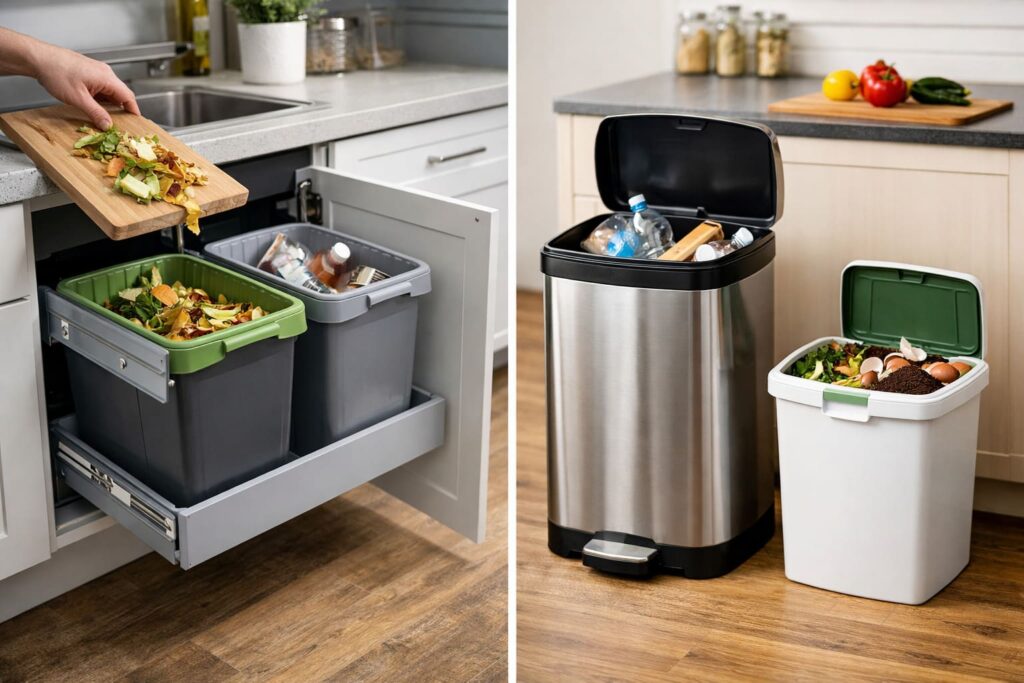
Choosing the right recycling waste bins for the kitchen setup makes daily sorting easier. It also helps keep your kitchen clean and reduces odors. Homeowners in Winnipeg face extra choices because of local compost and recycling rules. This guide breaks down hidden (pull-out) and freestanding recycling waste bins, kitchen options. You’ll get clear pros and cons, tips for use, and local notes for Winnipeg. The main keyword appears throughout, so search engines find this page when people look for recycling waste bins in the kitchen.
Why the right bin matters
A good kitchen system helps people sort recyclables and food waste at the source. That leads to less contamination and more material diverted from landfills. Canada diverted nearly 10 million tonnes of waste through recycling and composting in 2022. That number shows how much impact household sorting can have.
In Manitoba and Winnipeg, household composting and recycling rules affect what you put in bins. The City of Winnipeg provides specific guidance on kitchen and yard waste, including acceptable compost items. If you plan to compost or sort food waste, follow local rules so it actually gets recycled.
Quick definitions: hidden vs. freestanding
Hidden (pull-out) recycling waste bins in the kitchen
Pull-out bins sit inside a lower cabinet. A slide or rail system pulls the bin out when you need it. Many people use one or two bins there. You can combine a trash bin with a recycling bin in the same cabinet.
Freestanding recycling waste bins kitchen
Freestanding bins sit on the floor. They come in many sizes and styles. You can move them where you need them. Some freestanding models have lids or foot pedals. Others are open-top.
Pros of hidden (pull-out) recycling waste bins in the kitchen
- Cleaner look. Bins are out of sight. Cabinets hide clutter.
- Odor control. Cabinet doors keep smells from spreading. This helps with kitchen food waste.
- Space efficient. Pull-out bins use cabinet space well in small kitchens.
- Less tipping. Bins are secured on rails. They do not get knocked over easily.
- Integrated design. Pull-out systems fit modern kitchens and keep counters clear.
Note on installation: Pull-out systems usually require a cabinet sized to fit the bin and rails. If you already have standard base cabinets, many kits will fit with minimal carpentry.
Evidence & tip: Reviews and home guides show pull-out systems reduce visible mess and help families keep sorting consistent. If you want to hide bins and prevent pets from getting in, pull-outs are a strong option.
Cons of hidden (pull-out) recycling waste bins in the kitchen
- Limited size. Cabinet space limits bin volume. That can mean more trips to outside bins.
- Cleaning access. Spills inside a cabinet take more effort to clean.
- Cost to retrofit. Adding a pull-out kit to existing cabinets can cost time and money. (No numbers here; just know retrofits take some work.)
- Moist or heavy loads. Wet food waste can drip inside a cabinet if not bagged or lined well.
- Weight limits. Very heavy loads may stress slides over time.
Pros of freestanding recycling waste bins in the kitchen
- Flexibility. Move bins where you need them. Good for larger kitchens or open plans.
- Variety of sizes. You can choose a tall slim bin or a wide multi-bin unit.
- Easy to clean. Most freestanding bins lift out and wash easily.
- No cabinet changes. You don’t need to modify kitchen cabinets.
- Fast access. Grab and drop without opening doors.
Design note: Stainless steel freestanding bins are common for kitchens. They contain odors better and look tidier. Reviews find stainless models often outperform plastic for smell control.
Cons of freestanding recycling waste bins in the kitchen
- Takes floor space. May crowd small kitchens.
- Visible clutter. Bins are always in sight unless hidden by furniture.
- Pets and children. Easier to access unless you choose a lock or pedal model.
- Aesthetics. Not every freestanding bin matches kitchen decor.
How to choose Winnipeg homes
Winnipeg homes vary. Some have compact apartments. Others have big family kitchens. Here’s how to pick:
Start with your waste habits
- Do you produce a lot of kitchen food waste? Consider capacity first.
- Do you separate organics for curbside composting? A smaller kitchen food waste bin that you empty often may be fine. Winnipeg’s compost rules support kitchen and yard waste separation.
Check your kitchen layout
- If you have a standard base cabinet, a pull-out might fit.
- If you have island seating or an open plan, a freestanding bin near prep areas might work better.
Consider the family and pets
- Families with kids may prefer hidden bins to keep curious hands away.
- Pet owners might pick bins with secure lids or pull-out drawers that lock.
Think about cleaning and smell
If you cook often and produce wet waste, choose a bin with a lid and easy liners. Stainless steel helps reduce lingering odors.
Types of hidden and freestanding systems and what they do best
Single pull-out
Good for small households. Use it for trash or recycling. Keeps one type hidden.
Double pull-out
Two compartments for recycling and trash. Great for homeowners who sit at the counter.
Multi-bin freestanding station
Several small bins in one frame. Works well if you sort glass, paper, and organics separately.
Tall stainless-steel freestanding bin
Best if you want a single, sturdy bin with a pedal or sensor lid.
Practical tips for using recycling waste bins kitchen
- Label bins clearly. Use stickers or printed labels for paper, plastic, glass, and organics.
- Use liners for food waste. Compostable liners work with many systems and reduce mess. Follow Winnipeg’s rules for what can be composted.
- Rinse recyclables briefly. A quick rinse prevents odors and keeps the bin cleaner.
- Empty regularly. Don’t let wet food sit for days. Empty into curbside compost or outdoor bins as required.
- Keep a small counter caddy. A small container on the counter makes it easy to scrape plates and sort while you cook.
- Use charcoal or baking soda. These help control smells in enclosed cabinets or freestanding bins.
What Winnipeg rules mean for your kitchen system
Winnipeg offers curbside recycling and compost programs. The city’s composting guidance explains what kitchen food waste and yard waste belong in green carts and how to prepare the material. Following local rules reduces contamination and keeps more material out of the landfill. If you need help understanding what goes where, the City of Winnipeg site is the place to check.
Across Canada, diversion rates vary by province. Nationally, about 27 percent of solid waste was diverted in 2022. Some provinces do better than others. Manitoba’s diversion rate is lower than that of some provinces, so household sorting matters more here. Proper kitchen sorting supports better provincial results and local recycling streams.
Real-world example: a Winnipeg family
Sarah and Jason live in a 1950s house in River Heights. They cook most nights. They installed a double pull-out under the sink. One side is for organics, the other for recyclables. A small stainless-steel freestanding bin sits by the island for non-recyclable trash during parties.
Why this combo worked:
- The pull-out keeps food waste out of sight and makes scraping plates easy.
- The freestanding bin handles large volumes during gatherings.
- They empty the organics into their green cart before collection day. That follows City of Winnipeg rules and prevents smells.
This kind of mixed setup is common. It balances daily convenience with capacity needs.
When to call a pro (or use a service like Mr. Garbage)
- Renovations: If you remodel cabinets, add a built-in pull-out. A carpenter can fit the slides and cut the cabinet properly.
- Large cleanouts: If a project produces a lot of waste or old bins to dispose of, Mr. Garbage offers bin rentals and removal in Winnipeg. They can take large volumes and sort or dispose of them responsibly. Using a local waste partner helps ensure materials go to the right place.
Mr. Garbage also publishes local guides on solid waste management and composting. Those pages can help homeowners match kitchen systems to Winnipeg rules.
Maintenance checklist (keep bins working well)
- Wipe or wash the bin liner weekly.
- Check slides on pull-out systems every few months. Tighten screws if needed.
- Replace worn liners or small bins.
- Clean any cabinet spill immediately. Use baking soda and a damp cloth.
- Keep a small box of spare bags and liners near the bin.
Which is best for you? A short decision guide
- You want a tidy look and have cabinet space → Choose hidden (pull-out).
- You need bigger capacity and flexibility → Choose freestanding.
- You entertain often and need both quick access and storage → Mix both.
- You have pets or kids who get into bins → Choose a pull-out with a secure lid.
Design and material notes: stainless steel and lids
Stainless steel bins are durable and resist stains. They often do a better job of containing smells than plain plastic. If aesthetics and odor control matter, choose stainless steel for open kitchens. Many editors and product testers note stainless steel’s edge for smell control and longevity.
Lids matter. A tight lid keeps smells and pests away. For pull-outs, a cabinet door provides a lid effect. For freestanding bins, pick a model with a pedal or a strong lid.
Environment and impact: small choices add up
Household sorting helps national diversion goals. In 2022, Canadian households and businesses diverted nearly 10 million tonnes of material through recycling and composting. That proves sorting at home has real environmental value. Your choice of recycling waste bins in the kitchen affects how easy you make it for your household to sort.
Local action also helps. Winnipeg has composting policies and curbside programs. Use them. Proper sorting reduces contamination and saves resources.
Final checklist before you buy
- Will it fit the space? Measure the cabinet or floor area.
- Can you clean it easily? Look for removable liners.
- Does it control smells? Prefer lids, stainless steel, or good cabinet ventilation.
- Will it match your routine? If you empty organics daily, a small kitchen food waste bin works. If you only empty weekly, choose a larger capacity.
- Do you need pro help? For renovations and big disposals, talk to a local waste partner like Mr. Garbage.
Conclusion
Hidden and freestanding recycling waste bins, and kitchen systems both work. The best choice depends on space, habits, and family needs. Pull-outs hide waste and look tidy. Freestanding bins give flexibility and larger capacity. A mixed approach often fits busy Winnipeg homes.
If you plan a kitchen update or need help disposing of old bins and renovation debris, Mr. Garbage can help with bin rentals and waste removal across Winnipeg. They know local rules and can make sure materials move to the right place. Contact Mr. Garbage when you need a local partner for waste removal or advice.
Frequently Asked Questions (FAQs)
Q1: What are the main differences between hidden and freestanding recycling waste bins and kitchen systems?
A1: Hidden bins sit inside cabinets and pull out on rails. They hide waste and control odors. Freestanding bins sit on the floor, offer more variety in size, and are easier to move and clean.
Q2: Which is better for kitchen food waste: a hidden bin or a freestanding bin?
A2: Both work. Hidden bins keep smells out of sight but can be smaller. Freestanding bins can hold more. Choose based on how often you empty organics and how much space you have.
Q3: Can I retrofit a pull-out recycling system into existing cabinets?
A3: Yes. Many pull-out kits are made to fit standard cabinet sizes. A handyman or cabinet maker can install them if needed.
Q4: How should I prepare recyclables and food waste for my kitchen bin in Winnipeg?
A4: Rinse recyclables lightly and keep organics in a lined bin. Follow City of Winnipeg rules for curbside compost and recycling. Empty organics into your green cart on collection day.
Q5: Does Mr. Garbage offer help for homeowners who need to remove old bins or handle large waste volumes?
A5: Yes. Mr. Garbage offers bin rentals and waste removal services in Winnipeg. They can handle large cleanouts and advise on proper disposal and recycling.
Sources and further reading
- City of Winnipeg: Composting and recycling guides.
- Statistics Canada: Biennial Waste Management Survey: Waste Diversion, 2022.
- Government of Canada: Solid waste diversion and disposal overview.
- Product testing and reviews on kitchen trash cans (stainless steel benefits). bonappetit