
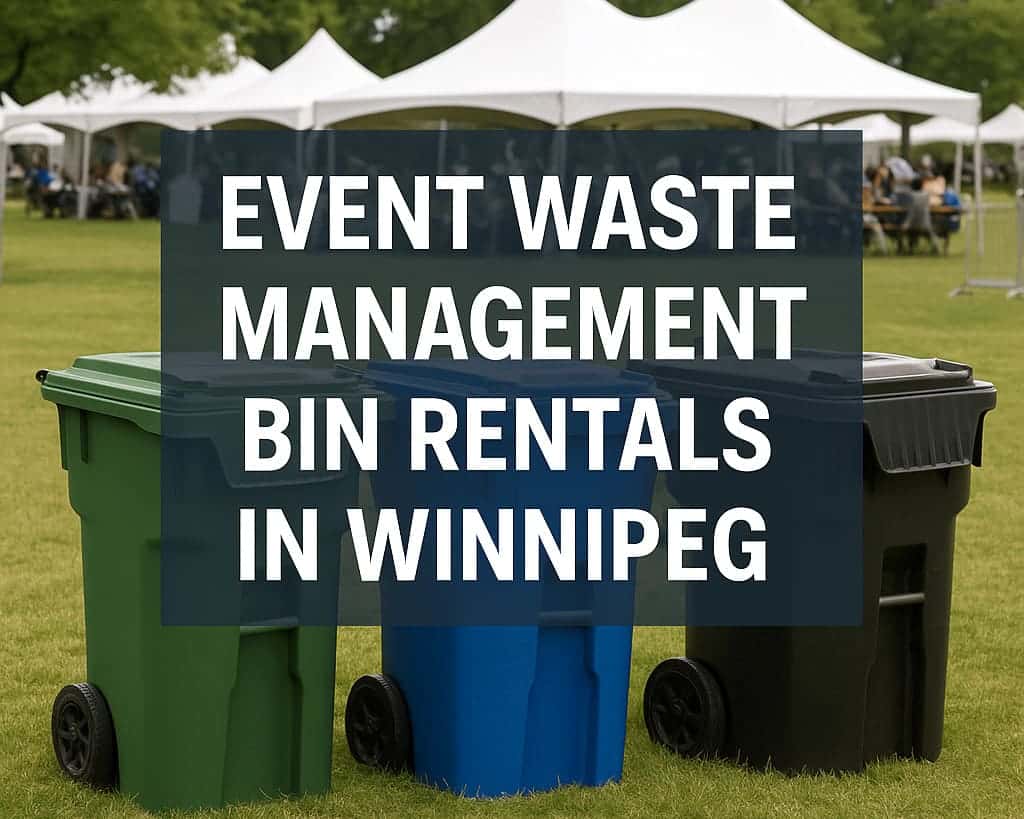
Organizing an event in Winnipeg, a festival, outdoor concert, golf tournament, community fair, or street gathering, means dealing with a lot of waste. Proper disposal is more than just tossing trash. It’s about keeping the place clean, safe, and respectful of local rules. Event waste management matters. It keeps guests healthy. It protects the environment. It makes cleanup easier after the event.
If you need to manage waste at an event, renting bins from a trusted provider can simplify everything. This guide shows you how to plan, what to expect, and why a service like Mr. Garbage makes sense.
Why Event Waste Management Matters
Public health and safety
Large gatherings produce lots of trash, recyclables, organic waste, and sometimes even food waste. Without proper bins and regular emptying, trash piles up. That can attract pests, cause odors, or even spread disease. Government of Manitoba
By planning waste management, with enough bins, frequent pickup, and separation of recyclables and garbage, event organizers can keep the venue clean and safe.
Environmental responsibility
The city of Winnipeg runs regular recycling and garbage services — but those are meant for households, not large-scale events.
Events often produce waste beyond what standard carts can handle. By using bin rentals and including recycling, composting, or special waste disposal when needed, events reduce their environmental footprint. That helps keep divertable waste out of landfills.
Smooth event logistics
If waste isn’t handled properly, cleanup drags on after the event. That delays teardown, adds stress, and can even lead to fines or health-code issues. Good waste management keeps the event on track.
When you work with a professional provider, you get bin delivery, placement guidance, pickup scheduling, and proper disposal. That leaves you to focus on the event itself.
What Event Waste Management Entails in Winnipeg
Bin rentals and waste containers
When you book event waste management, you usually rent containers or bins sized for large volumes. These containers can be simple trash bins, large roll-off dumpsters, recycling bins, or compost containers, depending on your needs. Some companies offer flexible options, bins, recycling stations, and composting. Flatland Equipment
Using bins suited for events helps you separate waste streams (general trash, recyclables, compost) and handle all kinds of waste, from empty drink cans to food disposal to packaging.
Compliance with public health and local rules
Events in Winnipeg or Manitoba must meet basic sanitation standards when food or beverages are served, or when crowds gather. Government of Manitoba
That means planning: number of bins, placement, waste-separation, regular emptying, and ensuring nobody leaves trash lying around.
If you do it right, you reduce risk — for your guests, for public health, and for the environment.
Disposal and waste facility guidelines
After the event, waste must go to a licensed disposal or recycling facility. In Winnipeg, regular garbage and recyclables are handled under city programs or at the licensed landfill/transfer stations.
Any hazardous or regulated waste (e.g., electronics, chemicals, certain materials) needs special handling. Providers familiar with provincial regulations should manage that properly.
How to Plan Waste Management for Your Event: Step by Step
If you plan an event, here’s a simple checklist to set up waste management properly, from early planning to final cleanup.
Step 1: Estimate Waste & Attendance
- Think about what type of event this is: fair, concert, tournament, community gathering, etc.
- Estimate how many people will attend. More people mean more waste, trash, recyclables, and food waste.
- Decide what kind of waste will be present: general trash, food/livestock waste, recyclable containers, compostables, maybe bulky waste (e.g., broken pallets, signage).
With a rough idea of volume and waste type, you can choose appropriate containers.
Step 2: Choose a Waste Management Service and Bin Types
A good provider will offer:
- Large bins or dumpsters (for general waste, bulky items)
- Recycling and compost bins (if you expect recyclables or organic waste)
- Flexible pickup and drop-off schedules
- Help with sorting and disposal according to Winnipeg / Manitoba regulations
A company like Mr. Garbage can handle many event types. They can advise on the number and type of bins, disposal routes, and ensure compliance.
Step 3: Plan Bin Placement Carefully
Where bins go on event grounds matters:
- Place bins where people naturally gather (food stalls, seating areas, exits).
- Ensure bins don’t block walkways, exits, or create hazards.
- Provide enough bins don’t have to hold trash too long.
- If you have recyclables, label bins clearly (e.g., “recycling,” “compost,” “trash”).
Good placement and labeling encourage proper disposal.
Step 4: Schedule Emptying and Pickup
For multi-day events or events with heavy footfall, bins must be emptied regularly. Some guidelines suggest at least daily emptying for large gatherings. Government of Manitoba
Your waste management provider should help schedule pickups. That ensures bins don’t overflow.
Step 5: Dispose of Waste Responsibly
Collected waste should go to licensed disposal facilities or recycling/composting depots. In Winnipeg and Manitoba, disposal is regulated under the provincial waste management laws.
Make sure hazardous or regulated waste is separated. Items like electronics, certain chemicals, or hazardous materials cannot go with regular waste. Users should check with their provider or local guidelines.
Real-World Example: Outdoor Festival in Winnipeg
Imagine a mid-sized outdoor music festival in Winnipeg. Organizers expect a few thousand guests, with food trucks, a beer garden, and a seating area.
- They contact a waste-management provider such as Mr. Garbage.
- Based on expected attendance and food service, they rent: large dumpsters for general trash, recycling bins for cans/plastic, and compost bins for food scraps.
- They position bins near food courts, seating, entrances/exits, labeled clearly.
- They schedule bin pickup once per day (evening) plus a final emptying after the event.
- After the festival, waste is transported to licensed disposal or recycling facilities. Organizers get confirmation of proper disposal.
Thanks to proper waste management, the event site stays clean. No trash pile-ups. Minimal environmental impact. And the organizers meet health & safety standards for public gatherings.
Why Using a Local Service Like Mr. Garbage Makes Sense
Working with a local provider offers clear benefits:
- Local knowledge: They know Winnipeg’s waste regulations, disposal facilities, landfill rules, and any permit requirements under municipal or provincial laws.
- Flexibility: They can supply the right mix of bins (trash, recycling, compost), schedule pickups, and handle disposal per regulations.
- Convenience: Bin delivery, placement advice, pickup, all managed by professionals. That saves you time and hassle.
- Compliance: Using a licensed hauler ensures waste goes to legitimate facilities. That keeps your event legal and responsible.
If you decide to use Mr. Garbage, you get a tailored plan based on your event, plus professional support from start to finish.
The Wider Waste Management Context in Winnipeg & Manitoba
- The city of Winnipeg supports recycling, garbage collection, and special waste-diversion programs for residents. City of Winnipeg
- But city curbside services are not meant for large events or bulky waste. Event waste needs special planning and containers.
- Manitoba regulates waste disposal and facility licensing under provincial laws. Licensed landfills, transfer stations, compost sites, and waste-processing facilities handle different kinds of waste.
- For public-health reasons, event sanitation guidelines require sufficient waste containers, regular trash removal, and safe handling of food-service waste. Government of Manitoba
Understanding these rules helps you plan smarter and stay compliant.
Conclusion
When you organize an event in Winnipeg, such as a festival, concert, community gathering, outdoor fair, or a tournament, waste management cannot be an afterthought. Proper planning ensures the event runs smoothly, stays clean, and respects public health and the environment.
Renting bins for event waste management and working with a local, licensed provider like Mr. Garbage simplifies the process. They help you pick the right containers, handle delivery, pickup, and disposal according to local regulations.
If you are organizing an event in Winnipeg, consider contacting Mr. Garbage. They can help you create a waste management plan based on your event size and type.
Frequently Asked Questions (FAQs)
Q1: What types of waste containers are recommended for events in Winnipeg?
A: Use a mix of containers, large dumpsters for general trash, separate bins for recyclables (cans, bottles, plastic), and compost bins or organics containers if food or organic waste will be generated.
Q2: Do I need a permit to place waste bins or dumpsters for an outdoor event?
A: It depends. If bins are placed on private property (event grounds, parking lot), a permit may not be needed. But if you place waste bins on public streets, sidewalks, or boulevards, you may need to check municipal regulations or local public-space permits.
Q3: How often should bins be emptied during a multi-day event?
A: For events with high foot traffic or food service, bins should be emptied regularly, typically at least once per day, and more often if needed to prevent overflow, odors, or health risks.
Q4: What happens to event waste after pickup?
A: Waste is hauled to licensed disposal facilities, such as landfills, transfer stations, recycling centres, or composting facilities. In Winnipeg and Manitoba, waste management must comply with provincial regulations.
Q5: Can a local company like Mr. Garbage handle waste planning and disposal for my event?
A: Yes. A professional local provider can help you plan waste container needs, provide bins, manage placement and pickup, and ensure proper disposal. This takes the burden off event organizers and ensures compliance with local laws and environmental standards.