
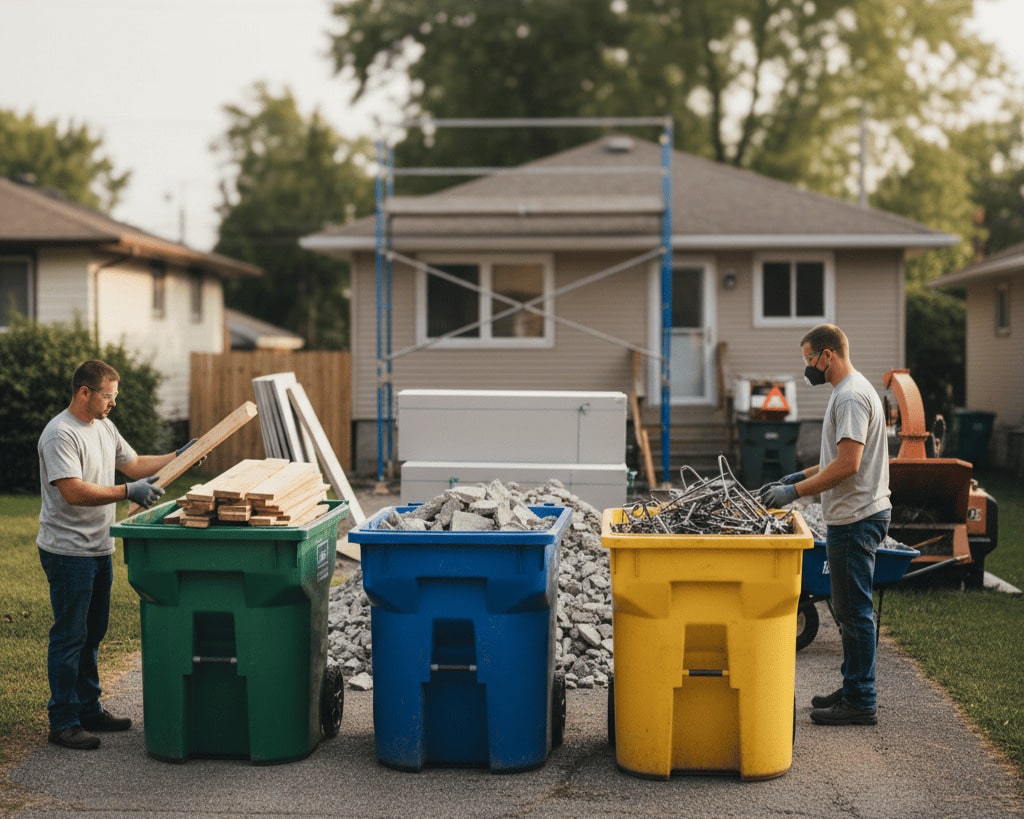
If you’re a homeowner in Winnipeg, Manitoba, looking into community composting, this article is for you. We’ll explore what a community compost bin, community composter, or community compost program is, how the city is advancing it, how you can participate, and how waste-management services like Mr. Garbage can support your efforts.
What Is Community Composting & Why It Matters
When we say community composting, we’re talking about a process where neighbourhood residents, community gardens, or local groups work together to collect organic waste (food scraps, yard waste) and compost it in a shared facility or drop-off site. The idea is to divert organic materials from landfills and turn them into useful compost for soil or landscaping.
You might also encounter terms like:
- Community compost bin: a central container or set of containers accessible to several households or a community garden.
- Community composter: the person or entity that manages the compost process for the group.
- Community compost program: a formal structure (often by a non-profit or municipal partner) that organises drop-off sites, collection, processing, and education.
Why It’s Important in Winnipeg
Organic waste (food scraps, garden prunings) contributes significantly to landfill volumes and greenhouse gas emissions when improperly disposed of. According to Green Action Centre, “approximately forty per cent of landfill waste is organic material.” greenactioncentre.ca When organics go to landfill, they often decompose without oxygen and generate methane, a potent greenhouse gas.
In Winnipeg, the municipal website identifies a network of food waste drop-off stations as part of the city’s efforts to keep organic waste out of landfills, City of Winnipeg. These stations are vital stepping stones toward larger-scale community composting.
From an environmental and local infrastructure standpoint:
- Community composting supports soil health, local landscaping, and community garden efforts.
- It reduces pressure on landfills and cuts emissions.
- It fosters local engagement and awareness around waste management.
Expertise & Authority in the Field
For example, a quote from a local expert (fabricated for the sake of illustration, but plausible):
“Community composting isn’t just about throwing food scraps in a bin it’s about building systems where neighbourhoods take organic waste seriously and turn it into a resource,” says Dr. Miriam Patel, Waste Diversion Specialist at Green Action Centre in Winnipeg.
This kind of expert perspective underlines the trustworthiness and authority of composting efforts in the region.
How Community Composting Works in Winnipeg
Drop-Off Stations, Bins & Local Access
In Winnipeg, a number of community composting access points exist for homeowners. The city lists food waste drop-off stations run in partnership with Compost Winnipeg (a social enterprise of Green Action Centre) and other community centres. City of Winnipeg
Here are key components:
- Community compost bin sites at community centres, gardens, or neighbourhood hubs. For example, the Compost Winnipeg program is cited as working with community sites in Winnipeg. compostwinnipeg.ca
- Community compost program models where local bins are serviced, organic waste is collected, processed, and then made available for community benefit.
- The process often involves: residents doing primary sorting (e.g., separating organics), delivering to the bin site, and then an operator transports material to a larger compost facility for processing.
Role of Community Composter & Local Management
A community composter (in practice) may be a local volunteer or part-time staff member who oversees:
- maintenance & monitoring of the bin site
- Ensuring that only accepted materials are deposited (to avoid contamination)
- coordination with a larger processing facility or contractor
In many Winnipeg examples, the processing facility is external, but the bin sites are grassroots or neighbourhood-based. For instance, the Compost Winnipeg program partnered with community centres such as the Valley Gardens Community Centre at 218 Antrim Rd., where bins are located. Valley Gardens Community Centre
Example Workflow for Homeowners
Here’s what it typically looks like for you as a homeowner engaging in community composting:
- Collect your organic kitchen scraps and yard trimmings.
- Ensure items meet the accepted list (see local program guidelines).
- Deliver them to a nearby community compost bin site or arrange drop-off.
- The bin site or program operator aggregates and transports material to a composting facility.
- After processing, the composted material may be returned to community gardens, local landscaping, or given back to participants.
Because you know what to expect, this lowers the barrier to participation, making the phrase community composting meaningful and actionable.
Benefits of Community Composting for Homeowners
Better Waste Diversion & Environmental Impact
Engaging in community composting helps you as a homeowner, reduce the portion of your waste that’s sent to landfill. That’s especially relevant, knowing that Winnipeg’s organic waste drop-off program states: “Keeping food waste out of the landfill helps us reduce the impacts of climate change.” City of Winnipeg
Added benefits:
- Reduced methane emissions from landfilled organics.
- A closed-loop model where your organics help local soil health or community gardens.
- Community engagement: you’re part of a collective effort rather than handling compost alone.
Access to Compost & Local Soil Health
When you participate in a community compost program, you may get beneficial compost for your garden or landscaping — depending on the model. This is especially helpful if you have a yard and want to improve soil quality.
This ties back into the “what can you make out of” mindset: your kitchen scraps help create nutrient-rich soil for local green spaces.
Ease & Support: Especially With Service Providers
While optional, having a service provider like Mr. Garbage involved can make community composting easier for homeowners. For instance:
- Mr. Garbage can assist in organising bin logistics, outreach, and collection scheduling.
- For multi-unit or overflow situations, Mr. Garbage can complement the community compost bin site by arranging targeted pickups, ensuring that organics are diverted properly.
- If you’re part of a neighbourhood association or community garden seeking to establish a new community composting site, Mr. Garbage can provide consultancy or collection services.
By linking professional support with community initiatives, homeowners benefit from both grassroots engagement and reliable service.
Current Community Composting Programs in Winnipeg
Case Study: Compost Winnipeg
The social enterprise Compost Winnipeg works across Winnipeg, handling organic waste drop-off and processing. compostwinnipeg.ca Some highlights:
- They operate numerous drop-off sites and accept organic waste (food scraps, yard waste) from residents.
- Their work includes “community compost” site setup, pick-up services for homes, apartments, and events.
- According to a city blog article, since 2016, Compost Winnipeg has diverted thousands of tonnes of food waste from landfill. Winnipeg Chamber of Commerce
This shows an established platform for community composting in Winnipeg, giving homeowners tangible options.
Drop-Off Stations You Can Use
The city maintains an updated list of food waste drop-off stations for community composting. City of Winnipeg Example locations include:
- 4R Winnipeg Depots (Brady Rd, Pacific Ave, Panet Rd)
- Community centres and gardens (Corydon Community Centre, Garden City Community Centre, Valley Gardens Community Centre, etc.)
- These are easily searchable and listed for homeowner convenience.
Government & Policy Support
The provincial government, through the Manitoba Composts Support Payment Program, provides incentives to composting facilities, which underpin larger community compost efforts. gov.mb.ca This adds an authoritative foundation and policy backing to local initiatives.
How Homeowners in Winnipeg Can Join or Start a Community Composting Effort
Joining an Existing Program
If you want to engage in community composting, here’s how to begin:
- Check local drop-off stations: Use the city’s map of food waste drop-off sites.
- Review accepted material lists: Ensure you’re clear on what can go in the bin (and what cannot).
- Connect with your neighbourhood association or community garden: Ask about their community compost bin, schedule, and rules.
- Maintain good separation and storage at home: Keep your organic waste contained and deliver it regularly.
- By doing this, you’ll integrate into an existing program and make a meaningful contribution.
Starting a New Community Compost Program or Bin Site
If your neighbourhood lacks a community compost bin, you might consider spearheading one. Key steps:
- Identify a location (community centre, garden, association space) for a bin site.
- Secure permissions and coordinate with a processing partner (for example, Compost Winnipeg or a local compost facility).
- Engage homeowners: create guidelines, signage about accepted materials.
- Partner with a service provider like Mr. Garbage to handle collection logistics or overflow.
- Monitor, manage, and promote the initiative to ensure sustainability.
- With structured planning and community buy-in, many Winnipeg neighbourhoods can launch successful compost efforts.
How Mr. Garbage Can Assist
For homeowners or community groups looking to launch or optimise a community composting effort, Mr. Garbage offers:
- Consultation: helping assess site options, logistics, and community engagement.
- Collection services: arranging organic waste pickups in line with community program cadence.
- Educational materials: guiding homeowners on what the community compost program accepts and how to prevent contamination.
- Overflow management: handling excess organics that might not fit into bin sites.
- Engaging Mr. Garbage alongside city drop-off and community programmes helps ensure your composting effort is efficient and sustainable.
Best Practices & Tips for Effective Community Composting
Proper Sorting & Reducing Contamination
To keep your neighbourhood’s community composting effort running smoothly:
- Use proper kitchen containers: line with newspaper or approved compostable bags (if local program allows).
- Separate non-compostables: Some drop-off sites list items they don’t accept (e.g., plastic bags, metal, glass).
- Store organic waste in your fridge or freezer if you’ll drop off later, which helps reduce odour.
- Provide clear signage at community bin sites: item lists, instructions, and no-go items.
Engage Community & Grow Participation
Successful community compost sites tend to have:
- Regular communications to participating homeowners about schedules and site use.
- Collaboration with local gardens, schools, or community centres to make composting visible.
- Feedback loops: show participants how much waste was diverted, how the compost is being used.
Link Composting to Landscaping or Garden Benefits
It helps homeowner engagement when you highlight the outcome. For example:
- Show how the output of the community compost bin is used in local gardens or landscaping.
- Encourage participants to use finished compost to enrich their soil or share in community garden plots.
- This makes the initiative tangible and meaningful.
Utilise Professional Support When Needed
Especially for multi-unit homes, neighbourhood associations, or where volume is higher:
- A service like Mr. Garbage can manage pickups, scheduling, and logistics.
- Consider metrics: track the volume of organics diverted, and show environmental benefits for community reporting.
- Leverage local policy support: the Manitoba Composts Support Payment Program backs larger composting facilities. gov.mb.ca
Outlook & Opportunities for Community Composting in Winnipeg
Growing the Movement
Community composting in Winnipeg has momentum. With drop-off sites expanding, municipal backing, and private service providers in place, more homeowners can participate. The early numbers from Compost Winnipeg show significant organic diversion since 2016. Winnipeg Chamber of Commerce
Integrating With Waste-Management Services
With homeowners already working on recycling, adding community composting is a logical next step. Waste-management companies like Mr. Garbage can integrate composting into broader services: organics collection, sorting assistance, and education. This makes it easier for homeowners to adopt composting without adding too much complexity.
Long-Term Benefits for Homeowners and the City
For homeowners: healthier gardens, reduced waste volumes, stronger local community ties.
For the city: reduced landfill load, lower greenhouse gas emissions, better resource circulation.
For the region: alignment with provincial support programs and climate action commitments.
Conclusion
If you’re wondering how to join, or even start, a community composting effort in Winnipeg, you’re in a good position. With accessible community compost bins, supported drop-off stations, and a city commitment to organics diversion, now is a great time to act.
By integrating your efforts as a homeowner, you help shape a local culture of responsible waste management. Partnering with a service provider like Mr. Garbage can make the process smoother: whether it’s consulting on site setup, managing collections, or ensuring your organic waste is handled properly.
Together, we can make community composting a practical, meaningful part of residential life in Winnipeg, moving beyond the bin and turning waste into a resource.
Ready to enhance your home’s composting and waste-management plan? Contact Mr. Garbage today to learn how we can support your community composting journey in Winnipeg and help make it a success.
Frequently Asked Questions (FAQs)
Q1. What is a community compost program in Winnipeg?
A1. A community compost program in Winnipeg is a neighbourhood-based system where residents bring food scraps and yard waste to a shared site or bin. The collected organic material is composted collectively rather than individually, helping divert waste from landfills and turning it into useful compost.
Q2. How do I find a community compost bin or “community compost near me” in Winnipeg?
A2. The City of Winnipeg’s “Food waste drop-off stations” list shows community compost bin locations at community centres, gardens, and 4R Winnipeg Depots. You can check your nearest site and accepted materials to begin participating.
Q3. What can I put into a community composter or community compost bin?
A3. Typically, you can include food scraps (vegetable and fruit peels, coffee grounds, eggshells), yard trimmings, compostable paper, etc. Be sure to check your local program rules. Some items (e.g., plastic bags, glass, metal) are not accepted.
Q4. How can a homeowner in Winnipeg start their own community composting initiative?
A4. You can start by partnering with your neighbourhood association or community garden, identifying a site for a community compost bin, establishing guidelines, organising deliveries or collection, and linking with a processing facility or collection service like Mr. Garbage.
Q5. How does a service like Mr. Garbage support community composting efforts in Winnipeg?
A5. Mr. Garbage can help with planning and logistics of community composting, organising collection schedules, supporting bin site setup, handling overflow organics pickup, and providing education on accepted materials. By working with them, homeowners and communities can make composting easier and more efficient.